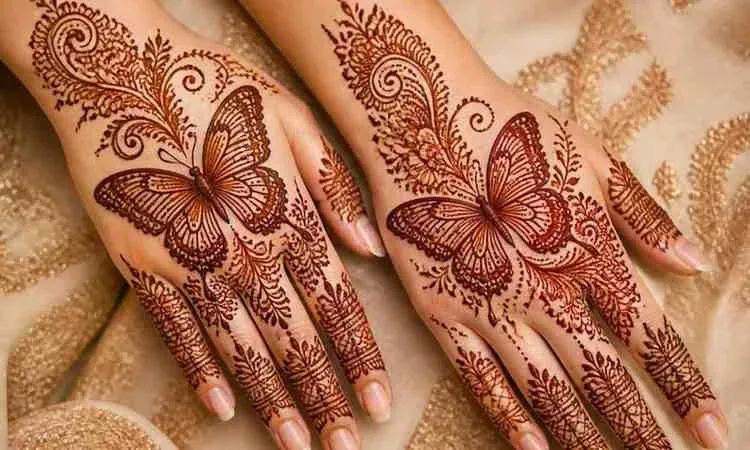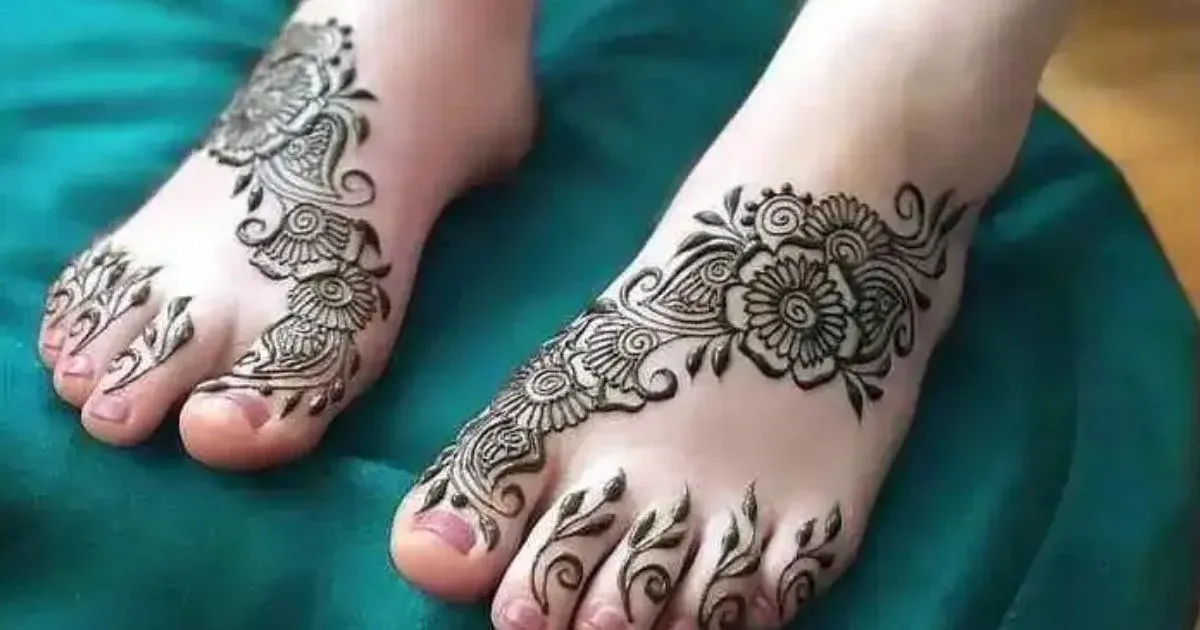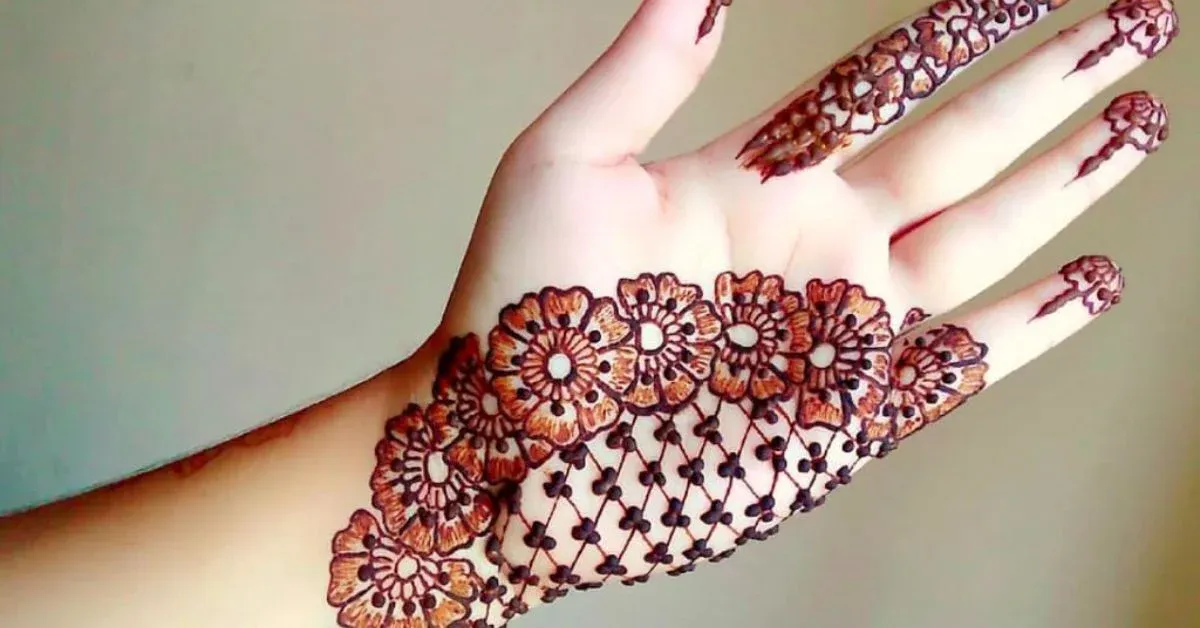
Rabeeca Khan mehndi design ideas are popular with anyone who wants a stylish, modern henna look inspired by her public fashion and beauty appearances. I use this collection as visual inspiration rather than assuming that every pictured design was personally worn by Rabeeca Khan. The gallery includes simple, Arabic, Eid, finger, and front-hand patterns so I can compare different looks before choosing one for my own occasion.
I have arranged the photos by style and placement so I can quickly compare the details I like. Instead of copying a complete look, I can take one element—such as a floral trail, finger pattern, bold outline, or open-space layout—and adapt it to my hand size, outfit, and comfort.
I have kept the selection broad because a celebrity-inspired mehndi look does not have to be heavy. A clean pattern can work just as well for a small gathering, while a fuller composition may suit Eid, weddings, or other festive events.
Rabeeca Khan Mehndi Design
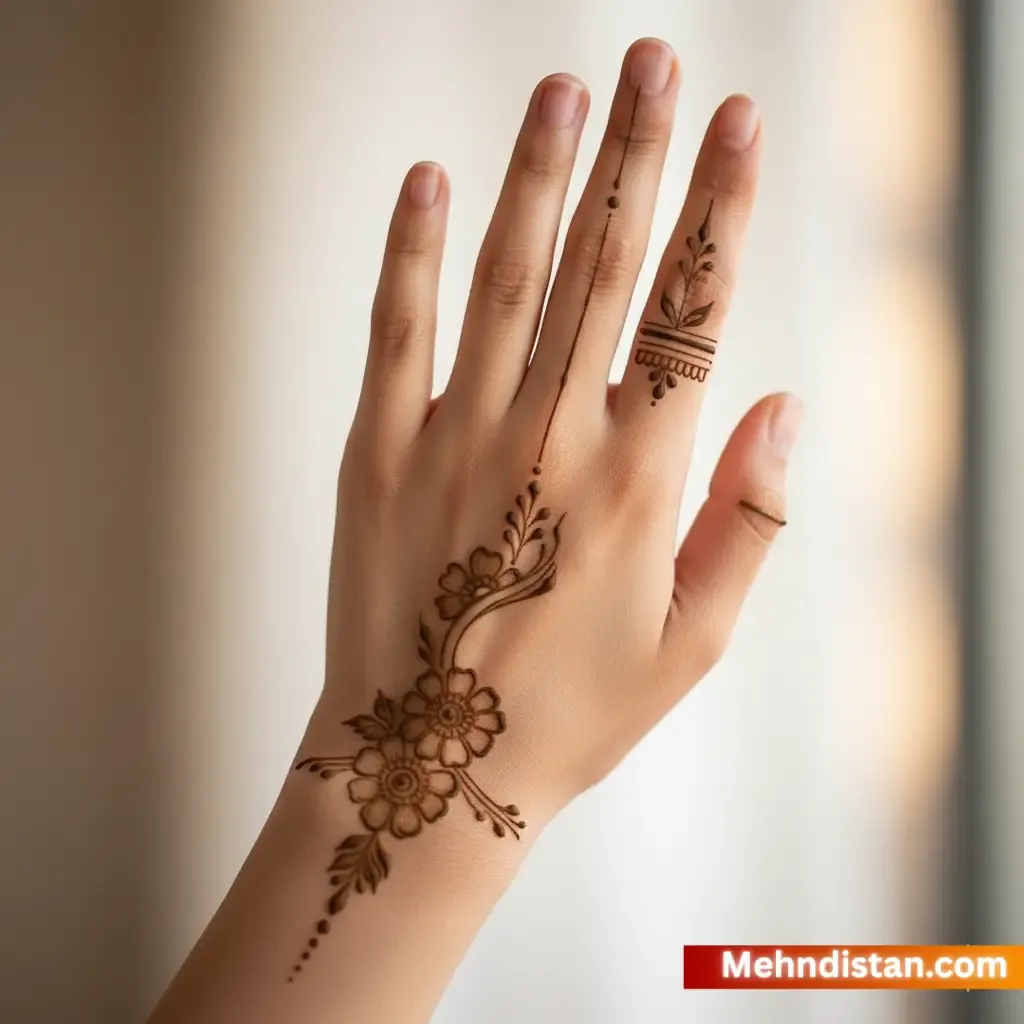
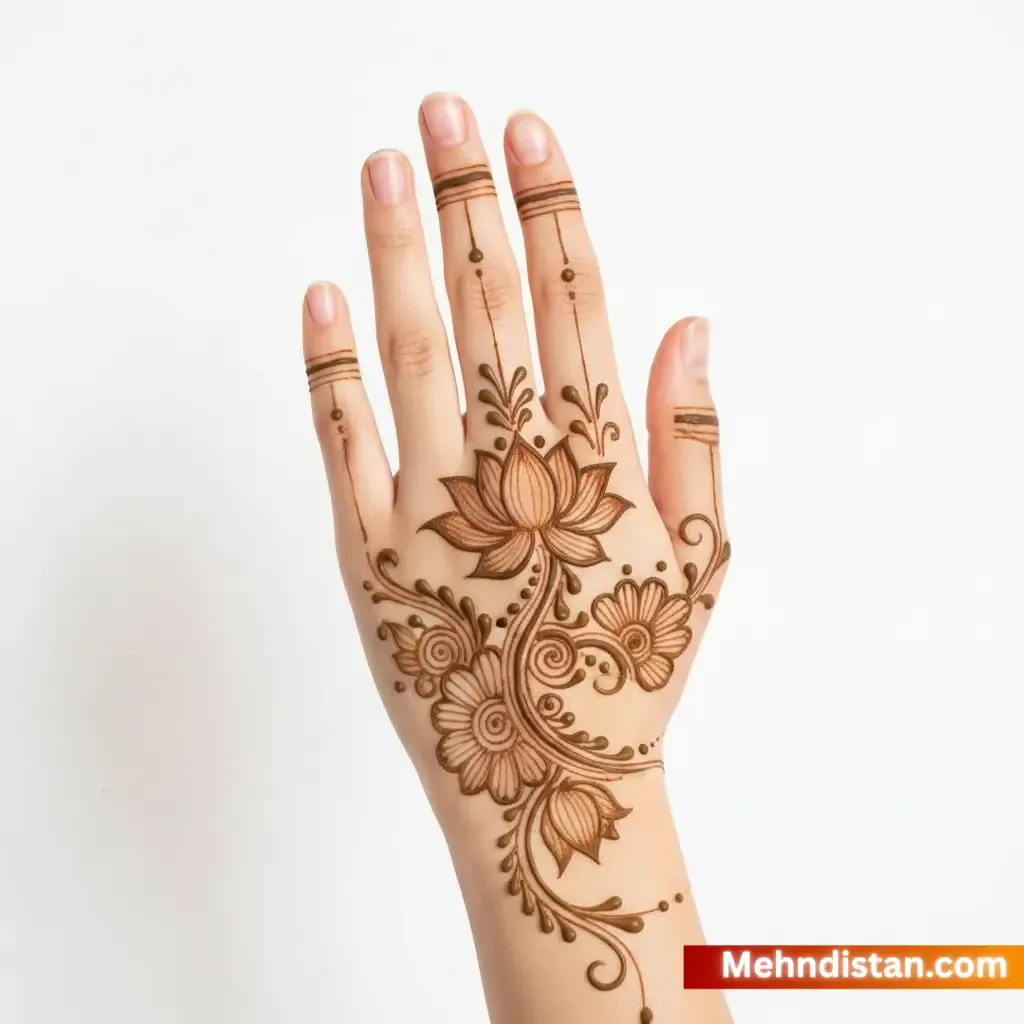
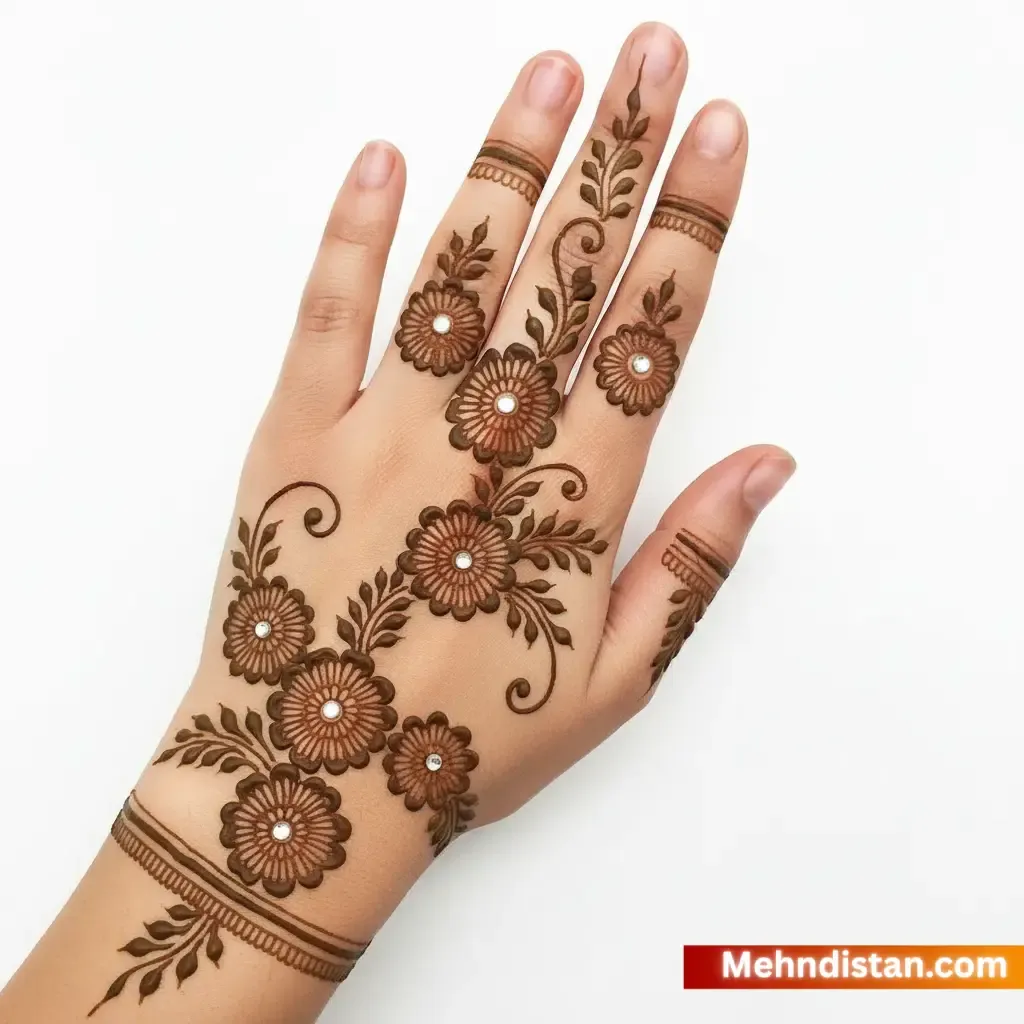
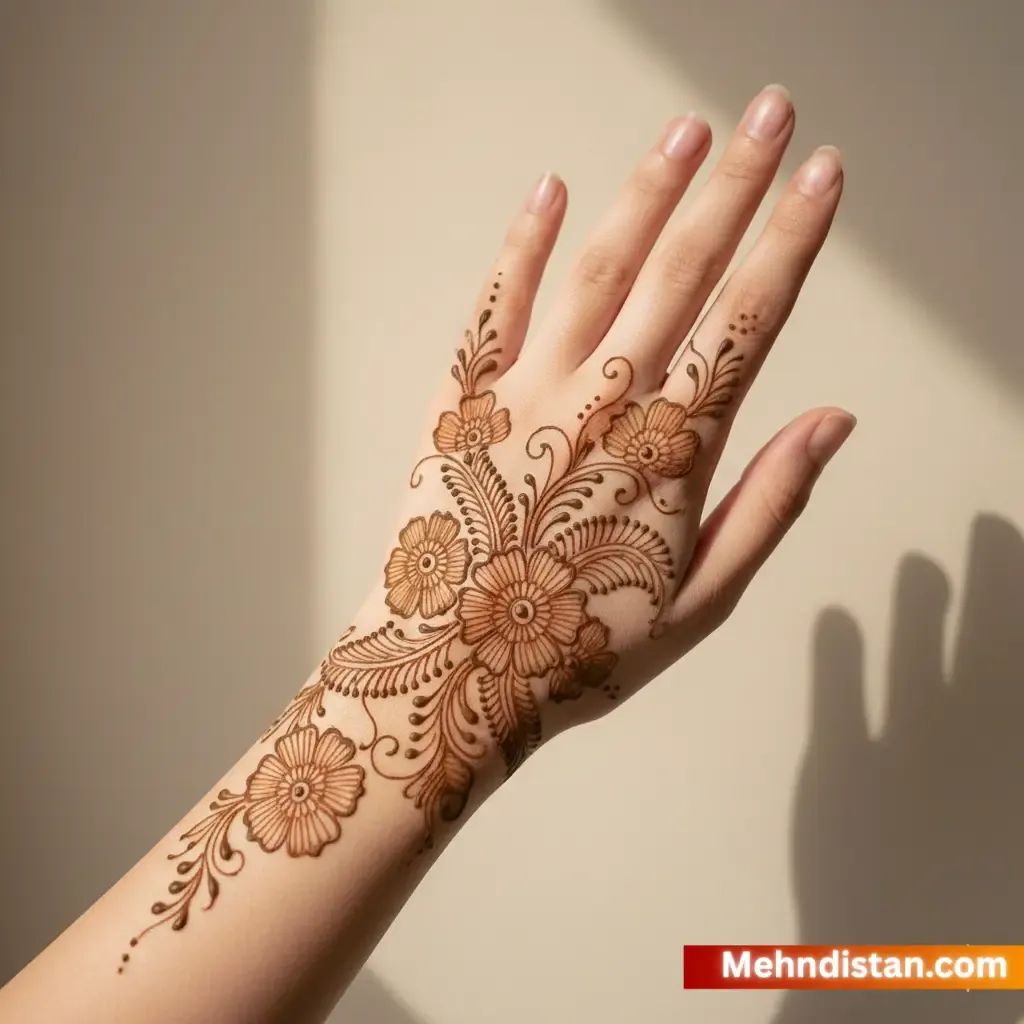
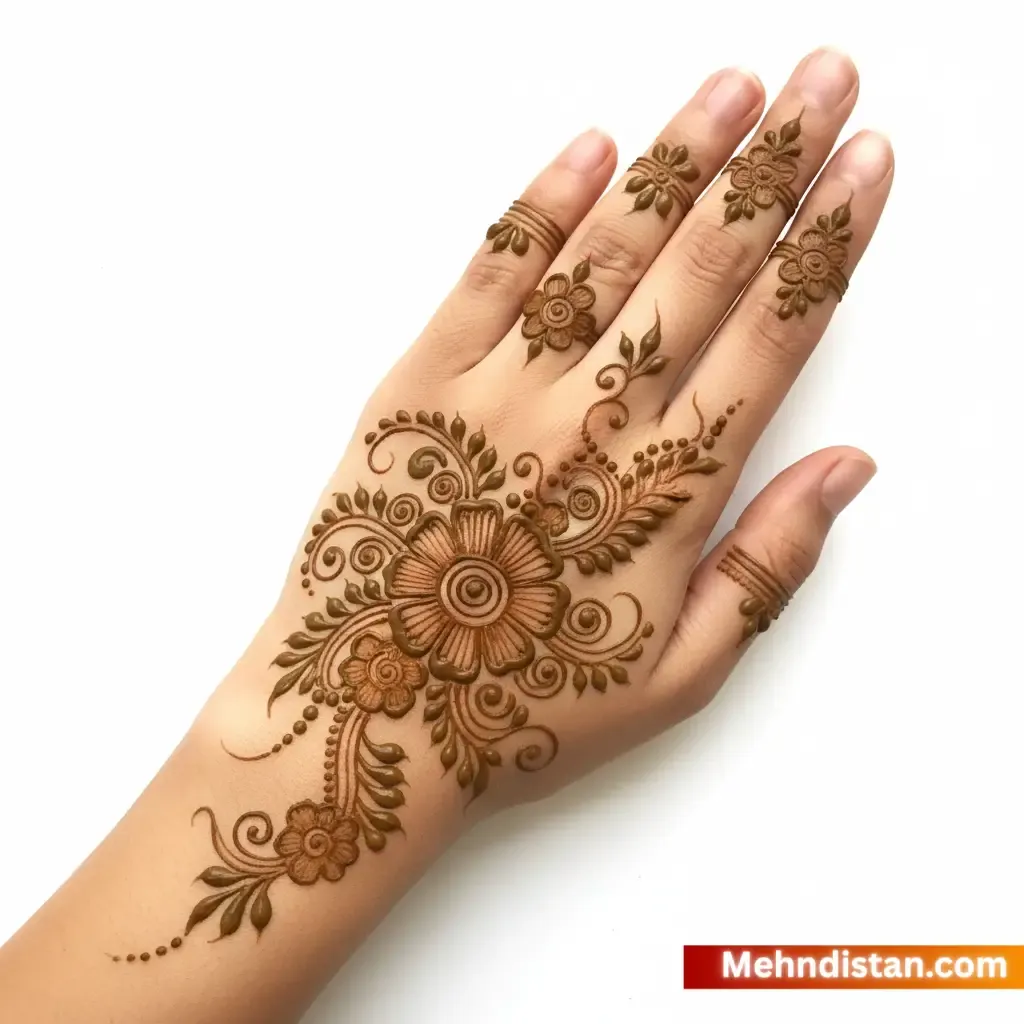
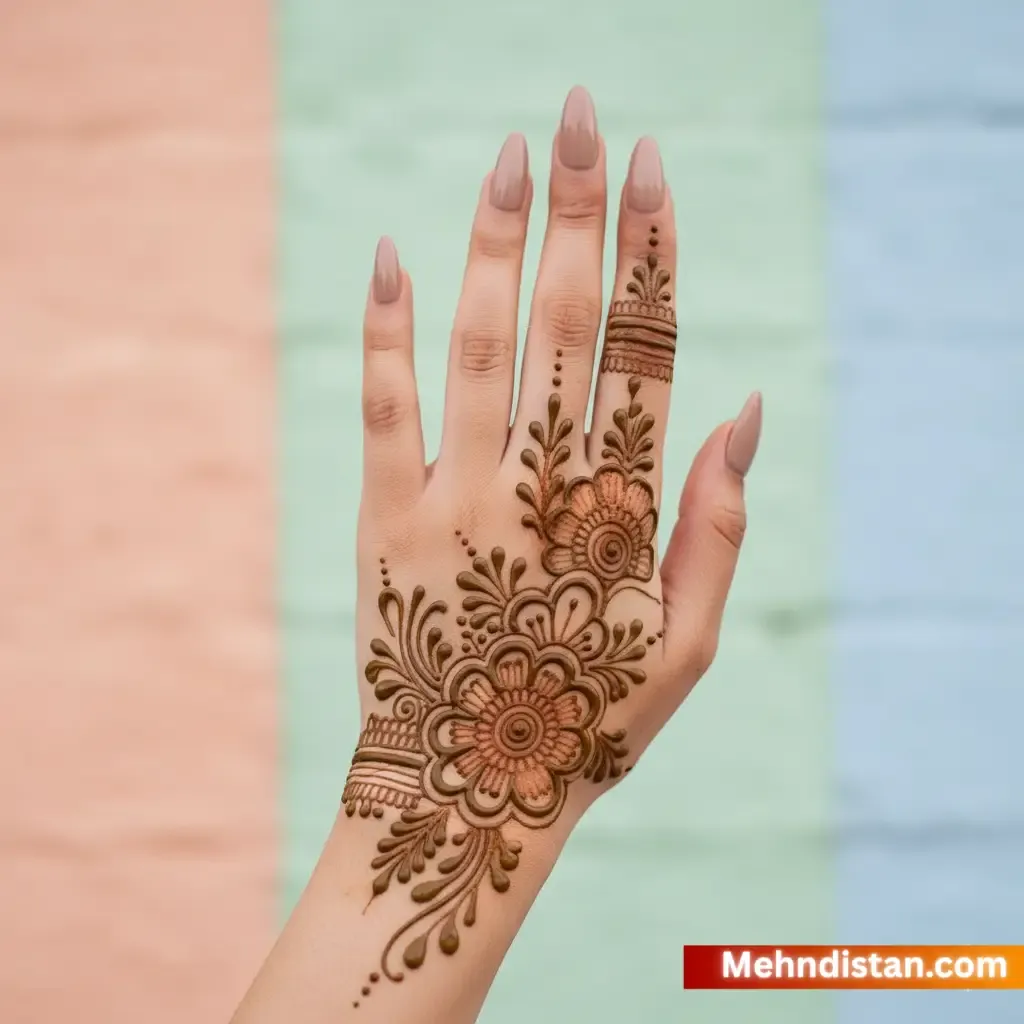
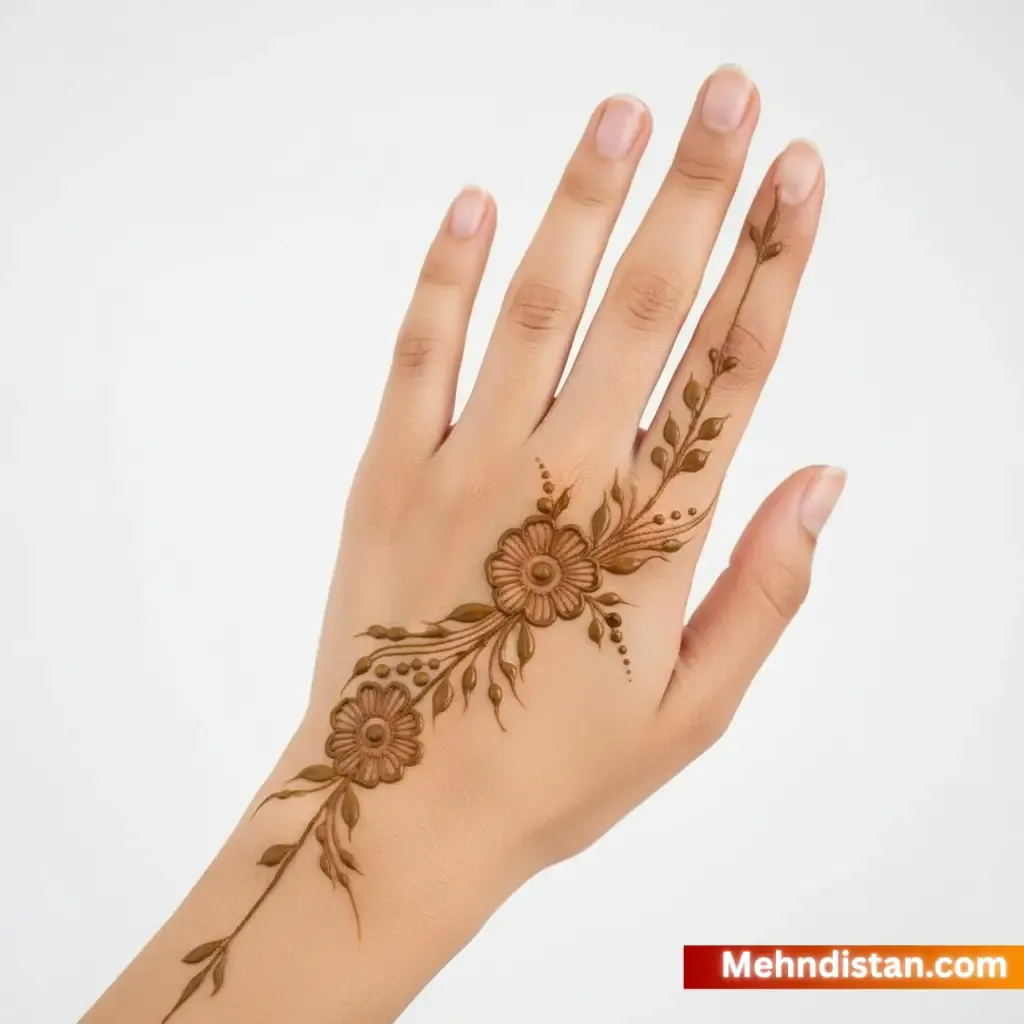
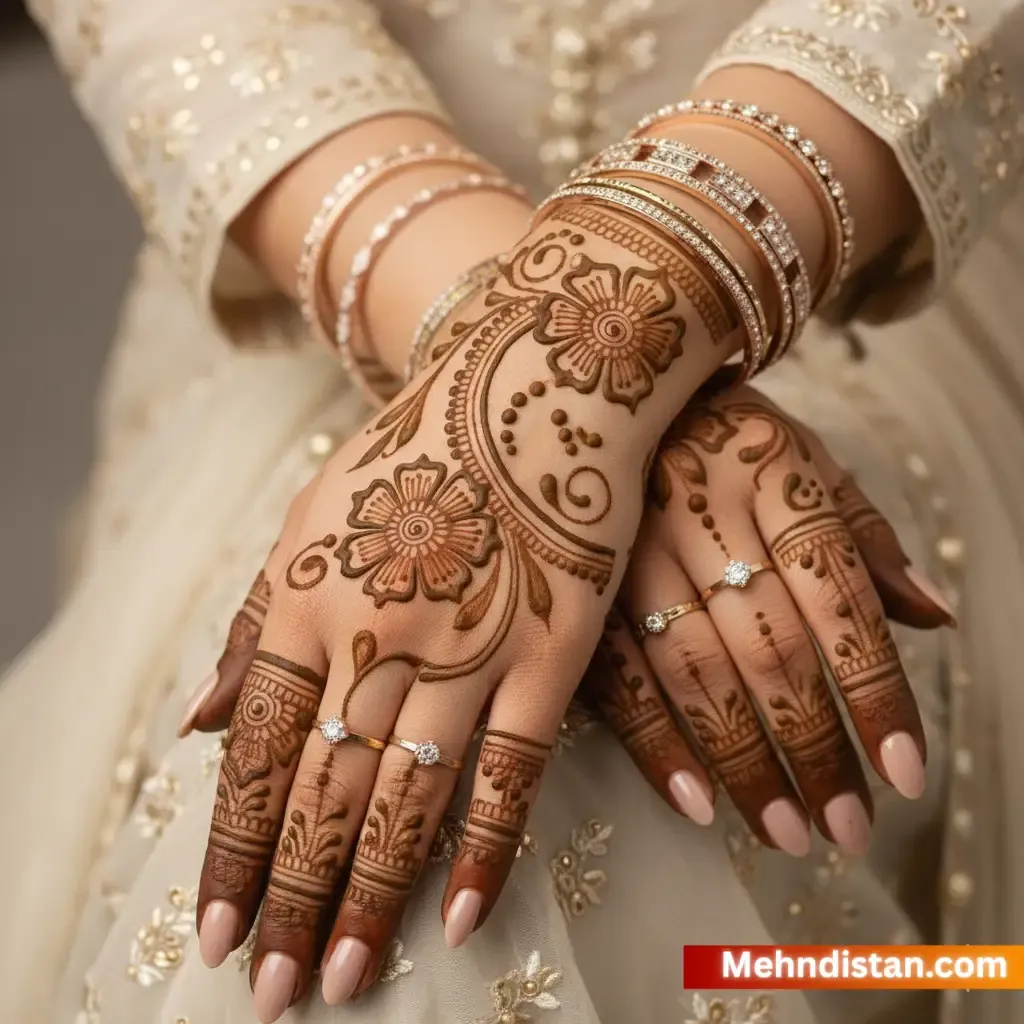
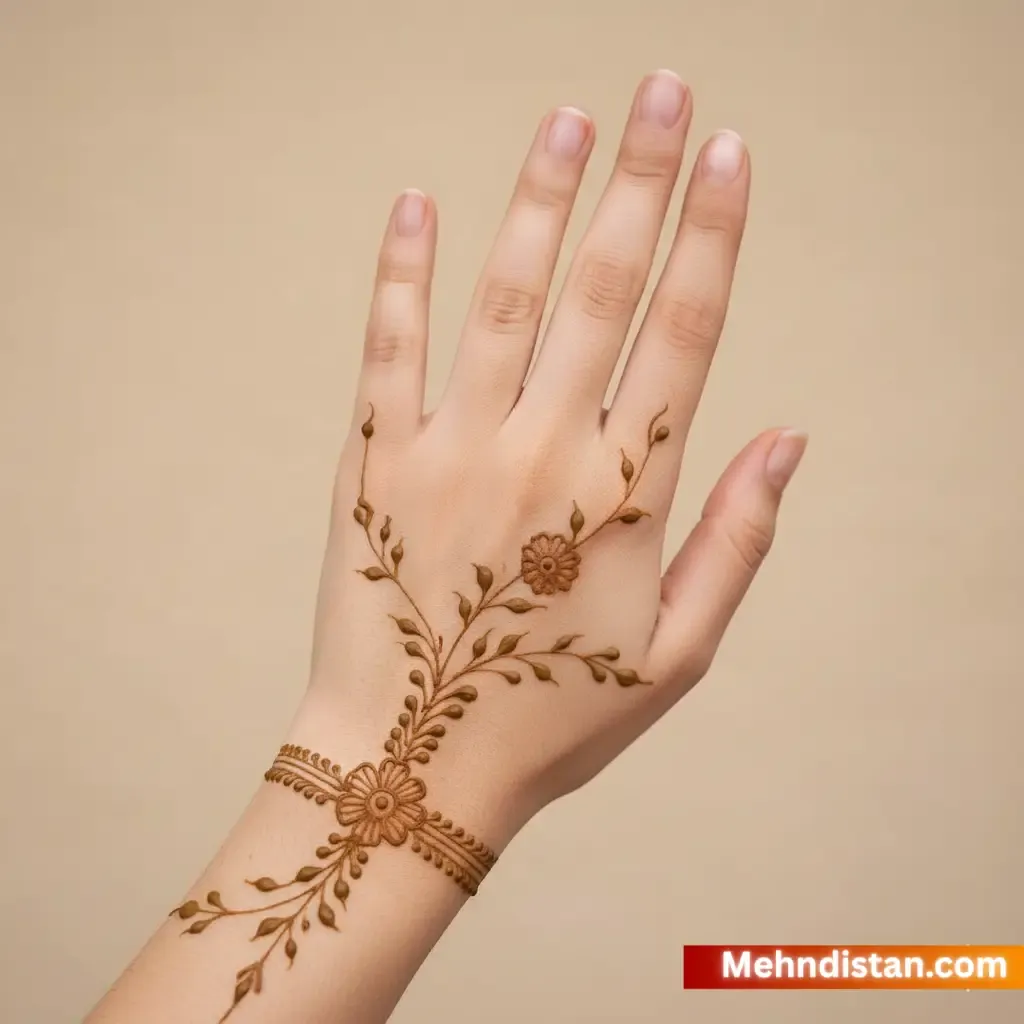
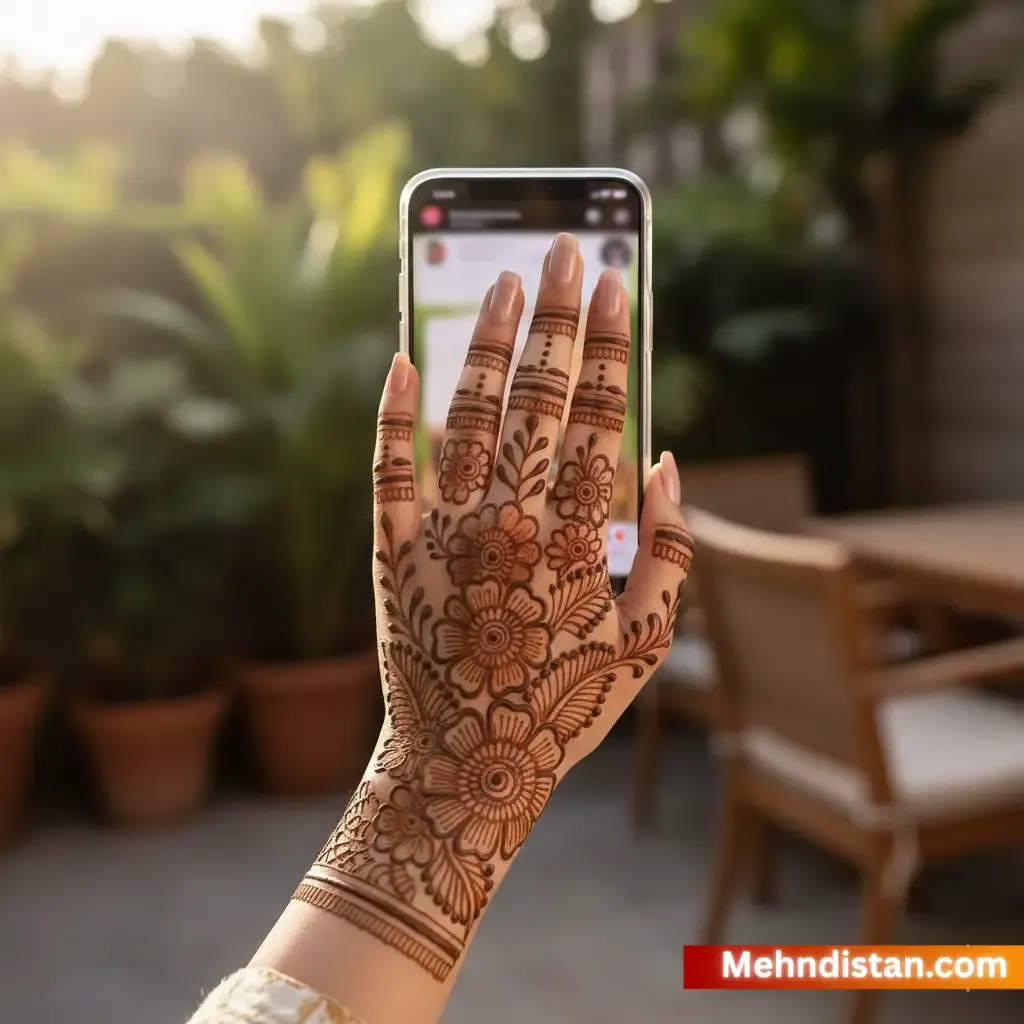
Rabeeca Khan Mehndi Design Eid
For Eid-inspired Rabeeca Khan mehndi design ideas, I look for festive patterns that feel detailed without becoming difficult to wear. Floral trails, balanced fillers, leafy shapes, and neat fingertip work can make the design feel celebratory. The photos in this section give me different layouts to consider, but I treat them as inspiration rather than proof of a particular personal appearance.
How I Style an Eid-Inspired Design
- I choose an outfit color that lets the henna remain easy to see.
- I plan the application according to the event and the henna product’s normal staining time rather than relying on a fixed one-day rule.
- I follow the paste’s recommended drying and removal time instead of using the same duration for every henna product.
Dos and Dont’s
- Do: Follow the henna product’s recommended application and aftercare instructions.
- Don’t: Avoid unnecessary washing immediately after removing the dry paste so the stain can develop.
Why I like this
- I like how the balance of traditional motifs and clean spacing can feel both classic and modern.
- I can adapt the density of the pattern to suit a heavily embroidered Eid outfit.
- I find that clear outlines and sensible spacing help the design show up better in festive photos.
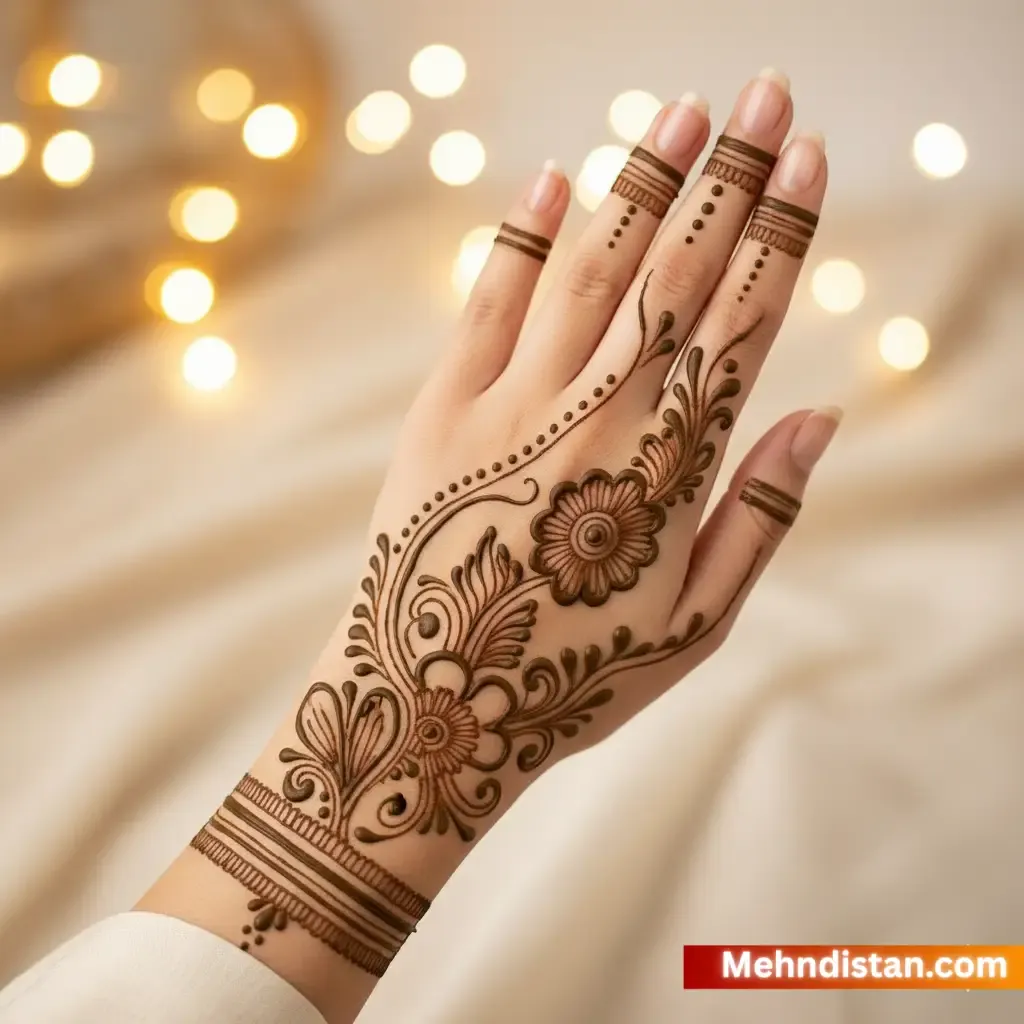
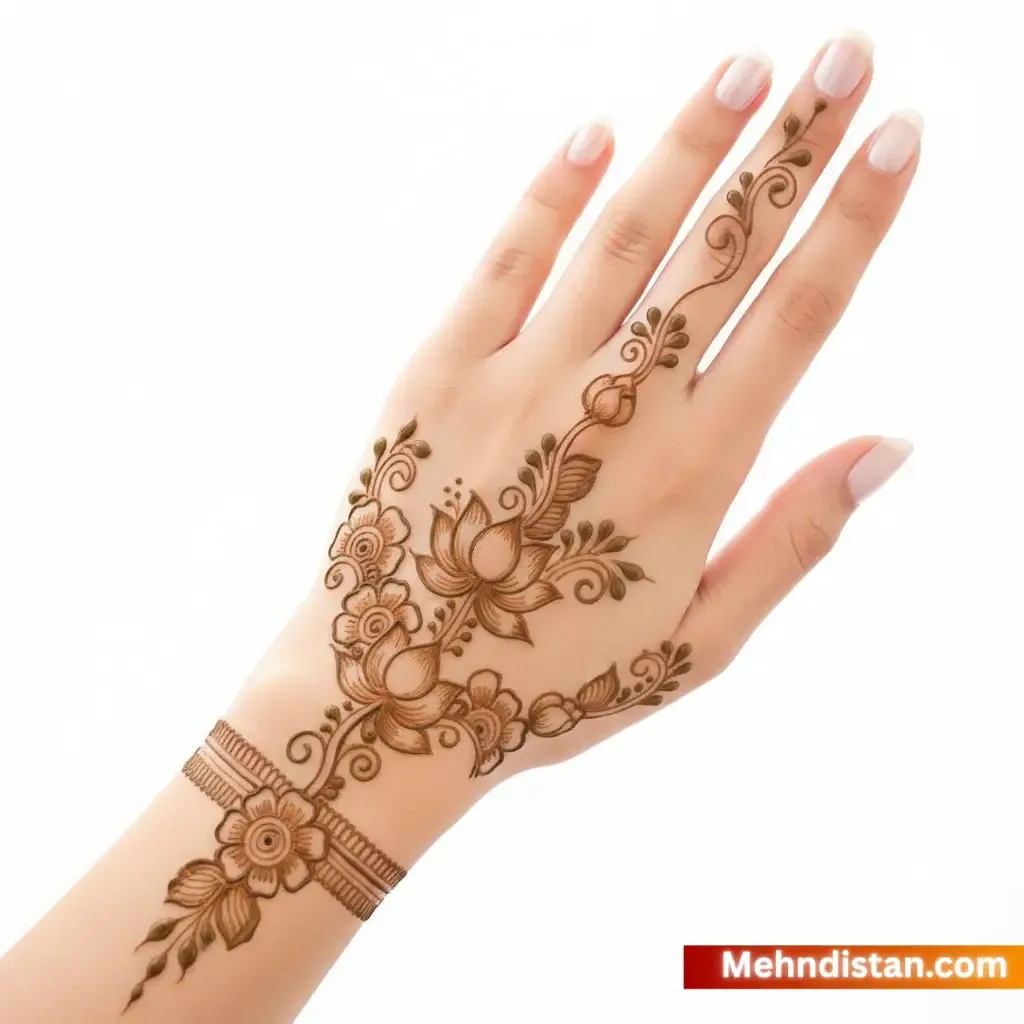
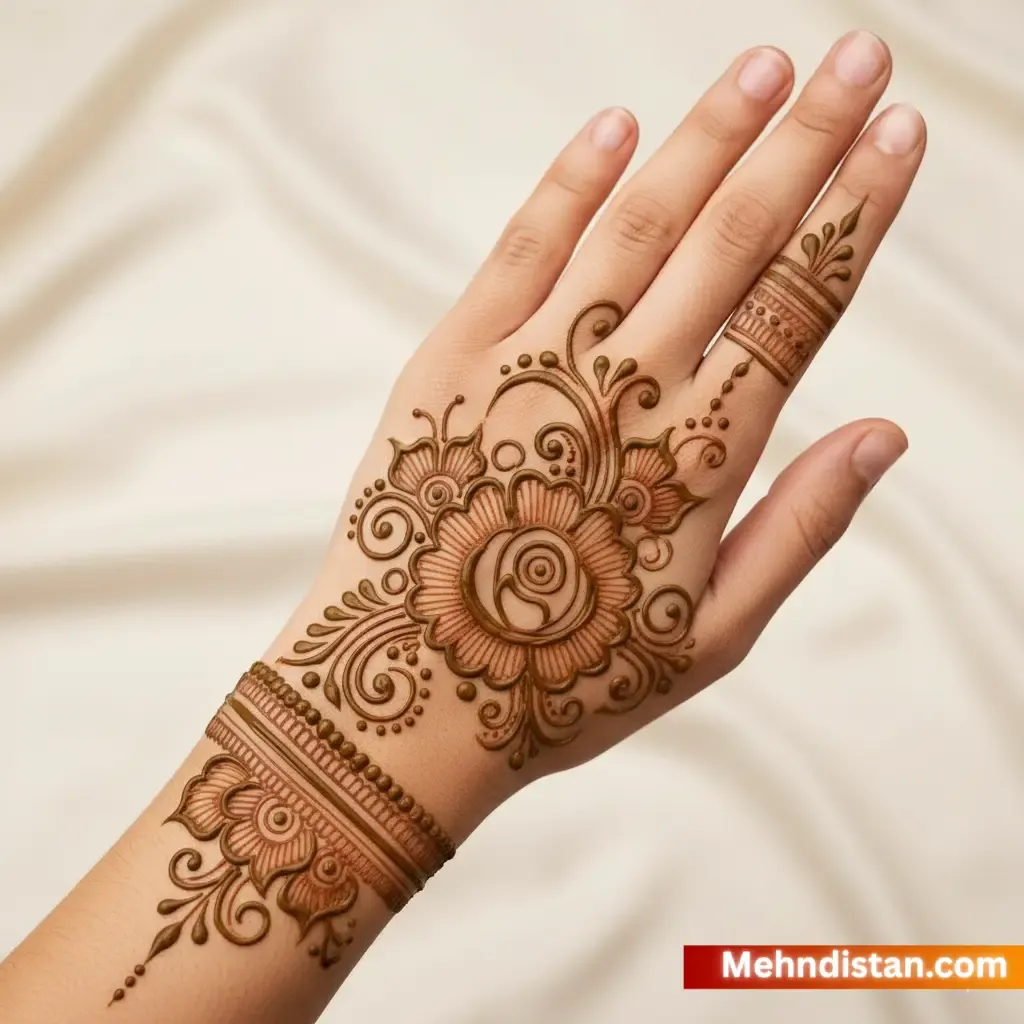
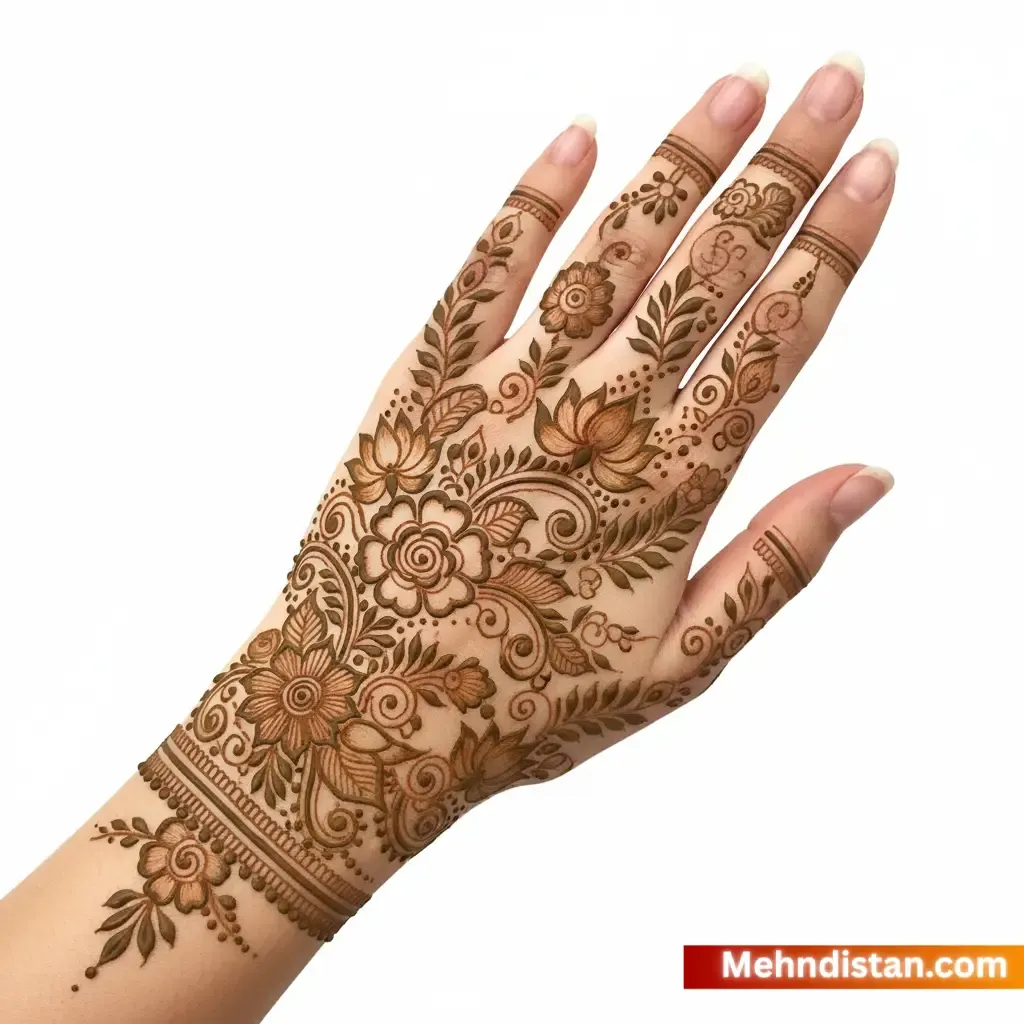
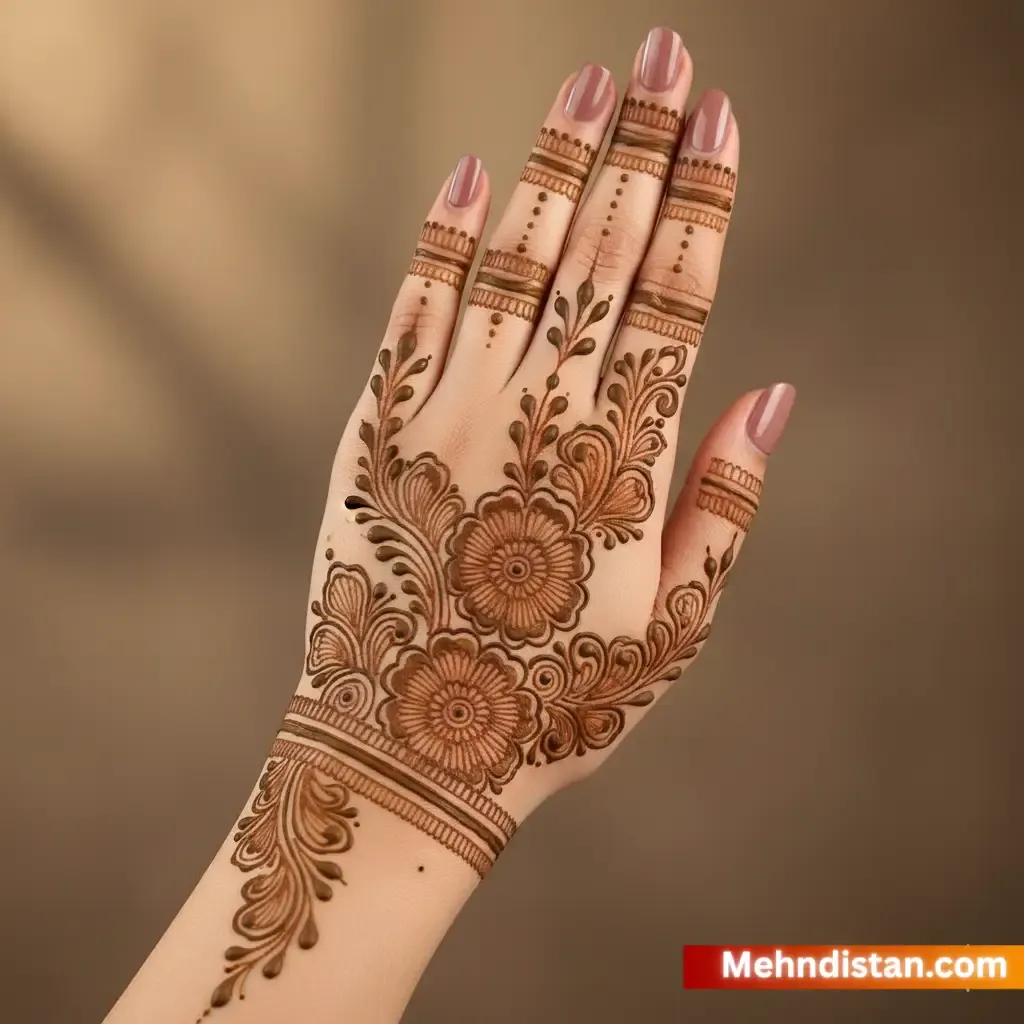
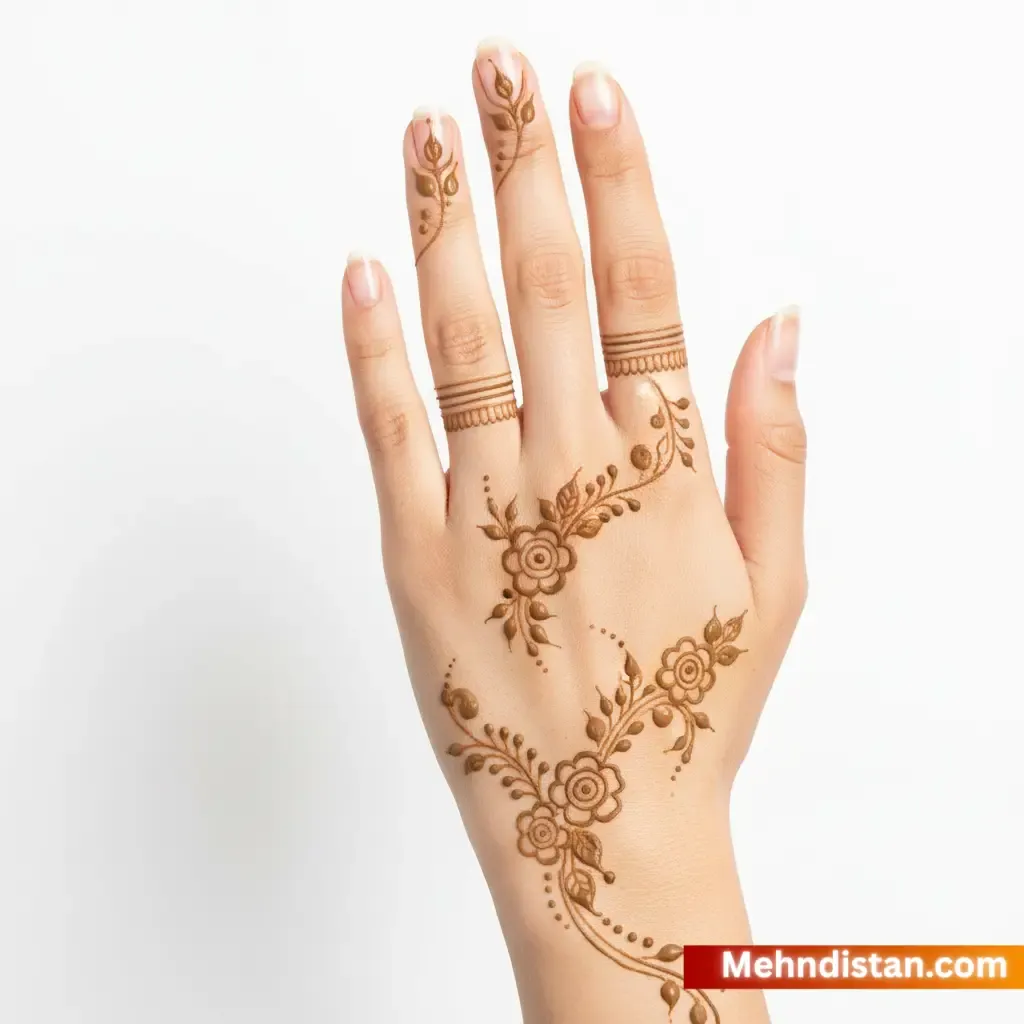
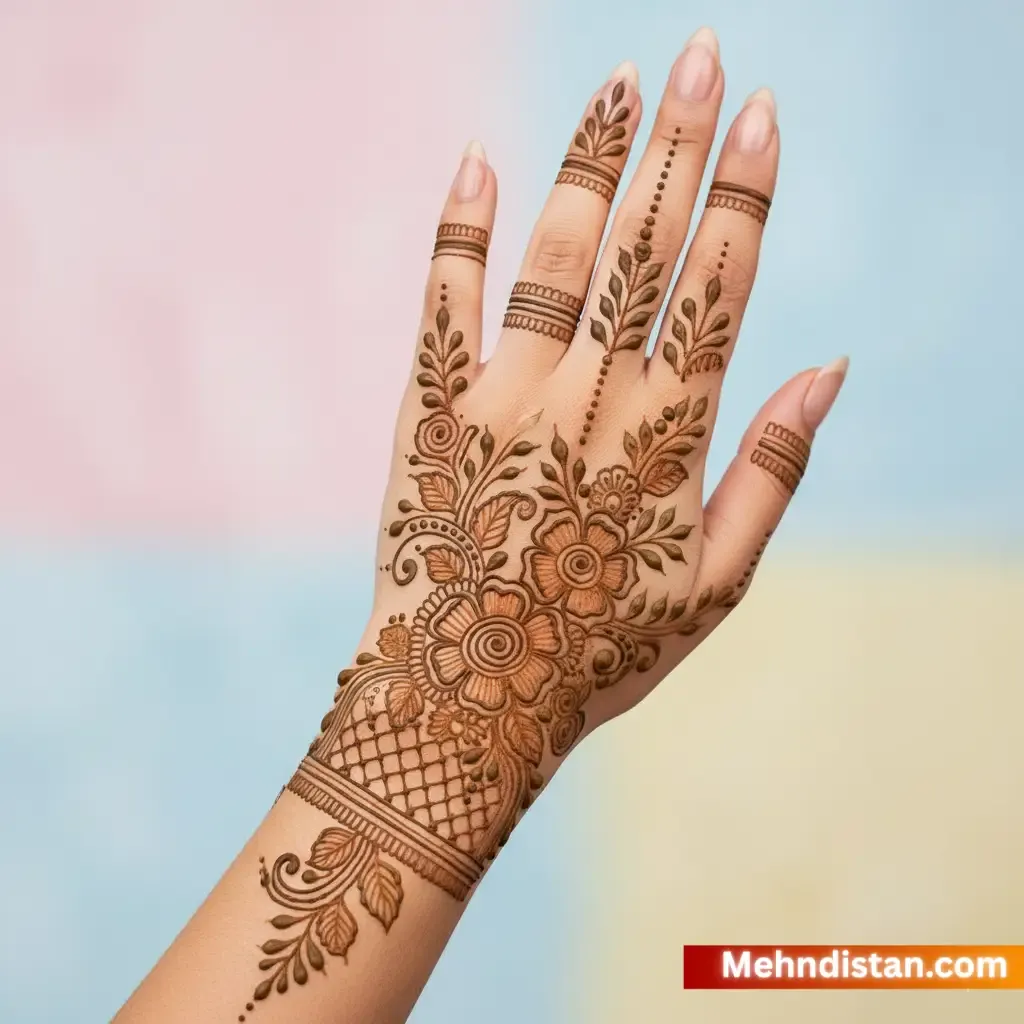
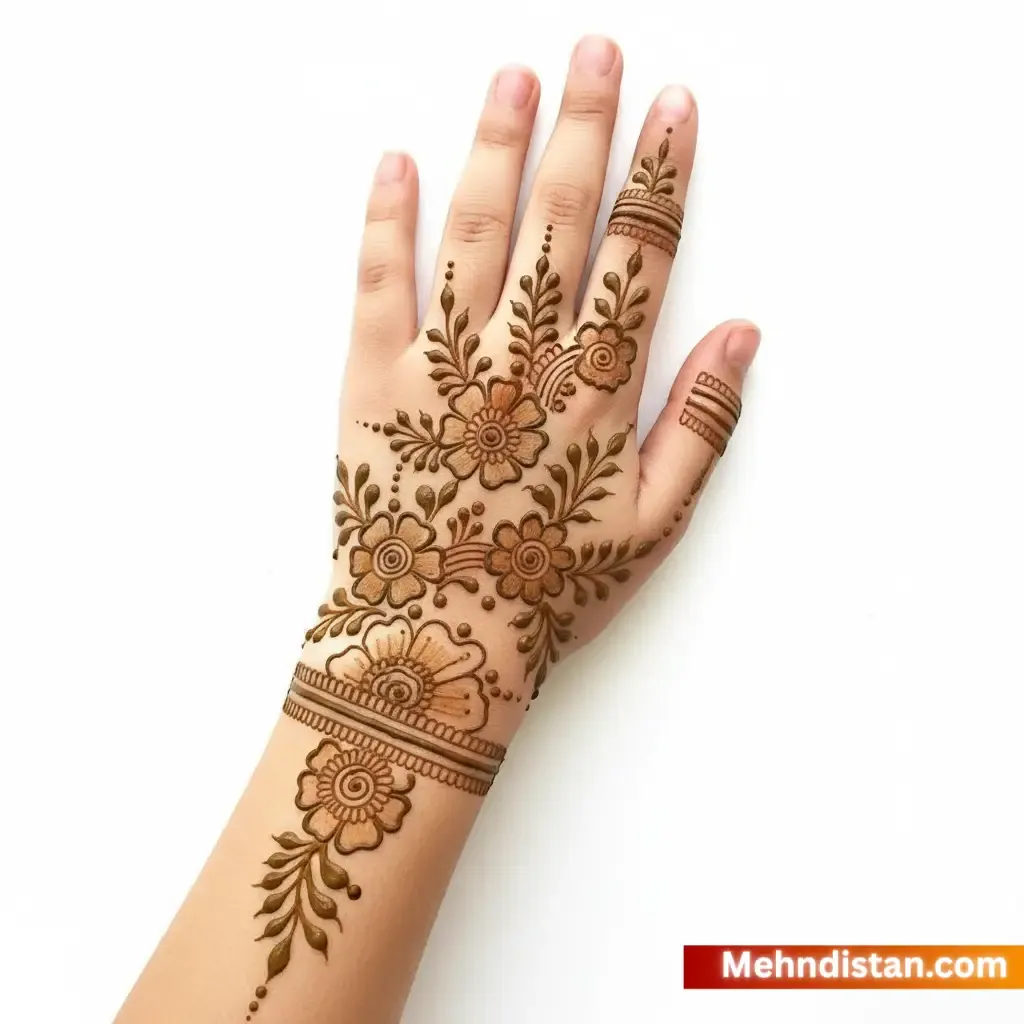
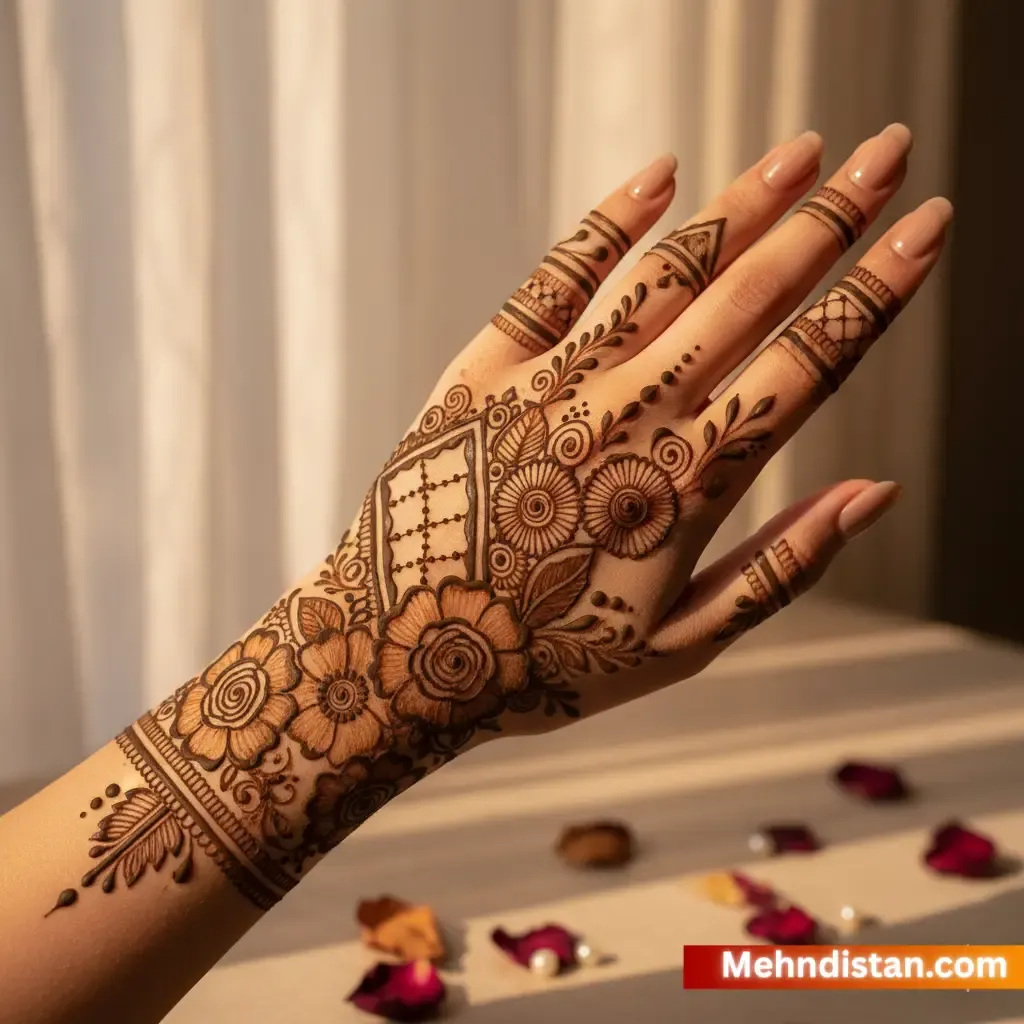
I like these Eid-inspired layouts because they combine festive detail with enough spacing to keep the hand easy to read. I can choose a lighter version for a small celebration or build a fuller composition when I want a more noticeable festive look.
Rabeeca Khan Finger Mehndi Design
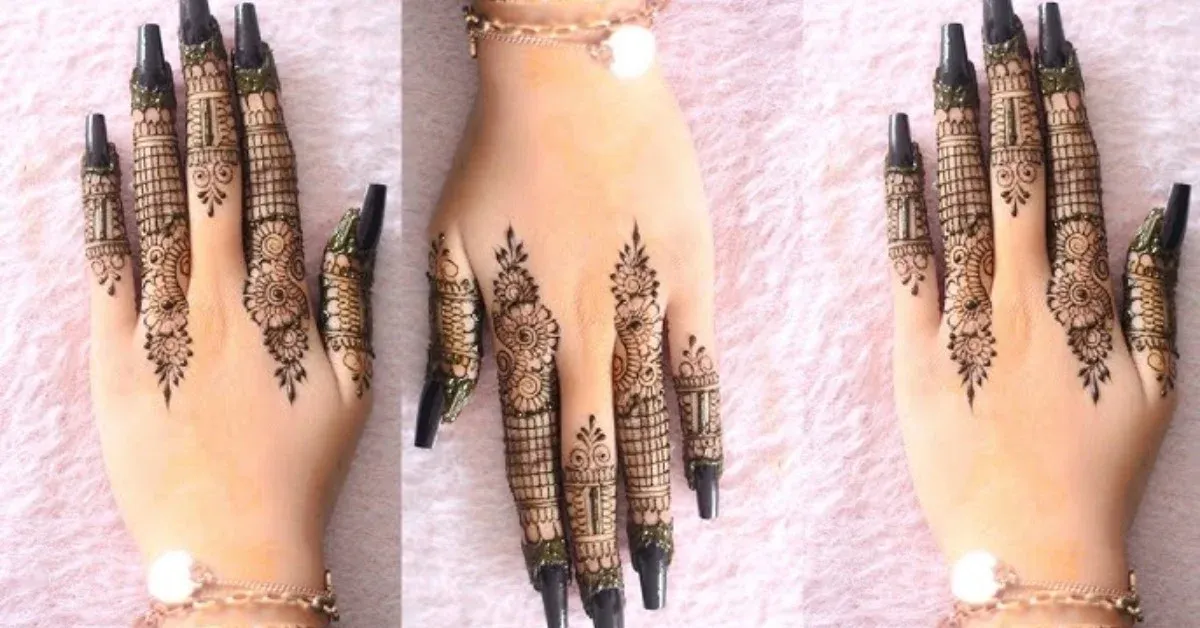
I choose finger mehndi when I want a smaller design that does not cover the whole hand. Fine lines, tiny florals, dots, leafy details, rings, and geometric bands can create a neat result. This style is especially useful when I want the fingers to remain the main feature while keeping the palm relatively open.
- I use a fine-tip cone and controlled pressure when I want crisp finger details.
- I keep the motif placement balanced around the fingers instead of filling every available space.
- I leave some palm space open when I want a cleaner modern finish.
- Do: Clean and dry the application area before starting.
- Don’t: Avoid unnecessary movement while the paste is drying so fine lines are less likely to smudge.
- I can usually finish a small finger layout faster than a full-hand design.
- I also find the lighter coverage more practical when I need to keep my hands relatively free.
- I can pair the clean finger pattern with rings without making the overall look feel too busy.
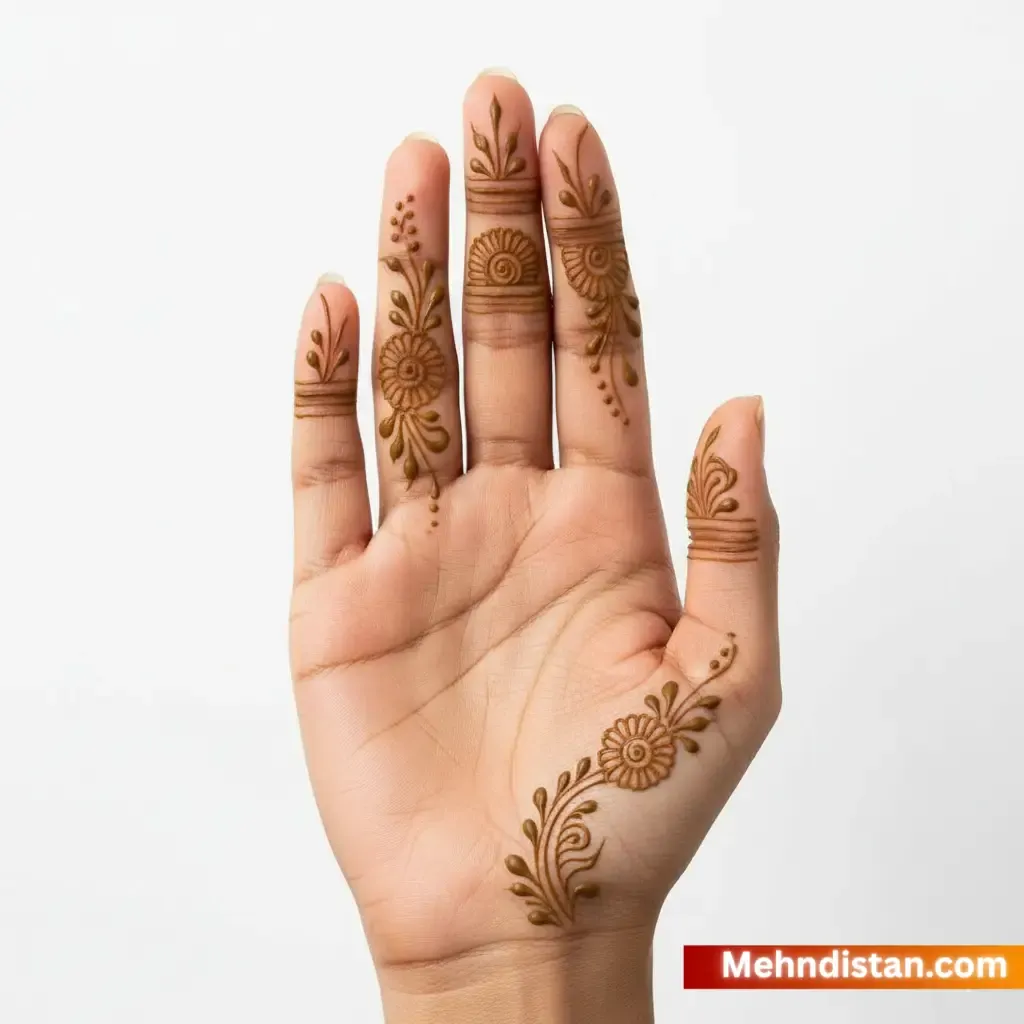
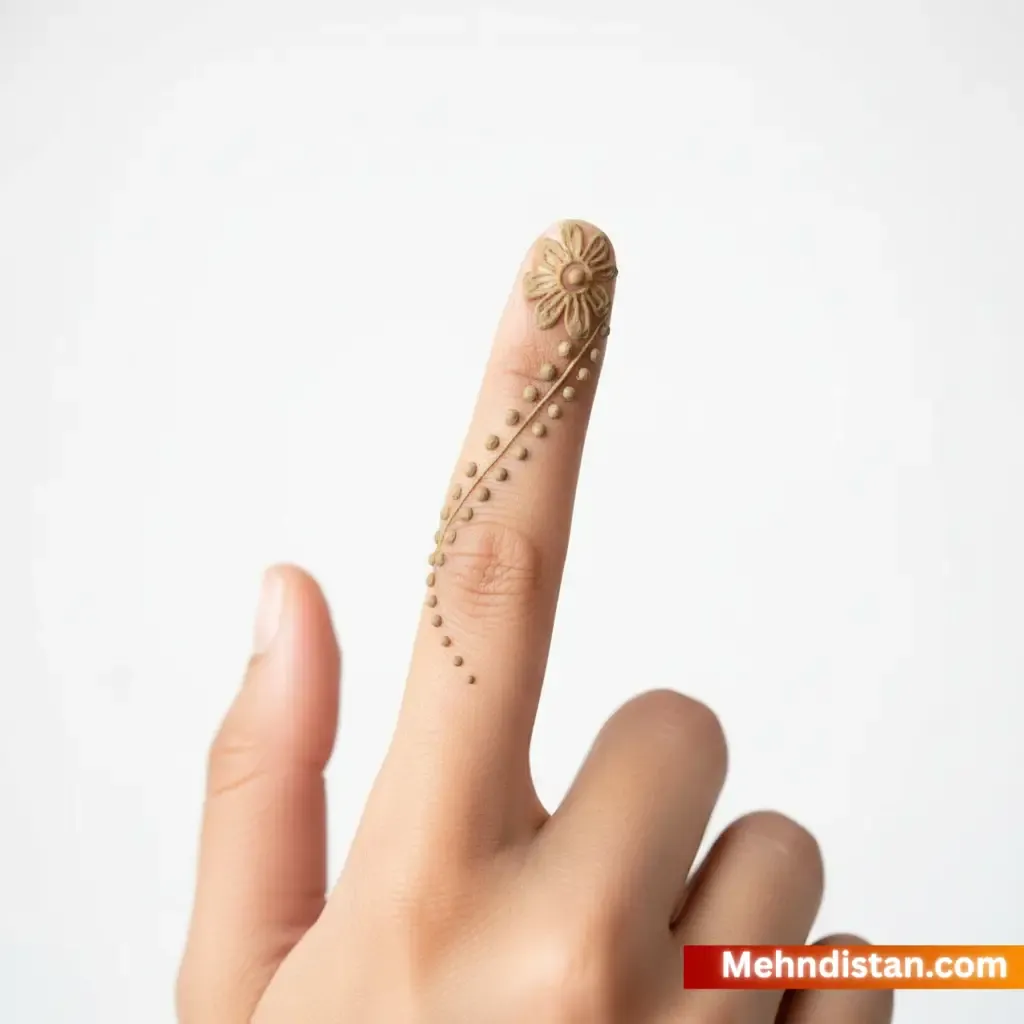
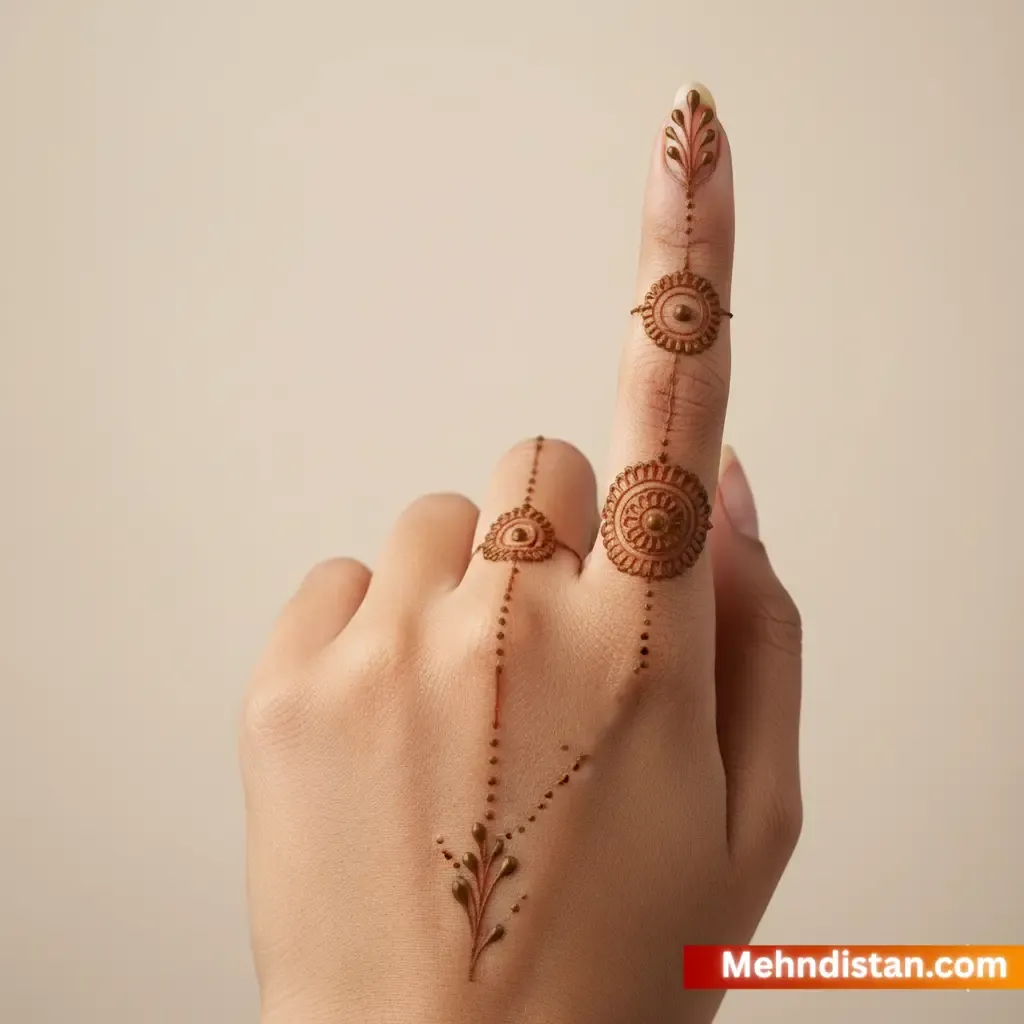
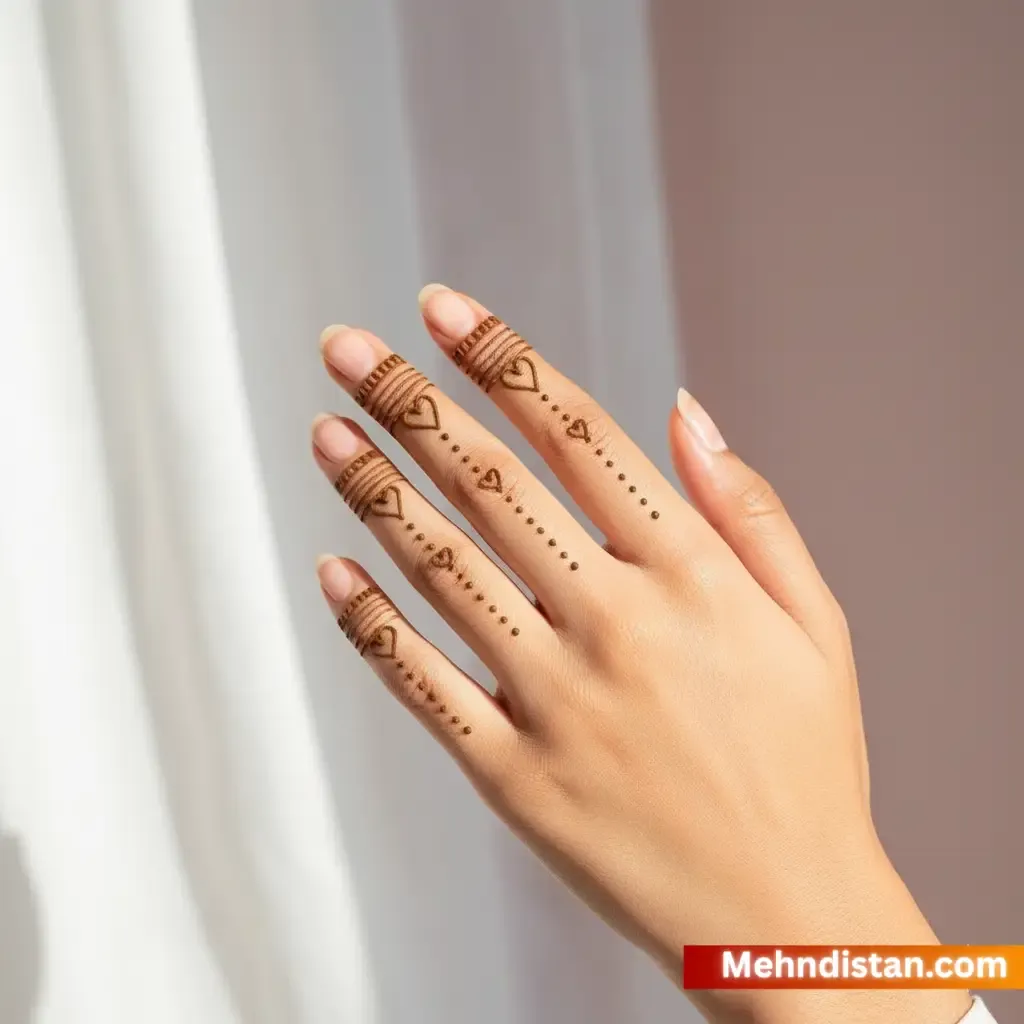
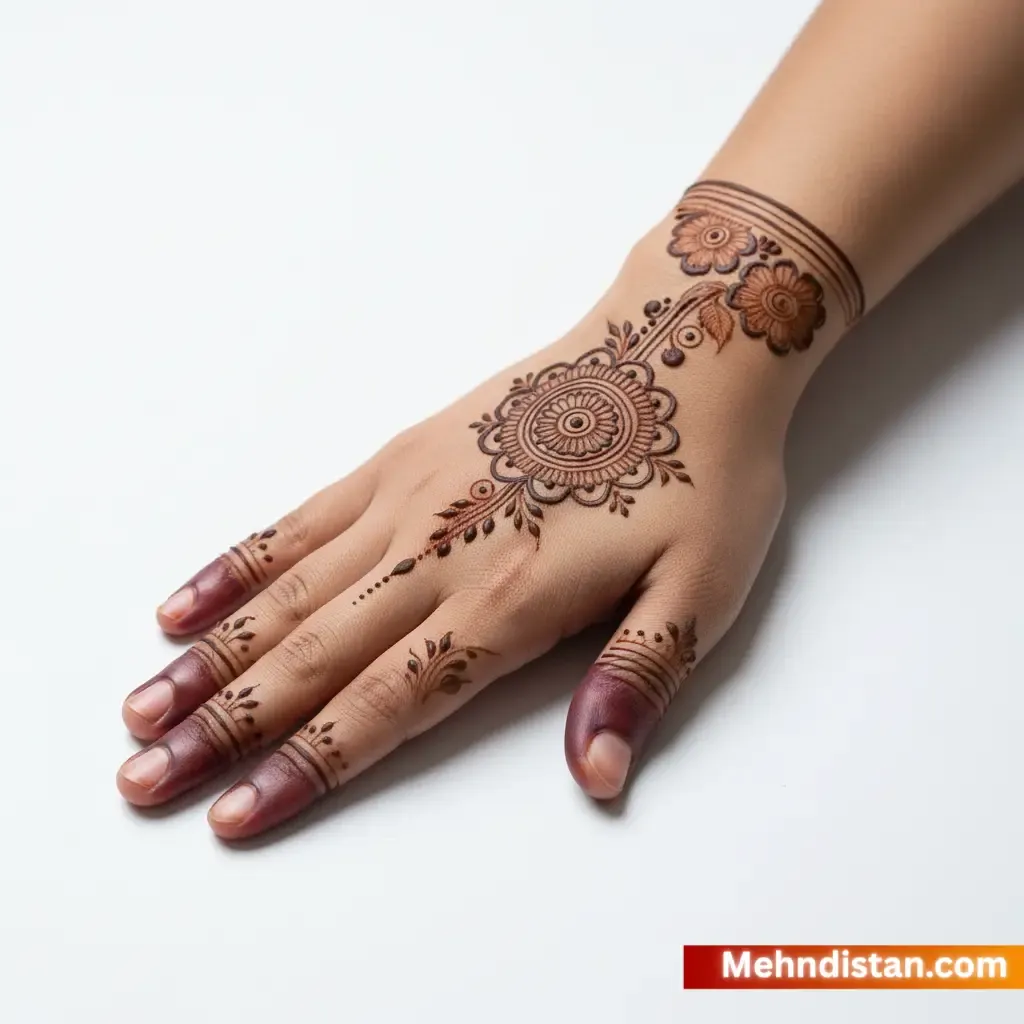
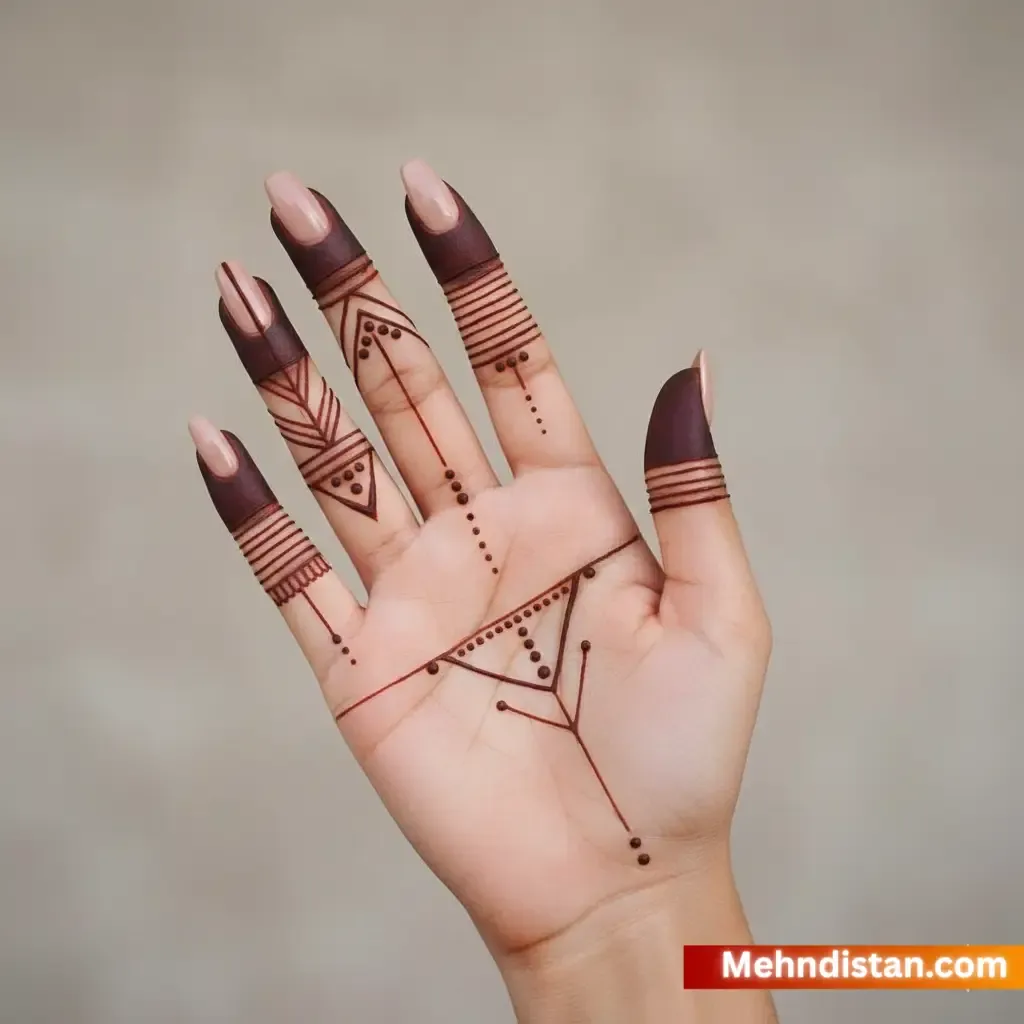
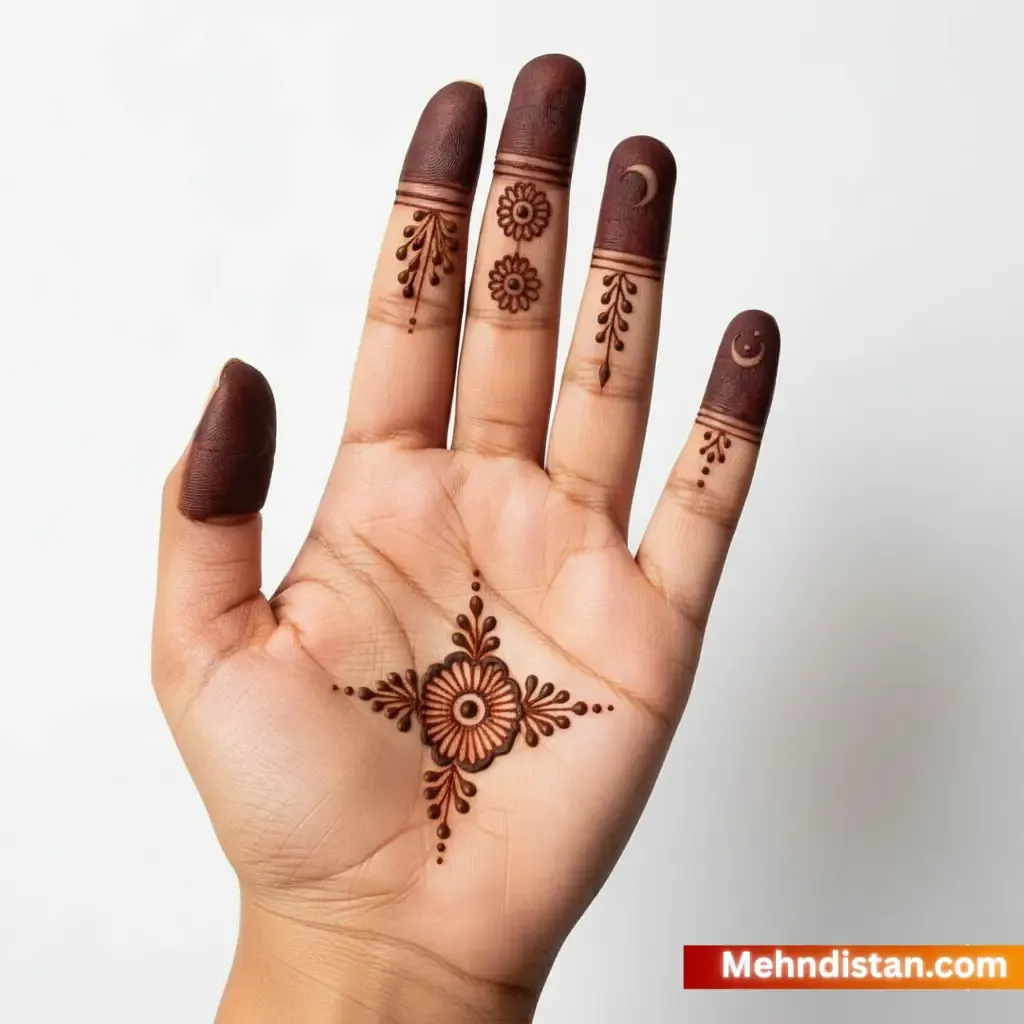
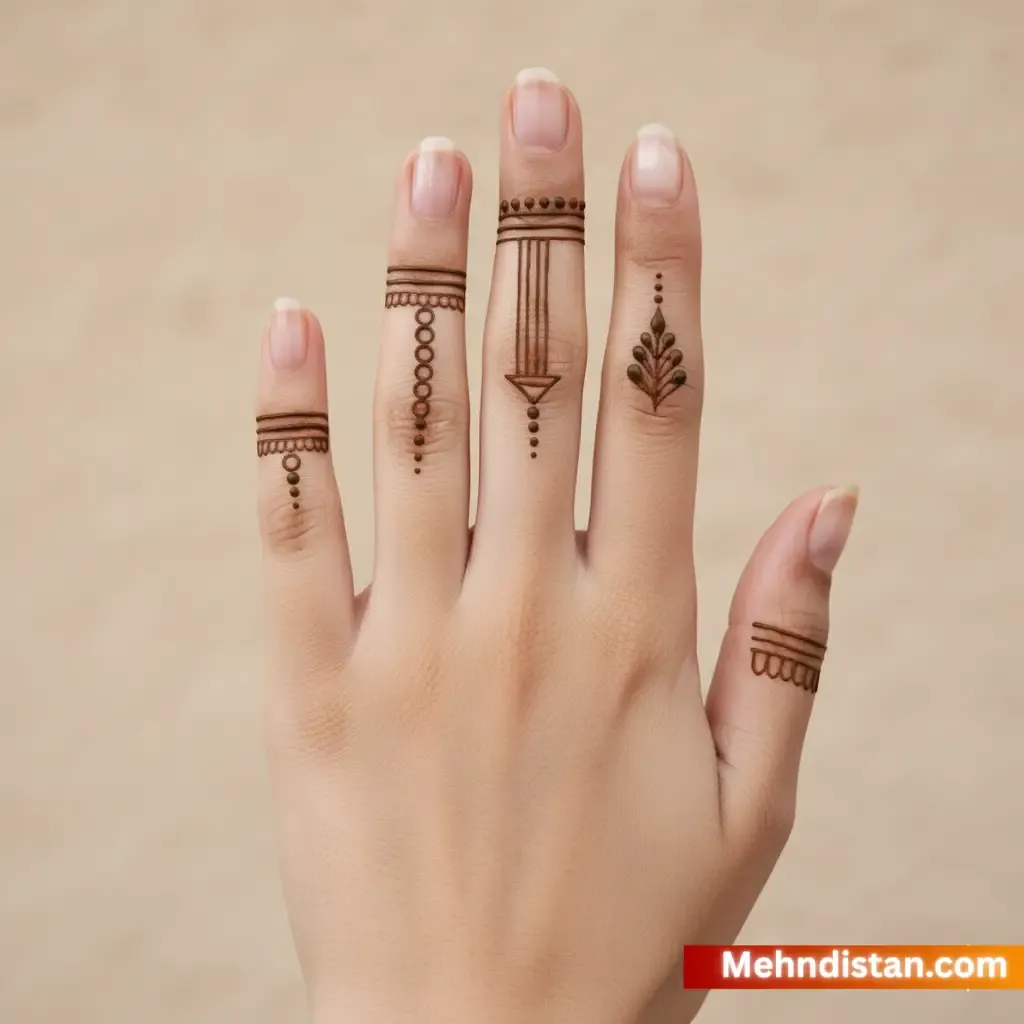
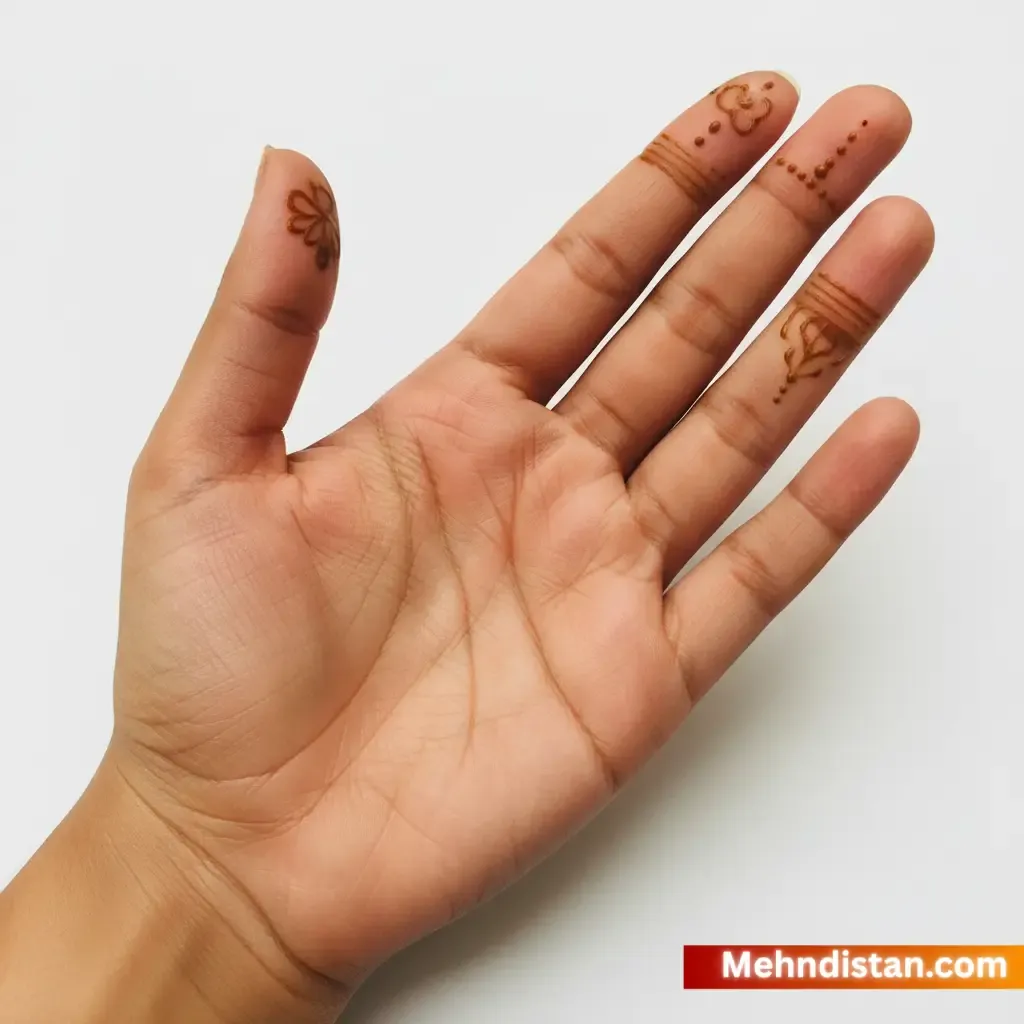
I find finger-focused patterns useful when I want a minimal look for a small gathering, casual event, or everyday style. The lighter coverage also lets me keep the palm open while still adding a clear mehndi detail to the hand.
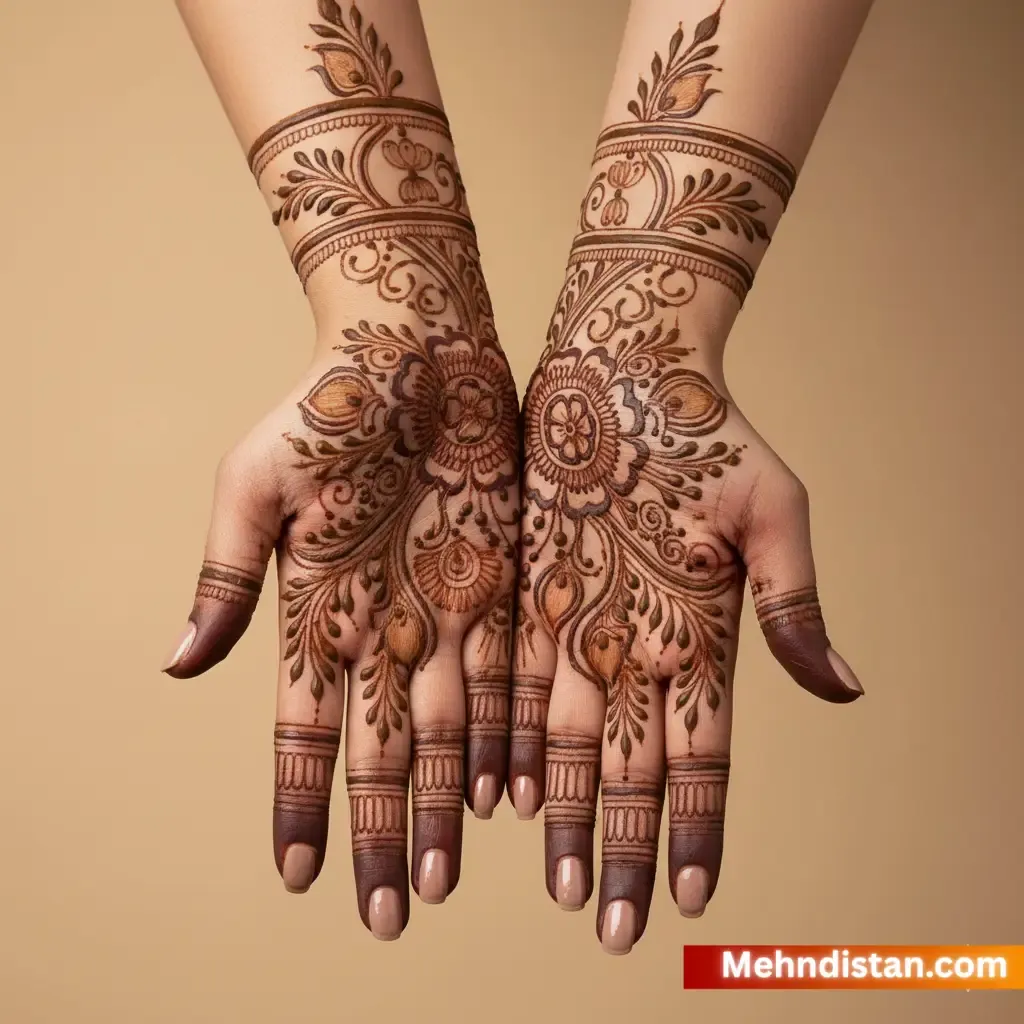
Rabeeca Khan Mehndi Design Front Hand
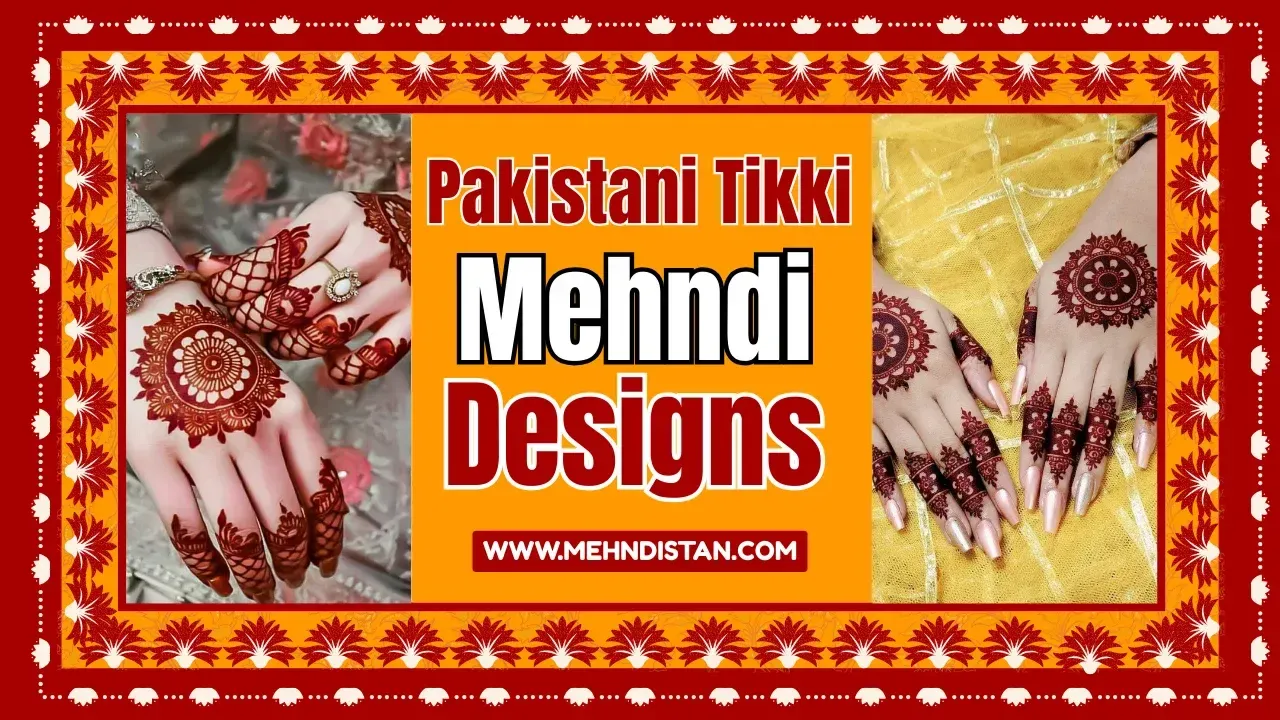
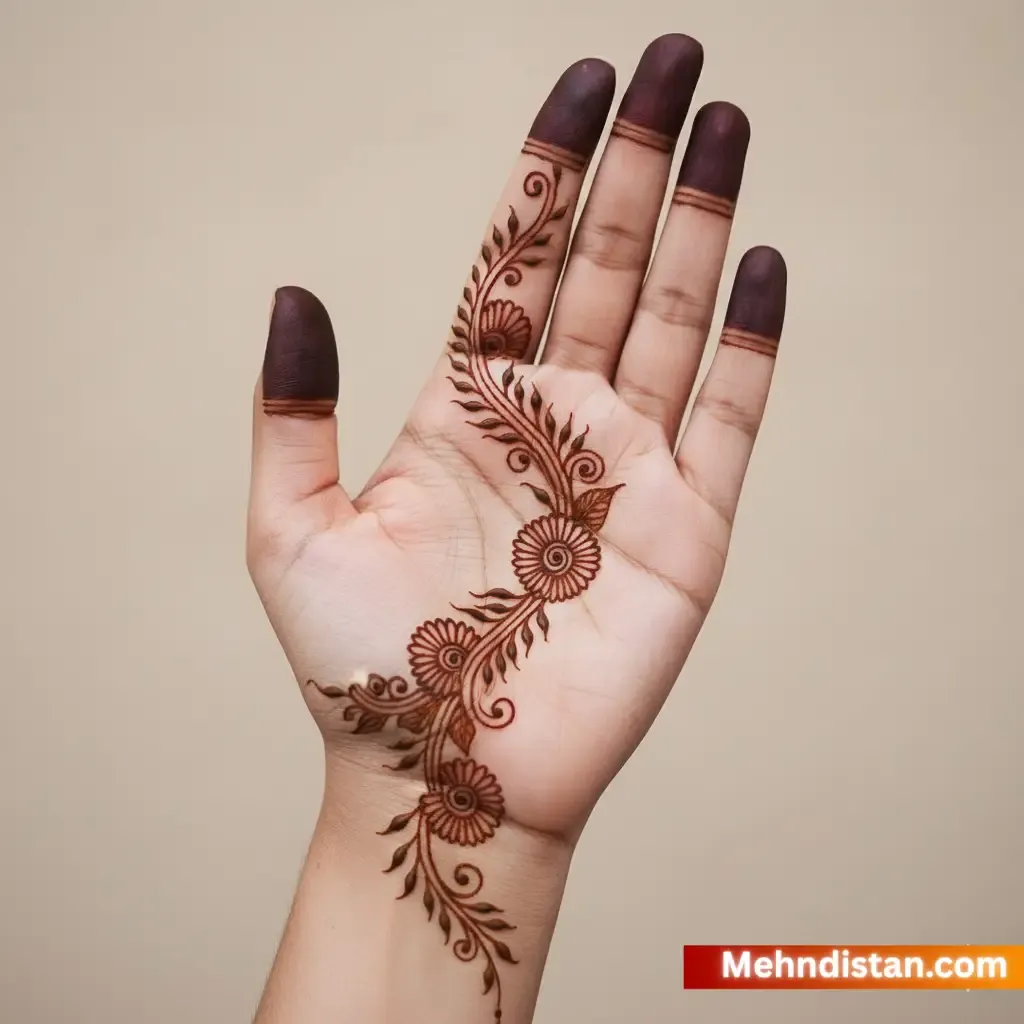
For a front-hand Rabeeca Khan mehndi design, I look for a composition that fills the palm thoughtfully while keeping the central motif easy to recognize. Floral arrangements, mandala-style centers, fine fillers, leafy trails, and fingertip details can all be combined. I use the gallery below to compare how different layouts handle the palm, fingers, and wrist.
- I plan the composition from the fingertips toward the palm so the elements connect naturally.
- I keep repeated circles and curved elements as even as possible for a balanced finish.
- I choose a suitable natural henna product and follow its application and aftercare instructions rather than expecting every product to produce the same stain.
- Do: Work in comfortable lighting where I can clearly see fine details.
- Don’t: Avoid forcing the paste to dry with excessive heat.
- I like the fuller visual impact when the palm has a well-planned central motif.
- I find that detailed front-hand layouts make fine line work and spacing especially noticeable.
- I make the main design easy to see because the palm often appears clearly in close-up photographs.
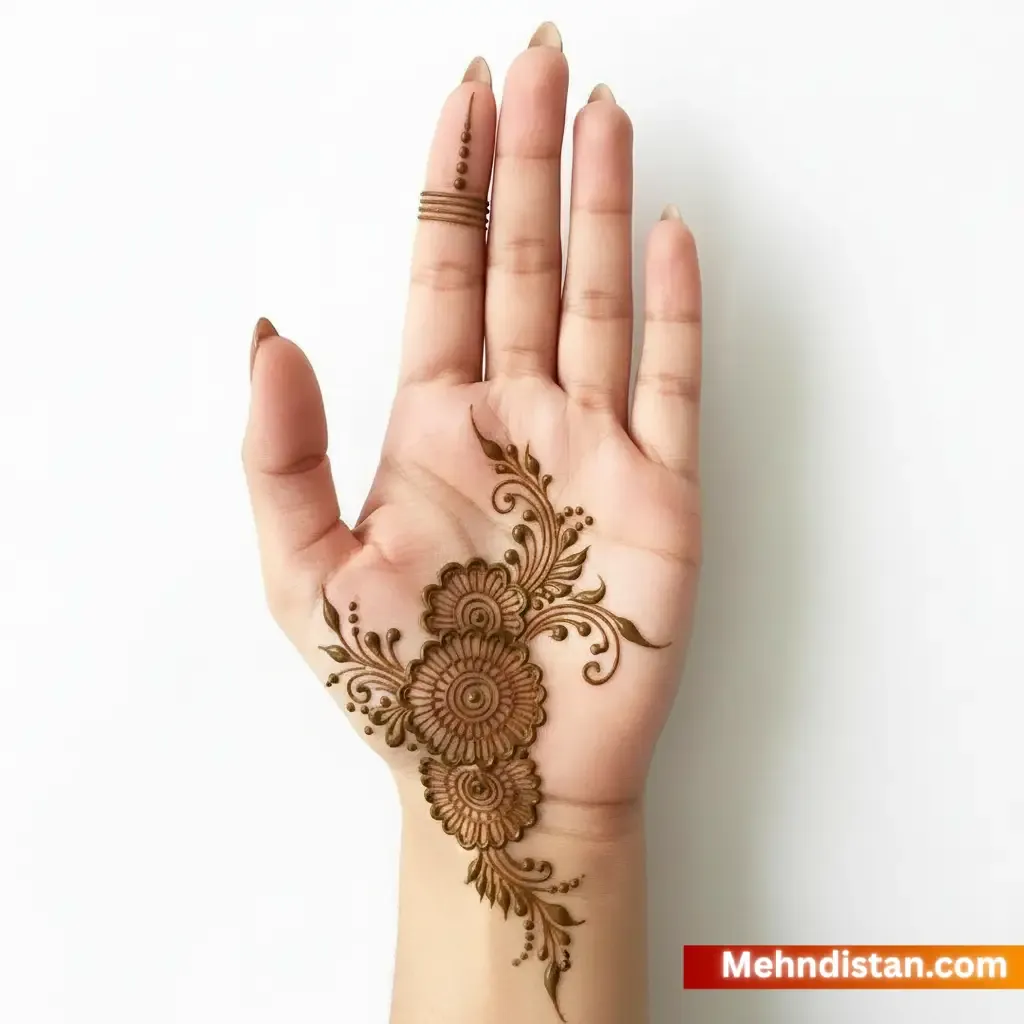
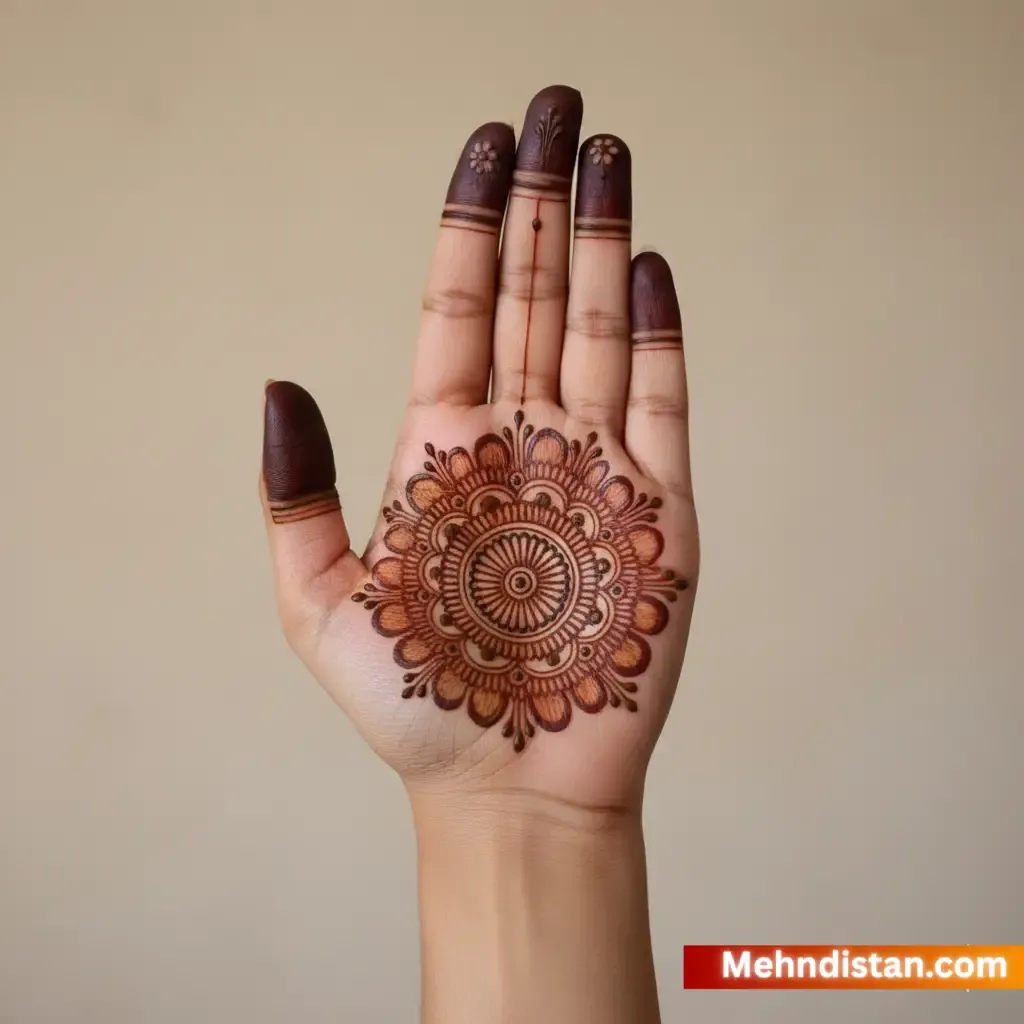
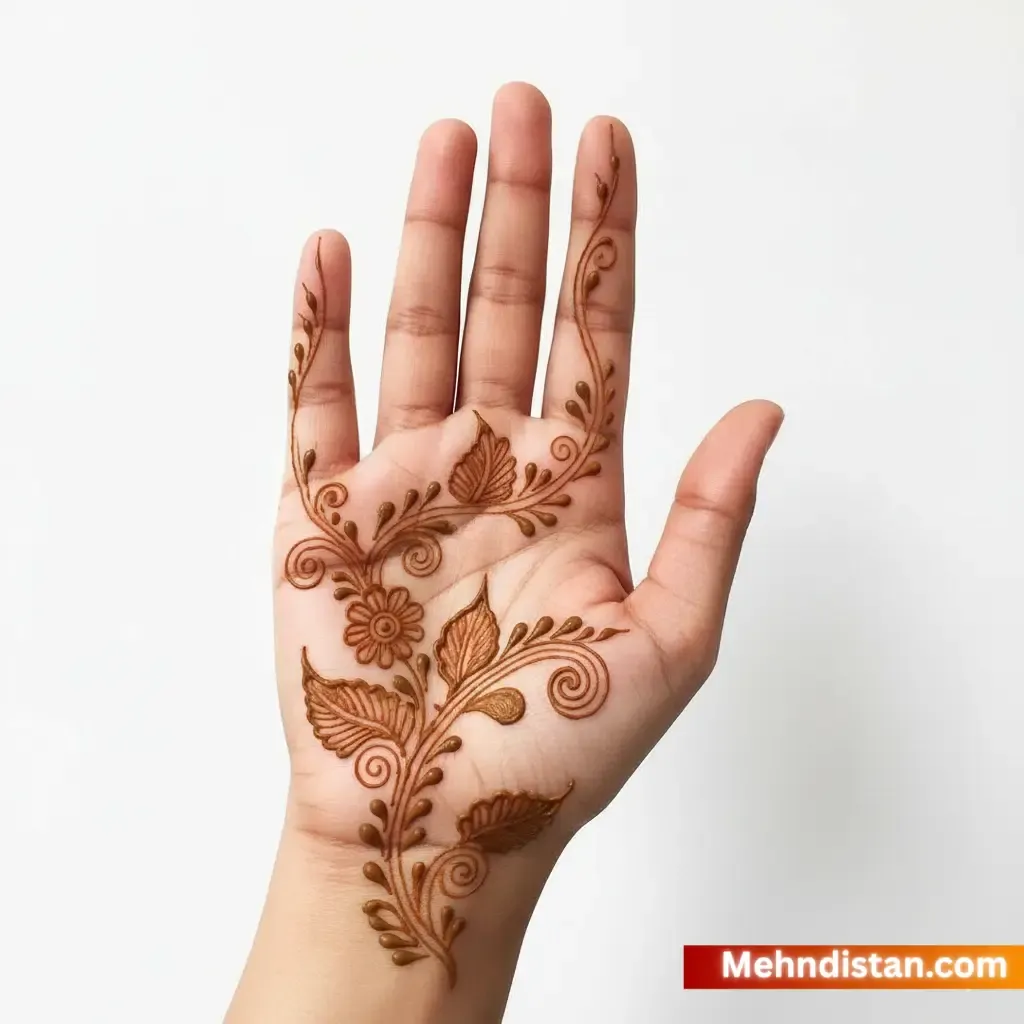
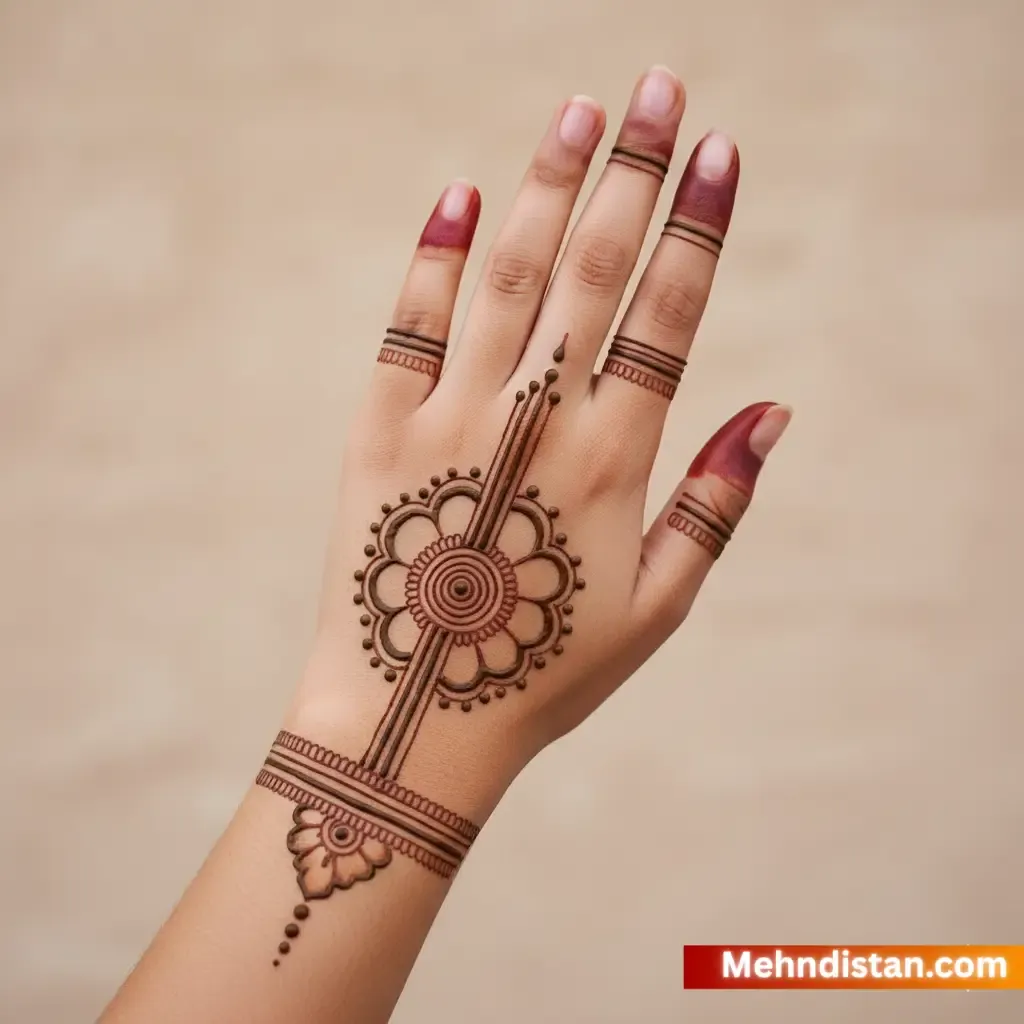
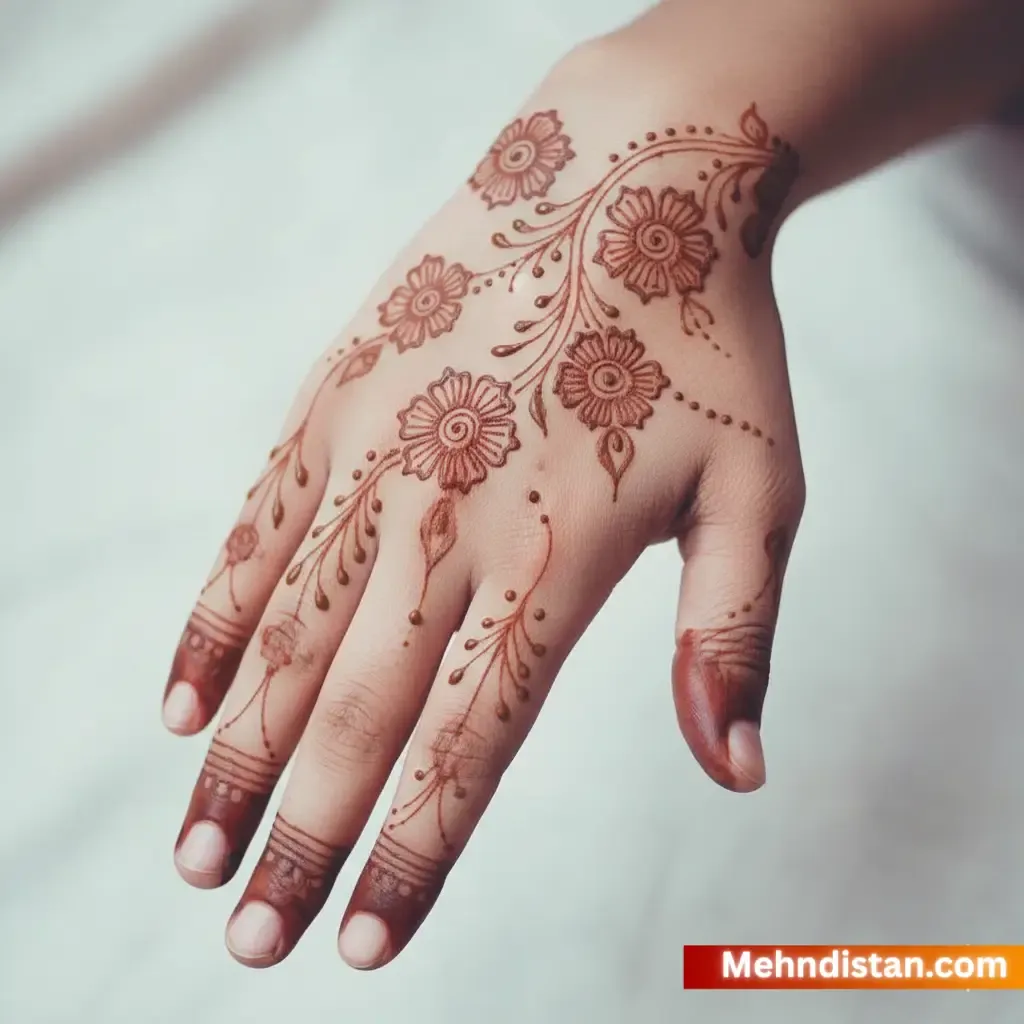
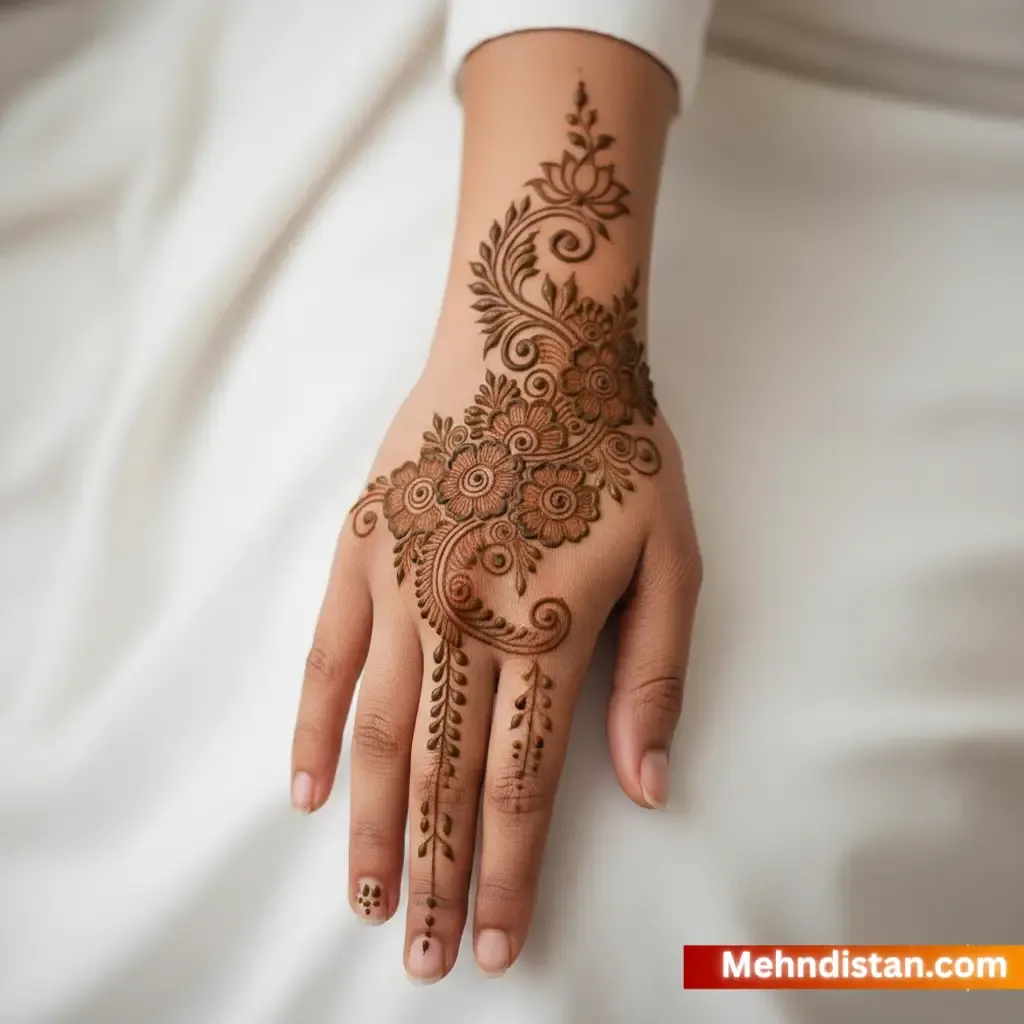
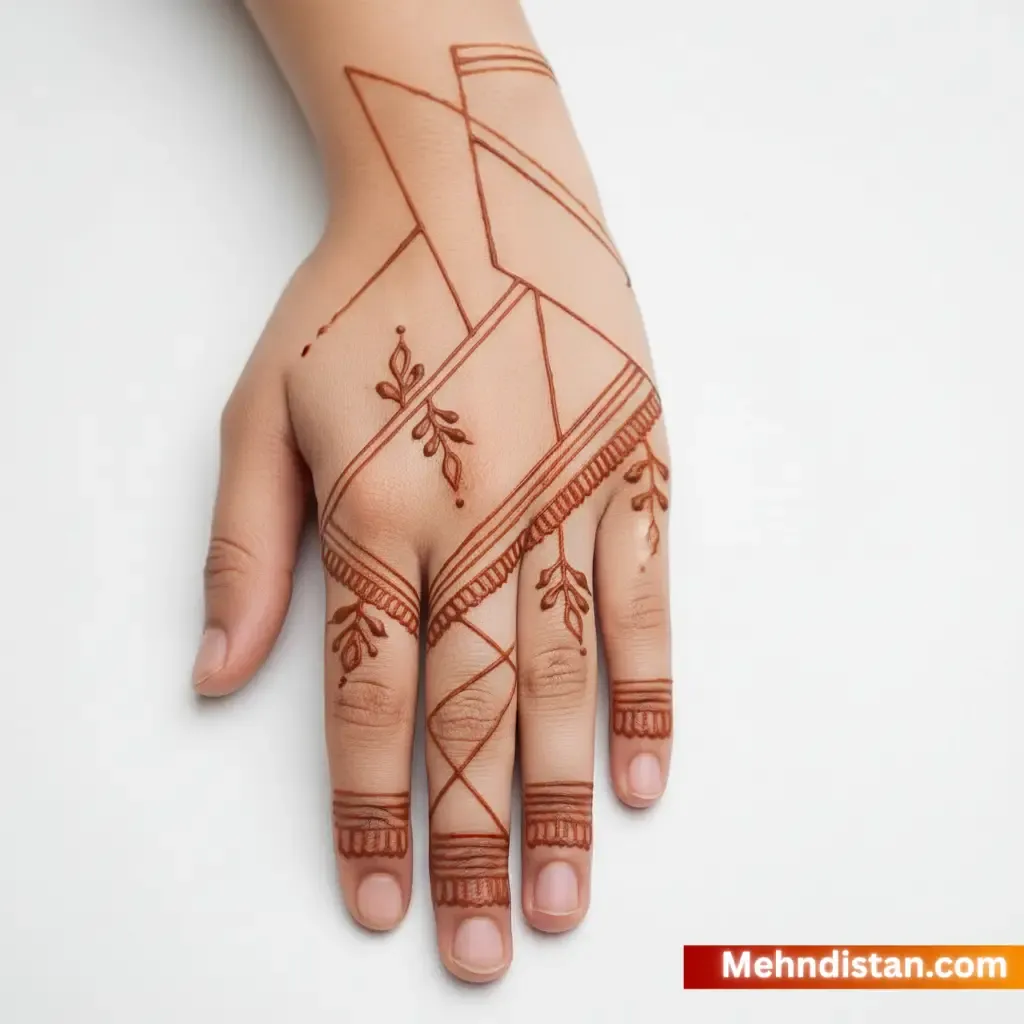
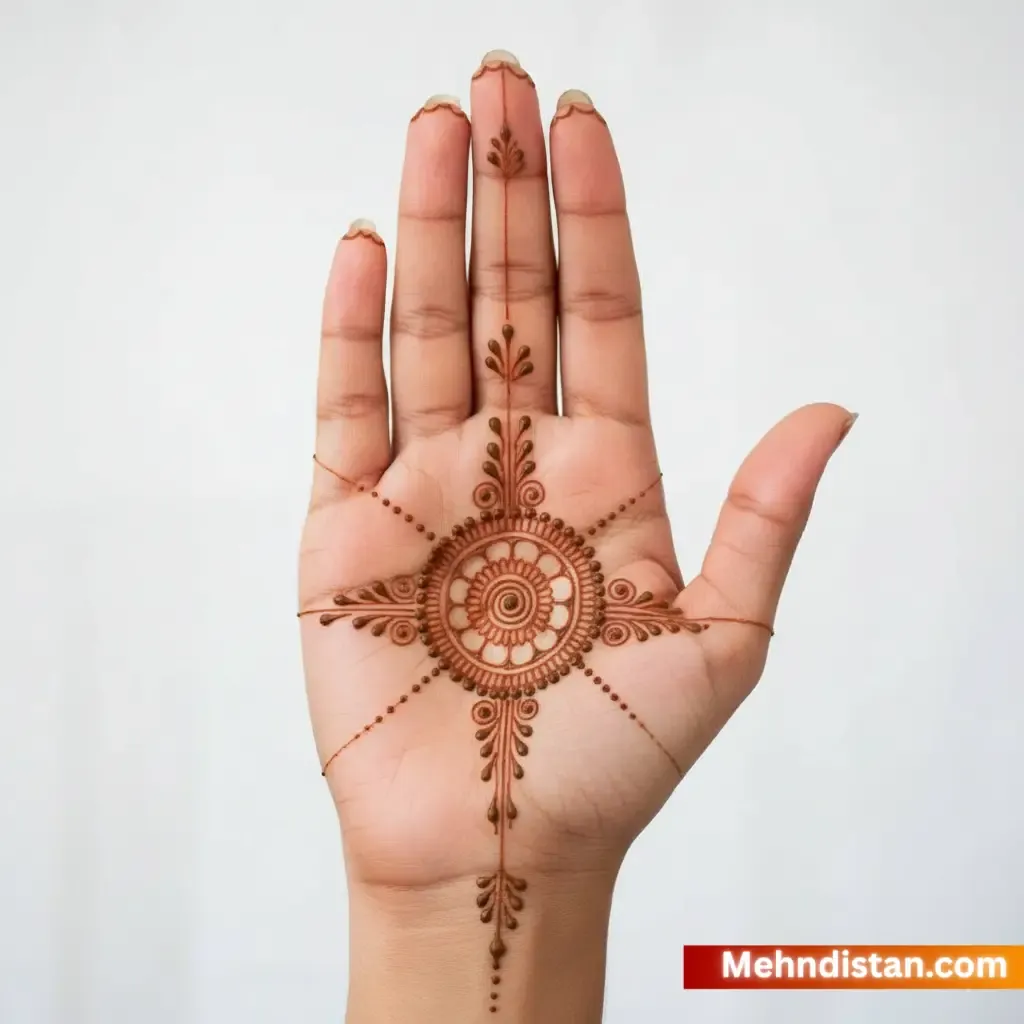
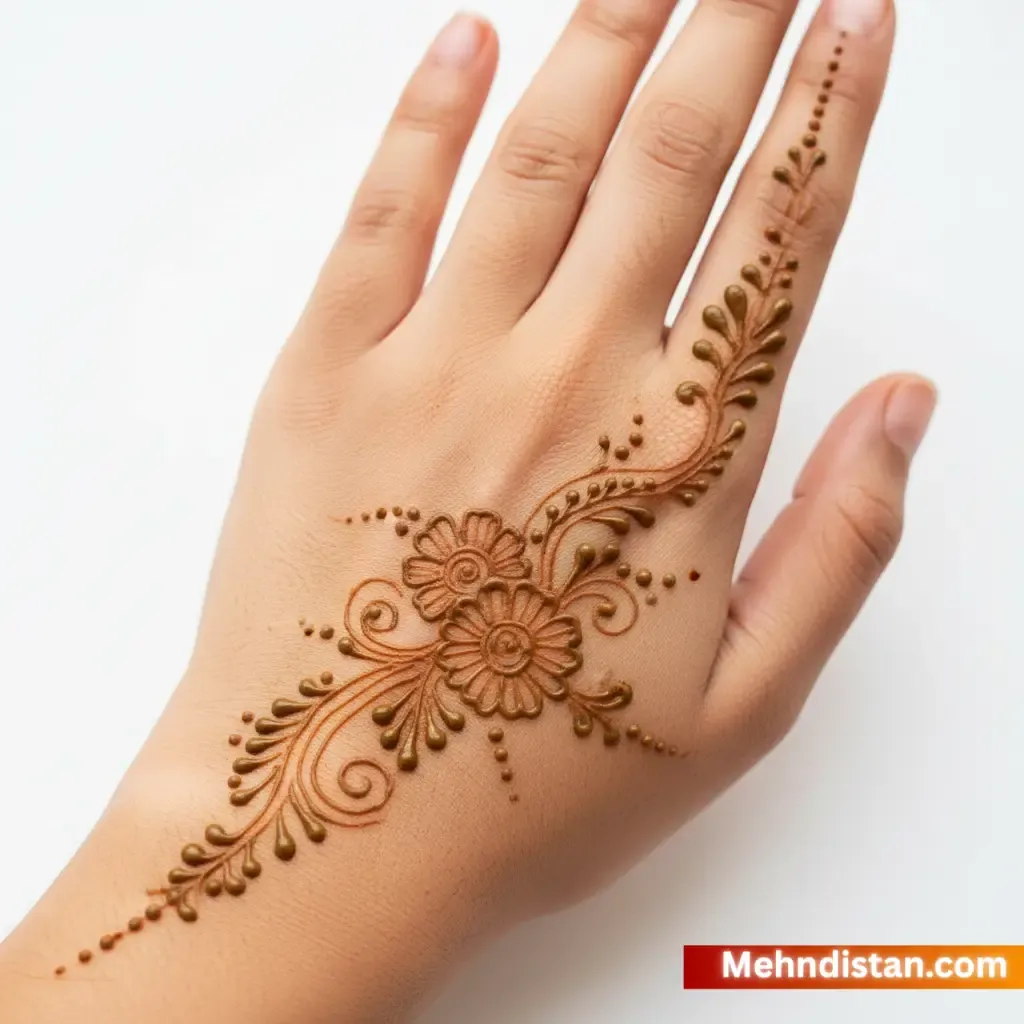
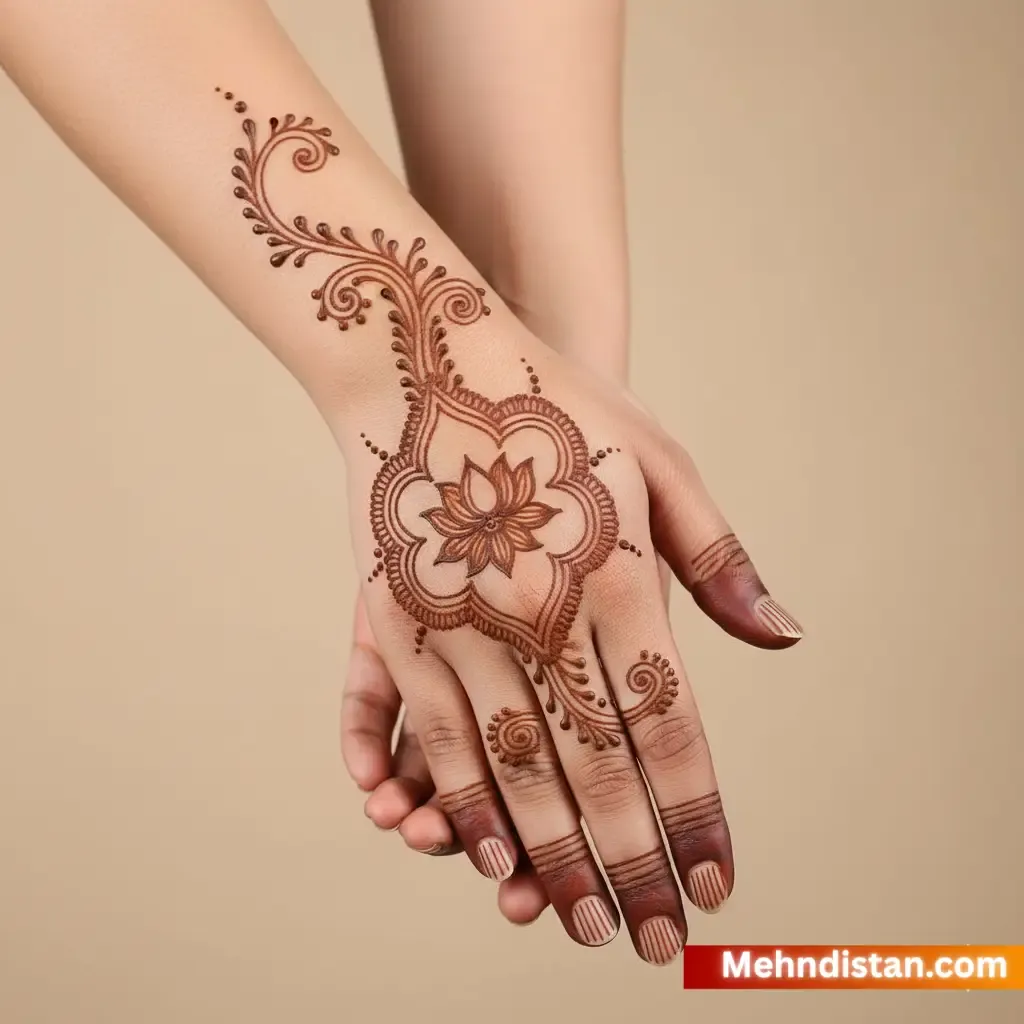
A detailed front-hand layout can create a strong festive look, especially when the central motif, fingertip work, and wrist connection are kept visually consistent. I choose the amount of coverage according to the event instead of assuming that a heavier design is always better.
Rabeeca Khan Mehndi Design Arabic
Arabic-inspired Rabeeca Khan mehndi design ideas usually stand out through flowing trails, leafy shapes, bold outlines, and purposeful empty space. I like this style when I want the hand to look elegant without covering every area. The gallery below gives me several ways to combine large floral motifs with smaller connecting details.
- I leave intentional gaps between major motifs so the Arabic layout stays airy and readable.
- I use confident strokes for larger petals and keep fine details around them controlled.
- I add shading selectively so the larger floral elements have depth without becoming visually heavy.
- Do: Keep my hand steady and use consistent pressure for clean outlines.
- Don’t: I avoid inconsistent line thickness because it can make the pattern look uneven.
- I like the elegant movement created by flowing trails and open areas.
- I can choose a lighter Arabic layout when I want less coverage than a traditional full bridal pattern.
- I prefer clear outlines because they help the main shapes remain recognizable as the stain develops.
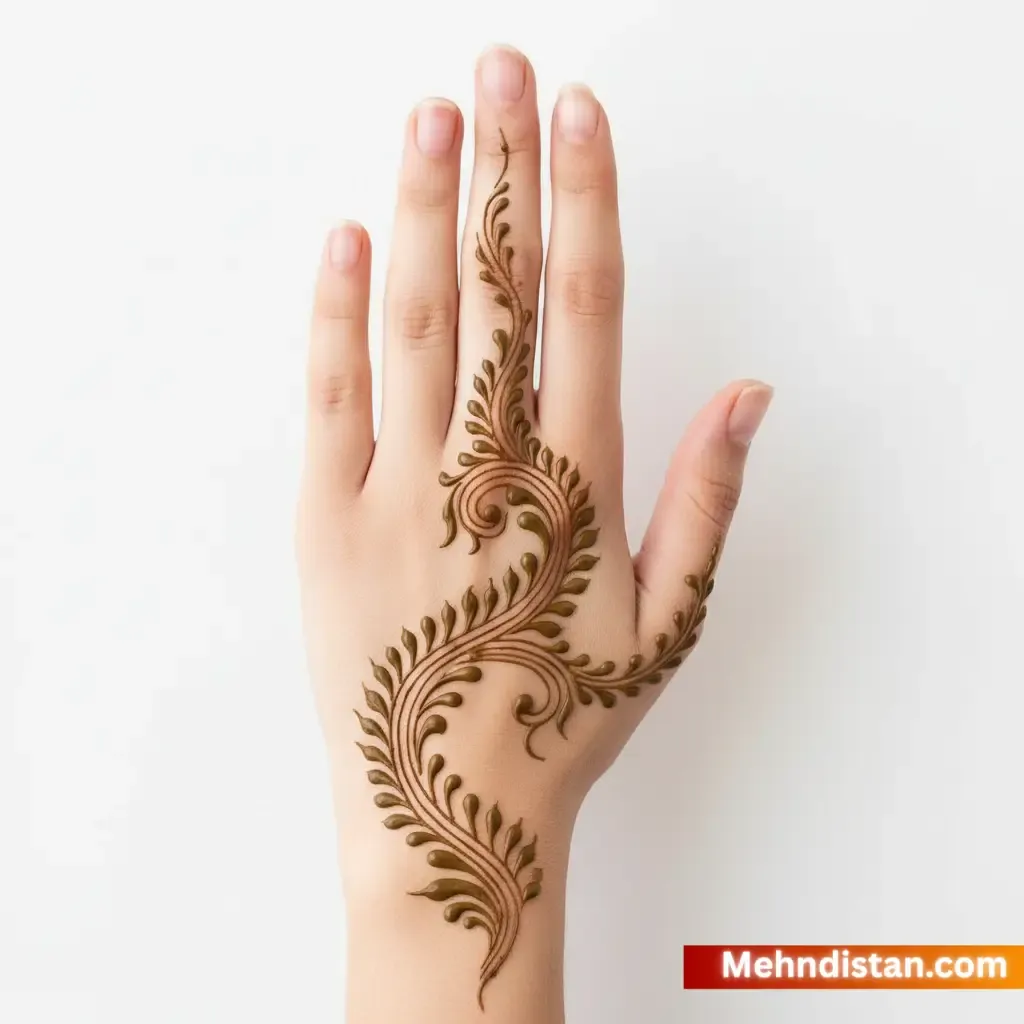
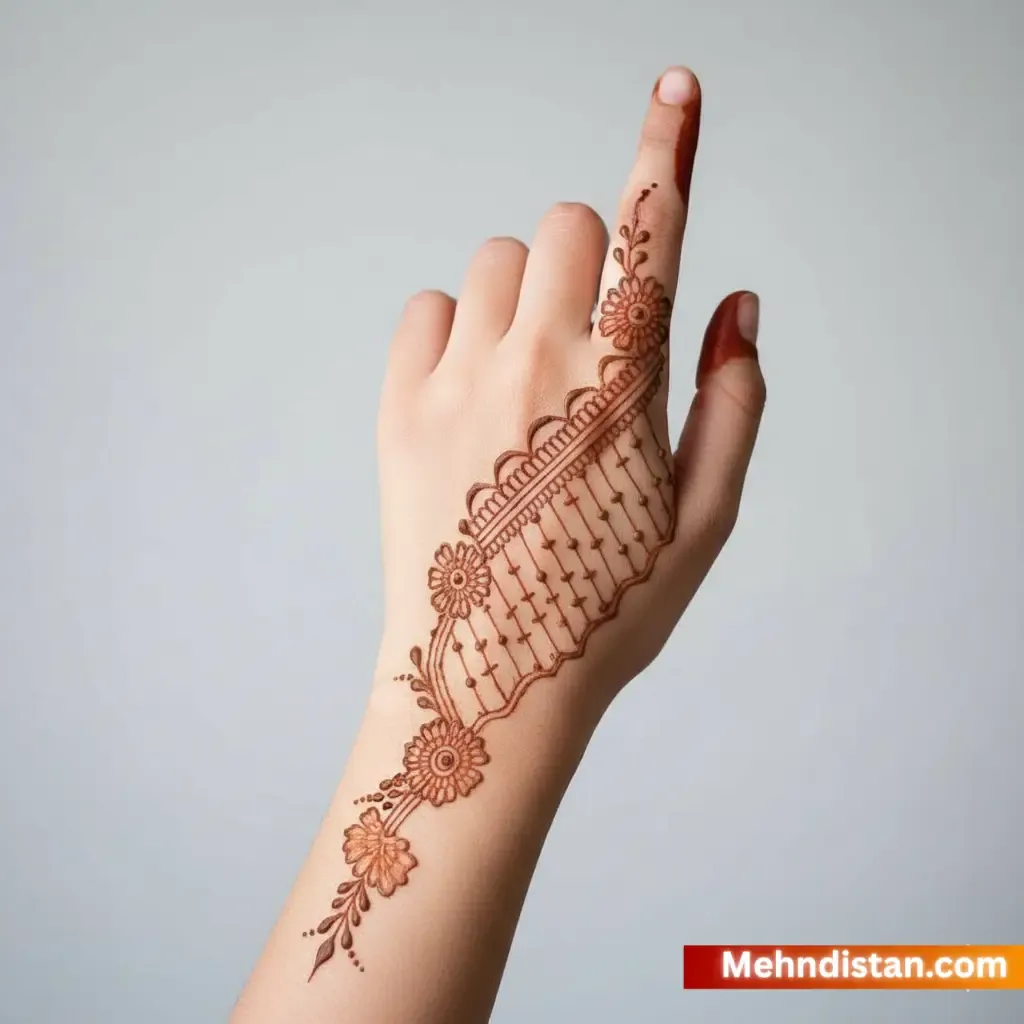
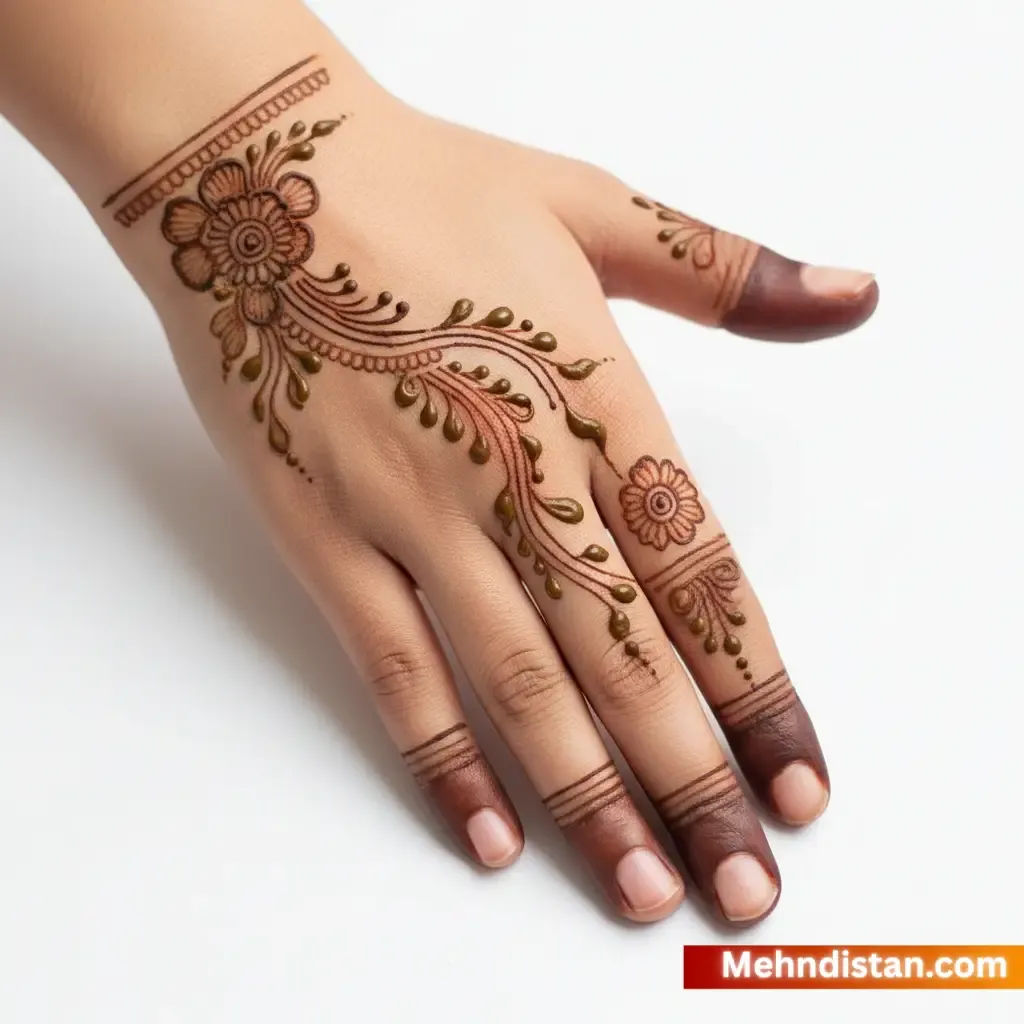
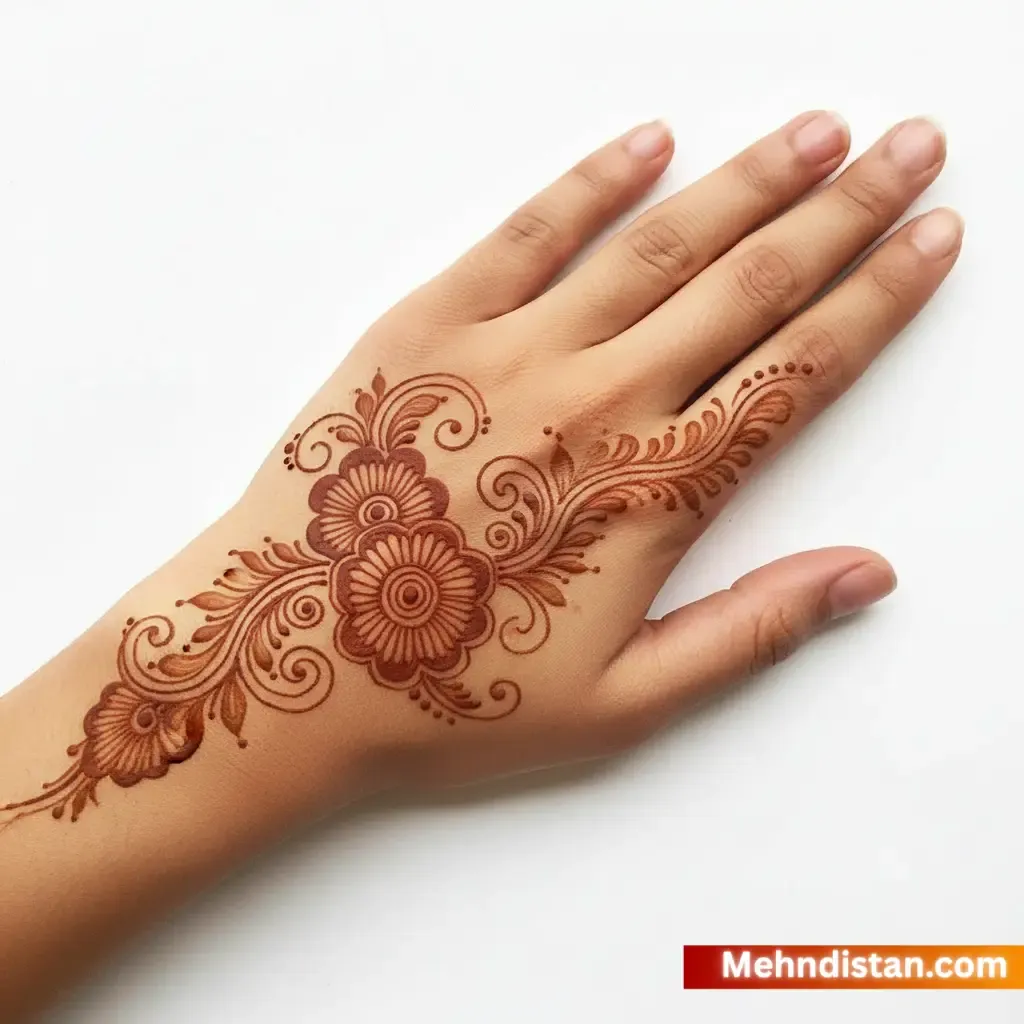
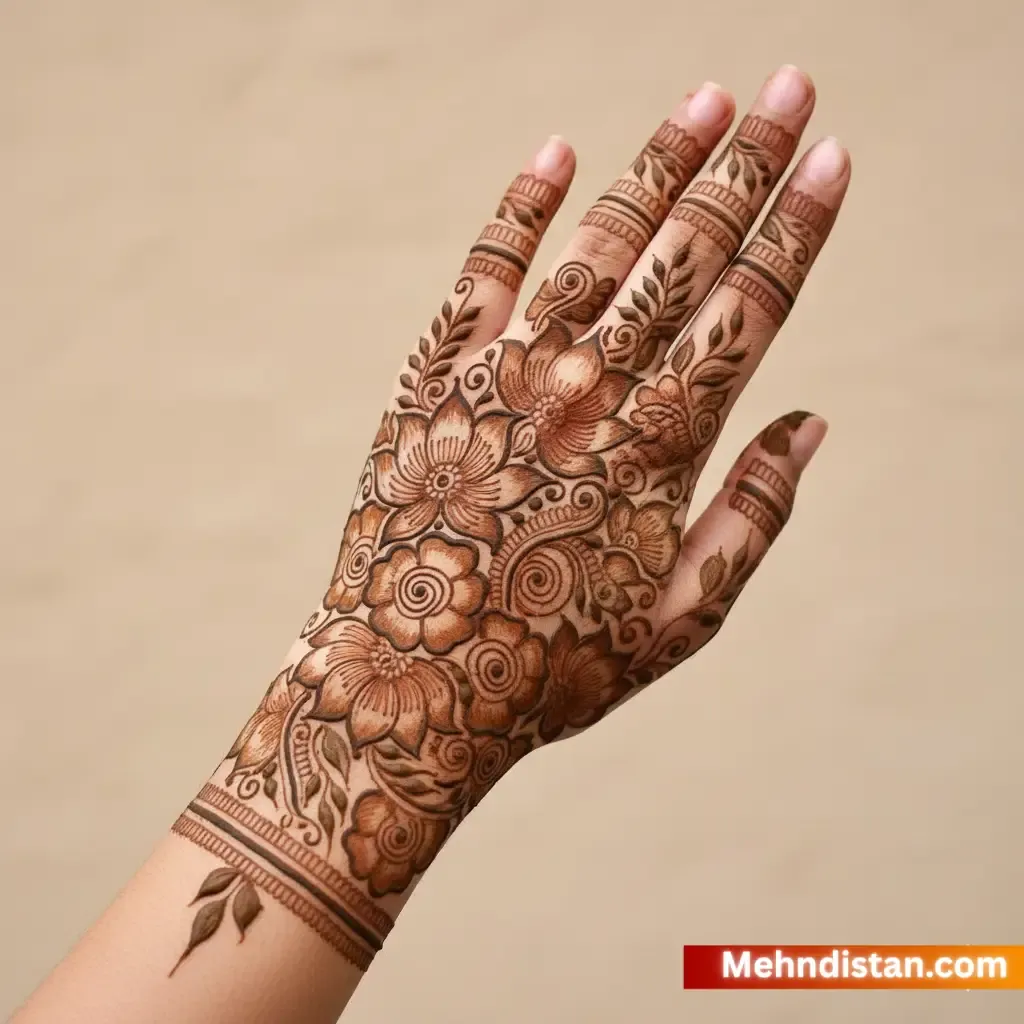
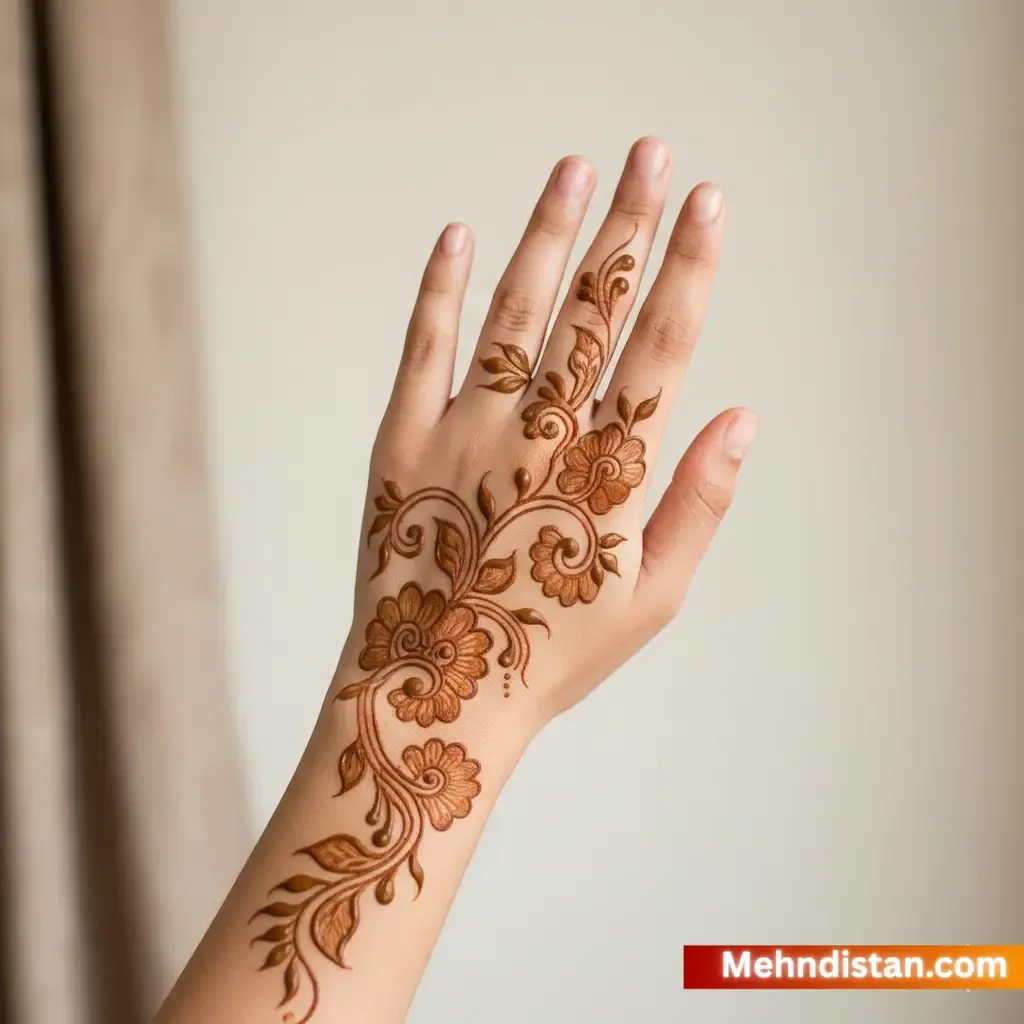
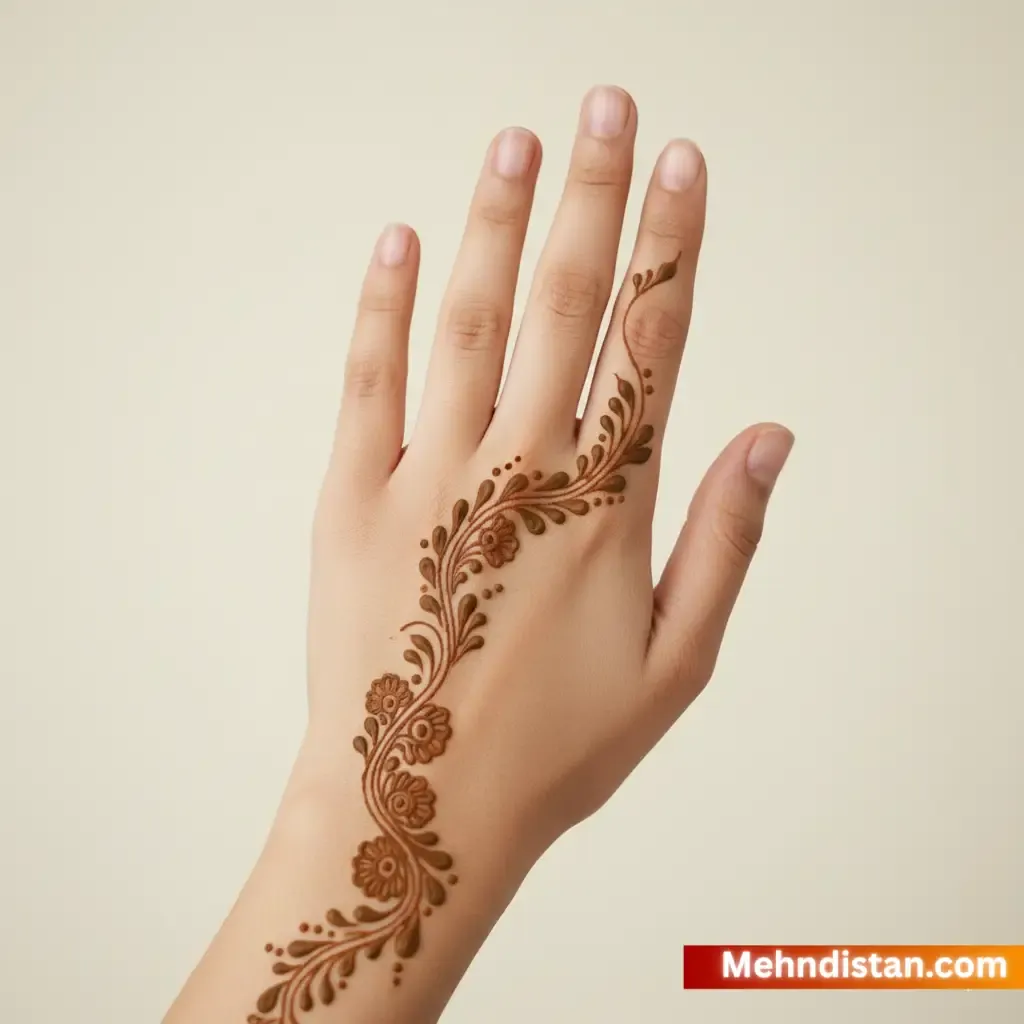
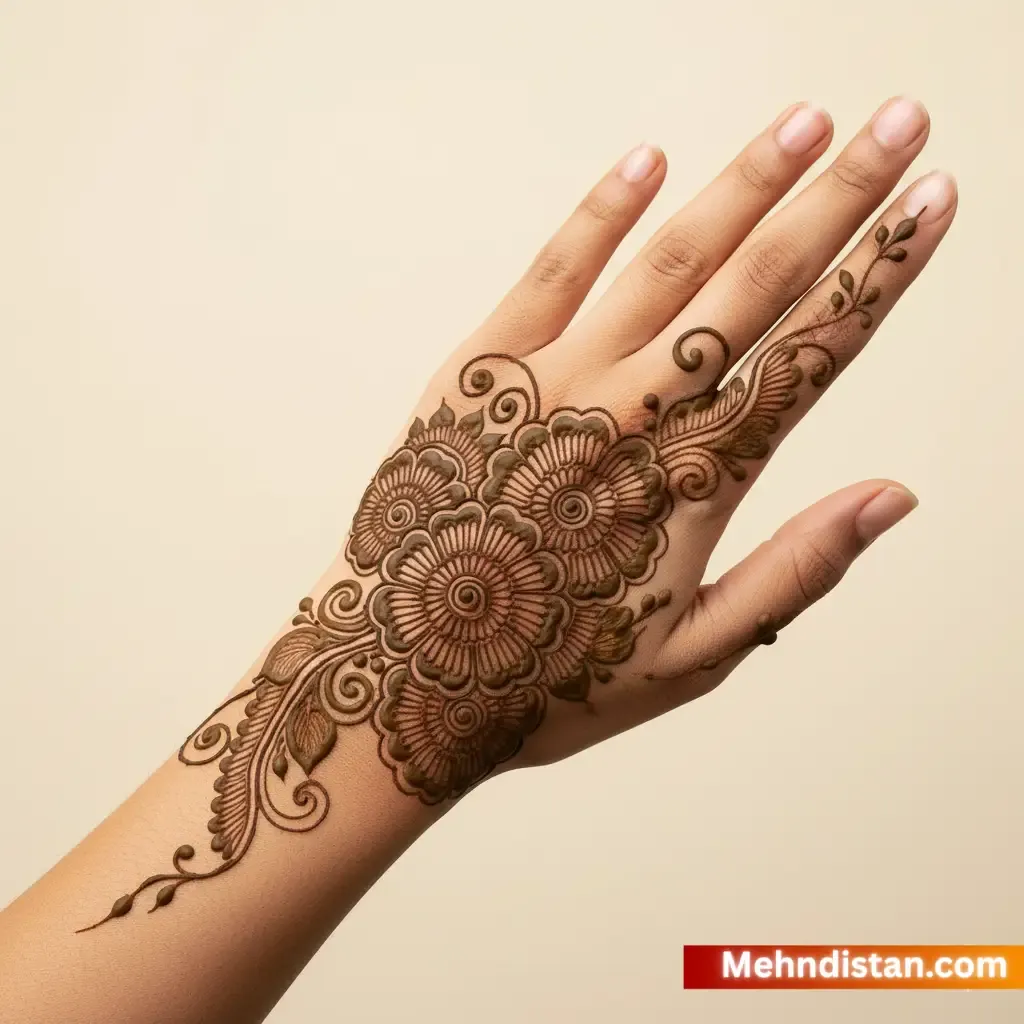
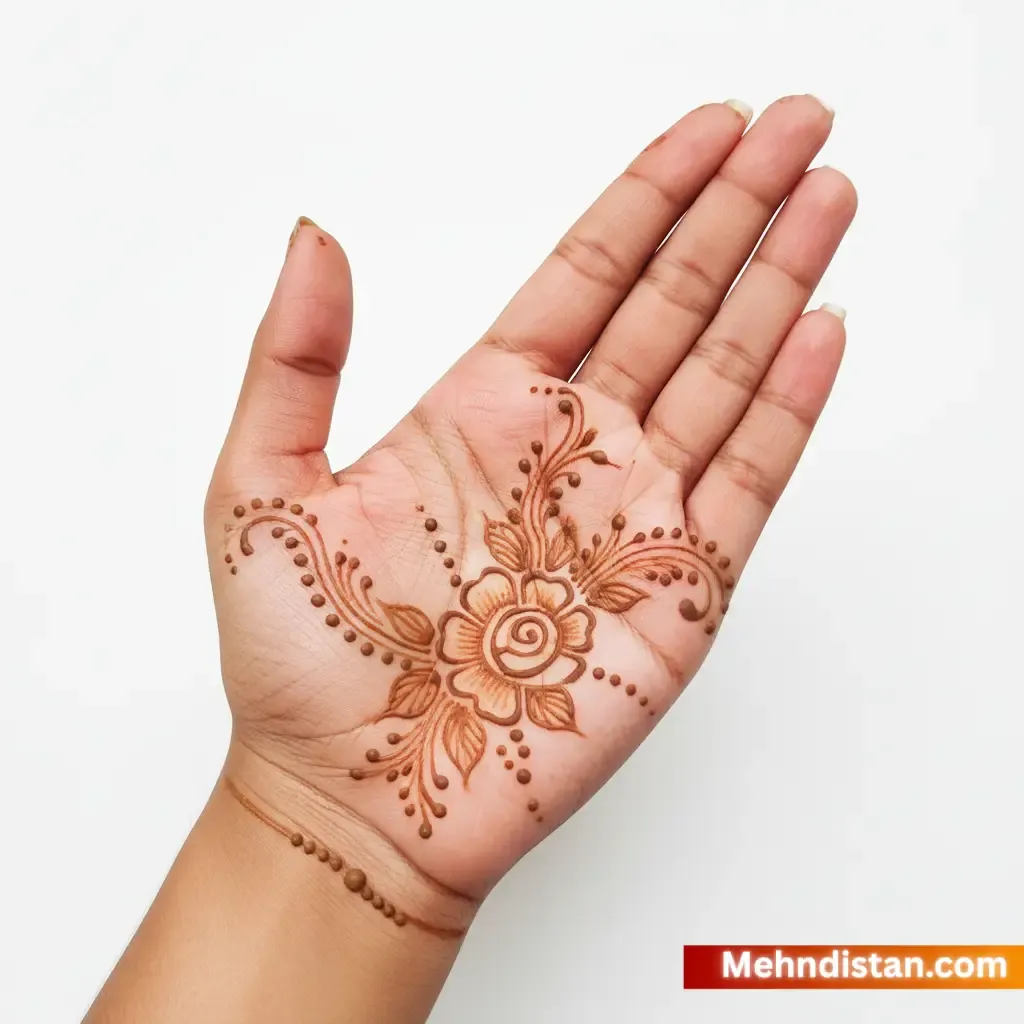
I can adapt an Arabic-inspired pattern for weddings, Eid, parties, or smaller gatherings. Its flowing structure works well when I want visible motifs without filling the entire hand, and I can make the design lighter or denser depending on the occasion.
Rabeeca Khan Mehndi Design Simple
Simple Rabeeca Khan mehndi design ideas are useful when I want a clean result without committing to a dense pattern. I can choose a single floral motif, a small geometric arrangement, a short trail, or a few carefully placed details. These layouts are also good starting points when I am practicing cone control at home.
- I start with simple dots, curved lines, leaves, and small shapes that are easy to control.
- I can use one central flower or another simple focal motif and build the rest around it.
- I practice the main shapes on paper first if I am still getting comfortable with the cone.
- Do: Keep tissue or cotton nearby for small corrections while the paste is fresh.
- Don’t: I do not overcrowd the design when a simpler layout already looks balanced.
- I can adapt these simpler layouts for home application or show them to a henna artist as a reference.
- I like the fresh, uncluttered appearance of a simple design.
- The application time depends on the pattern, hand size, and detail level, so I choose the design based on the time I actually have.
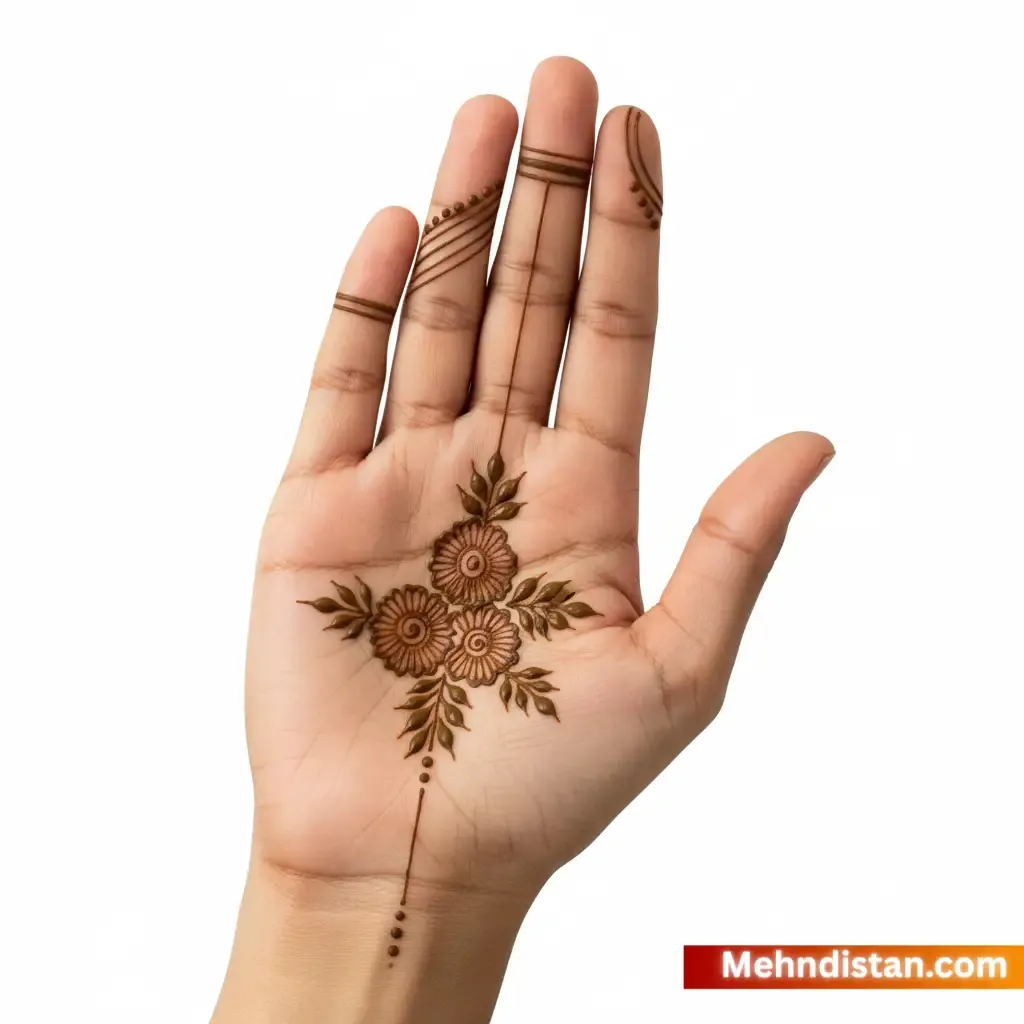
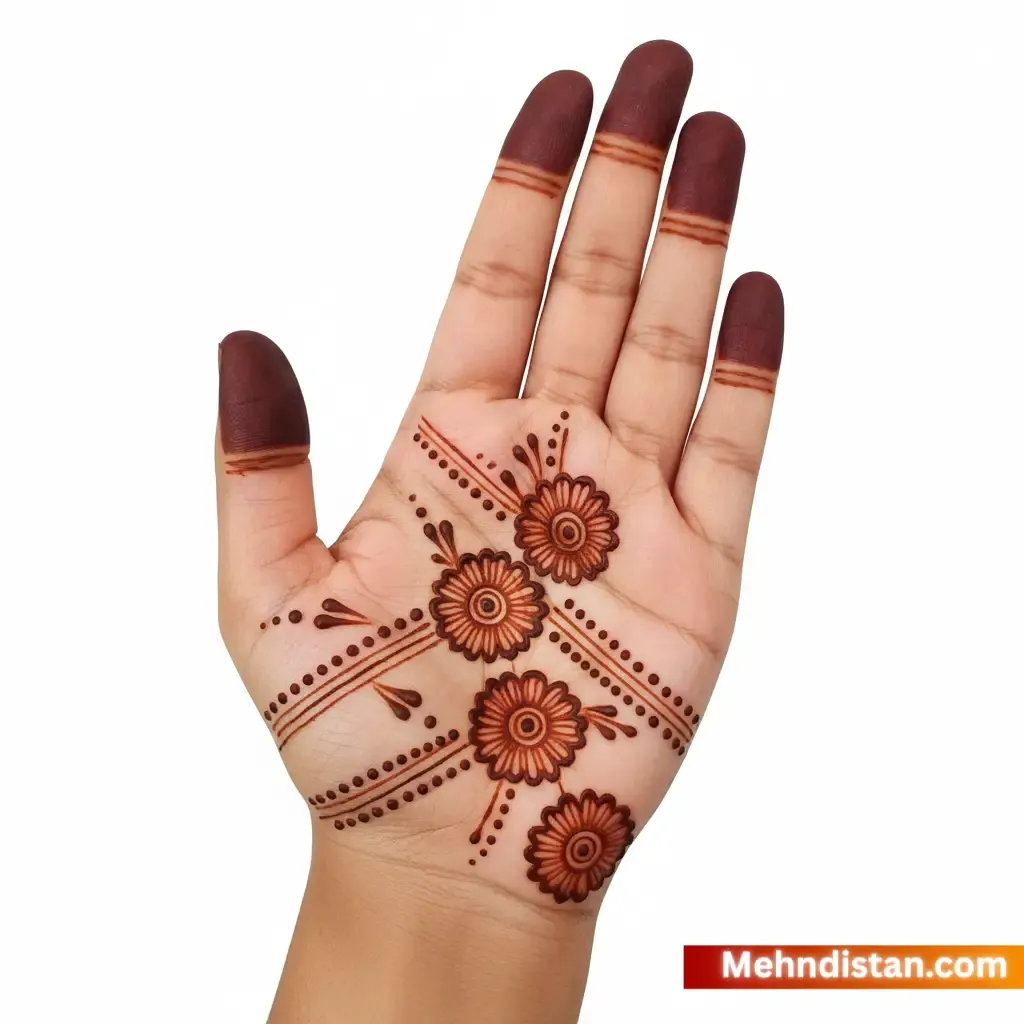
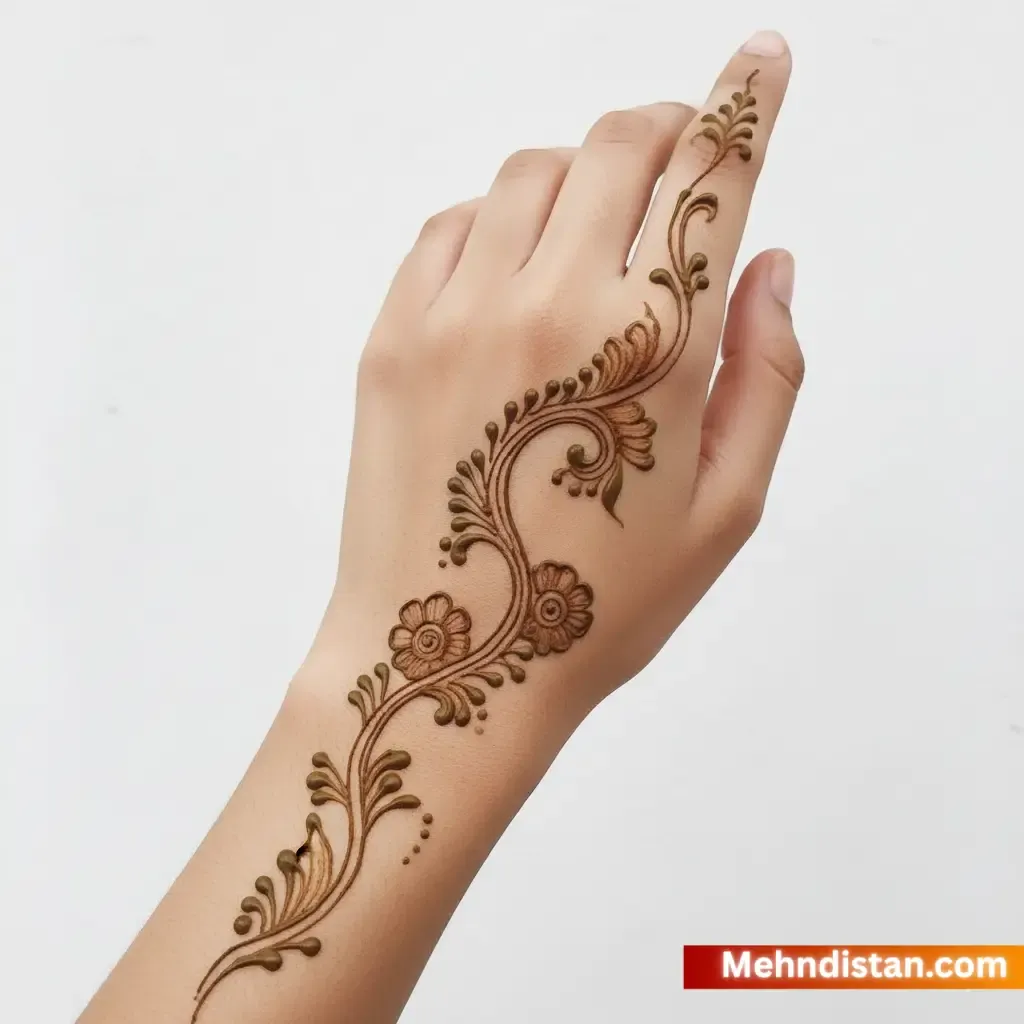
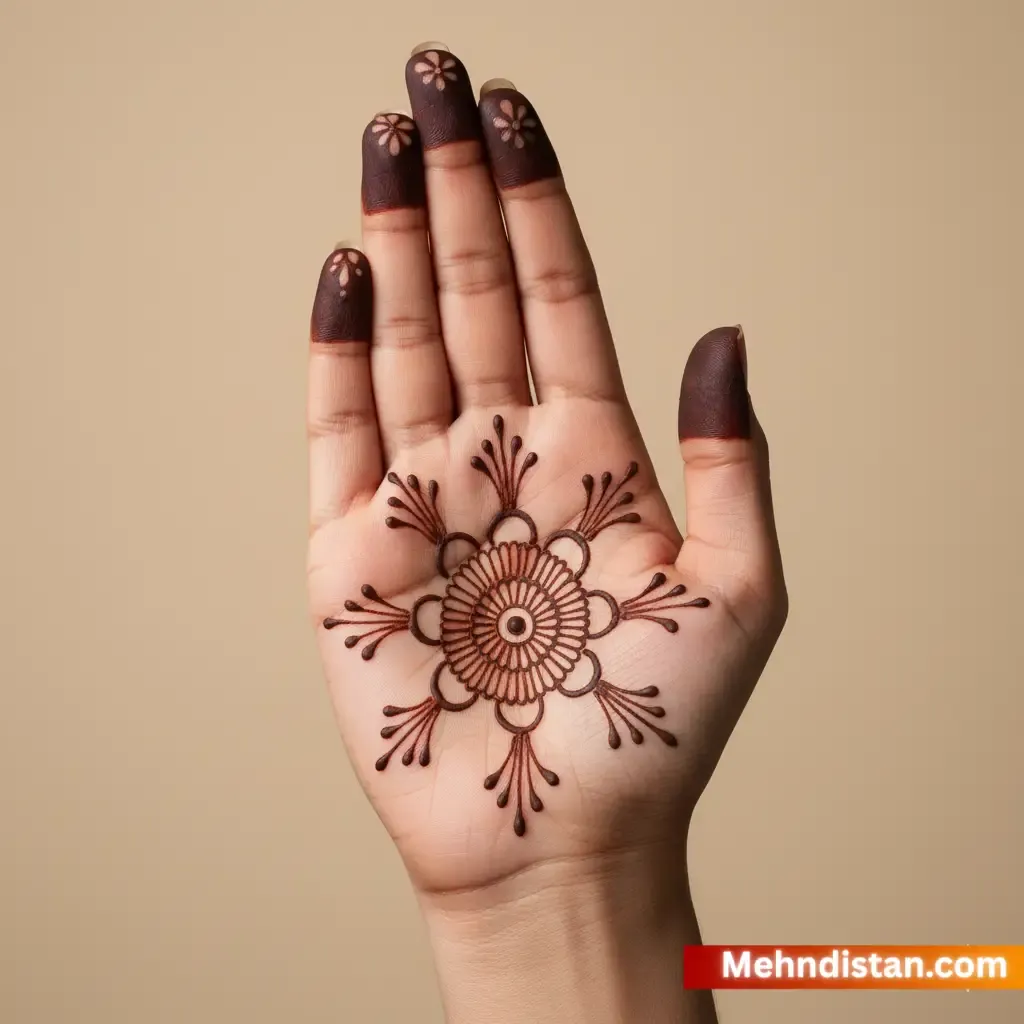
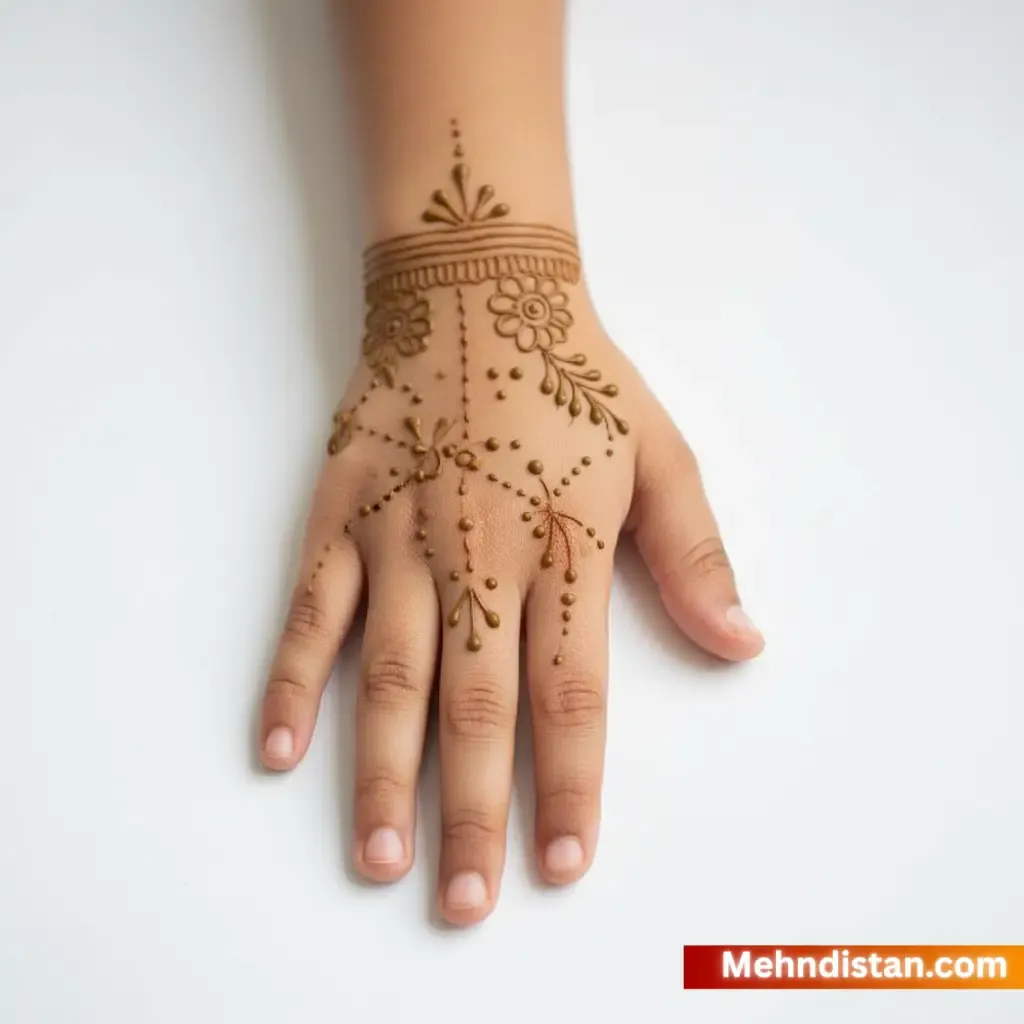
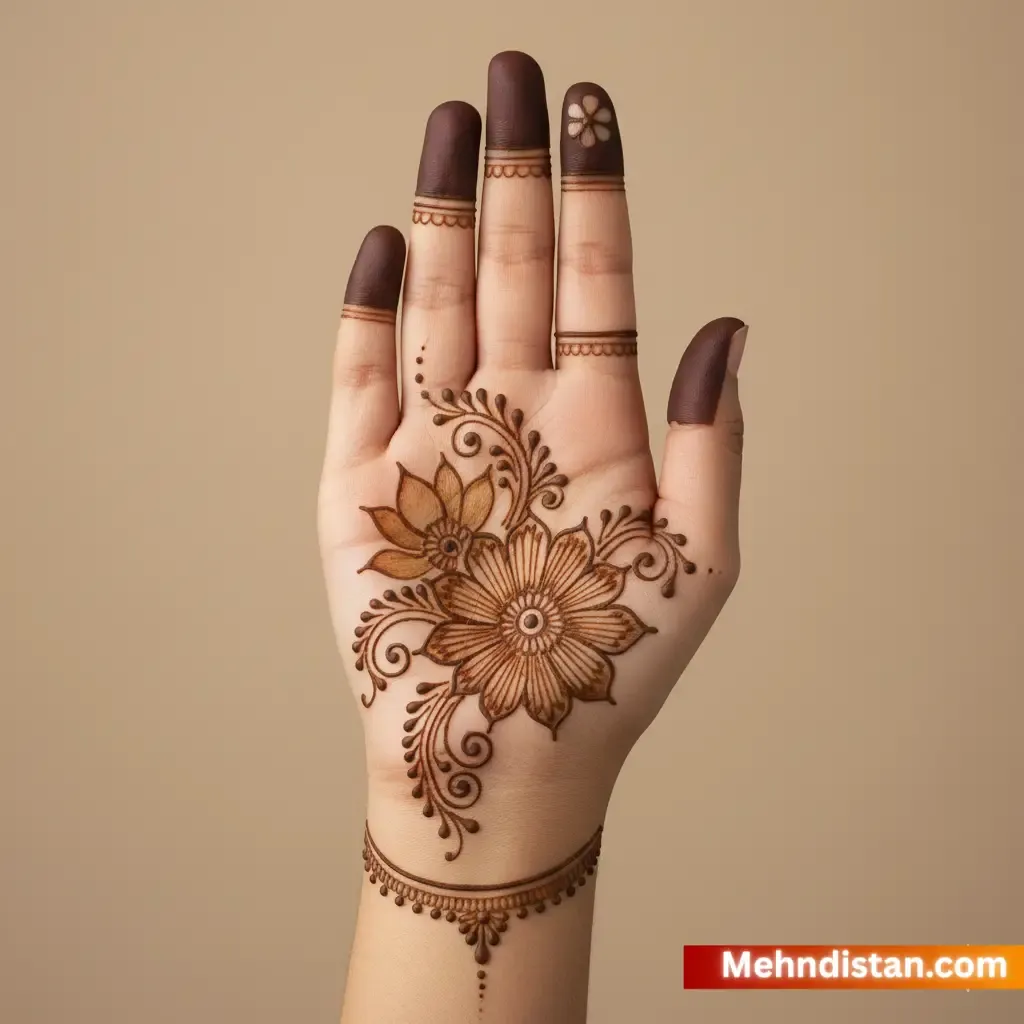
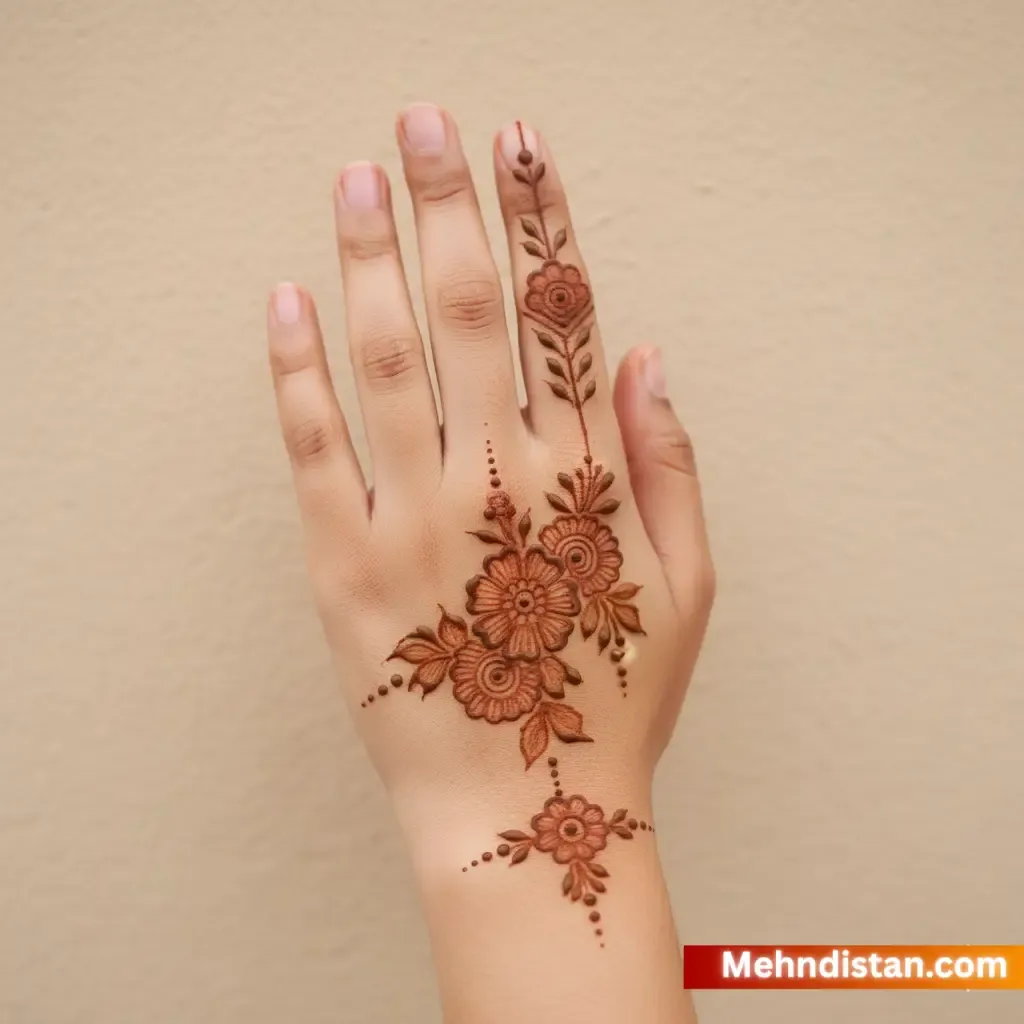
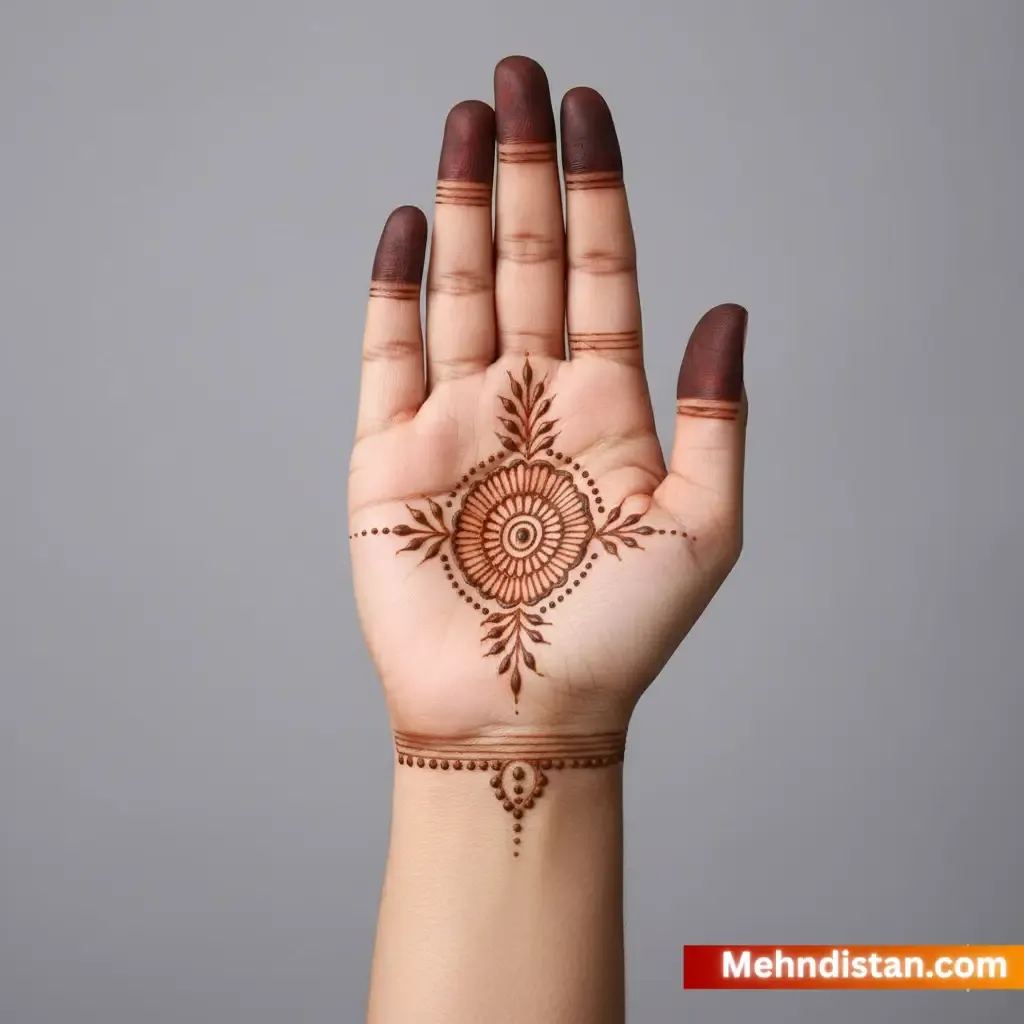
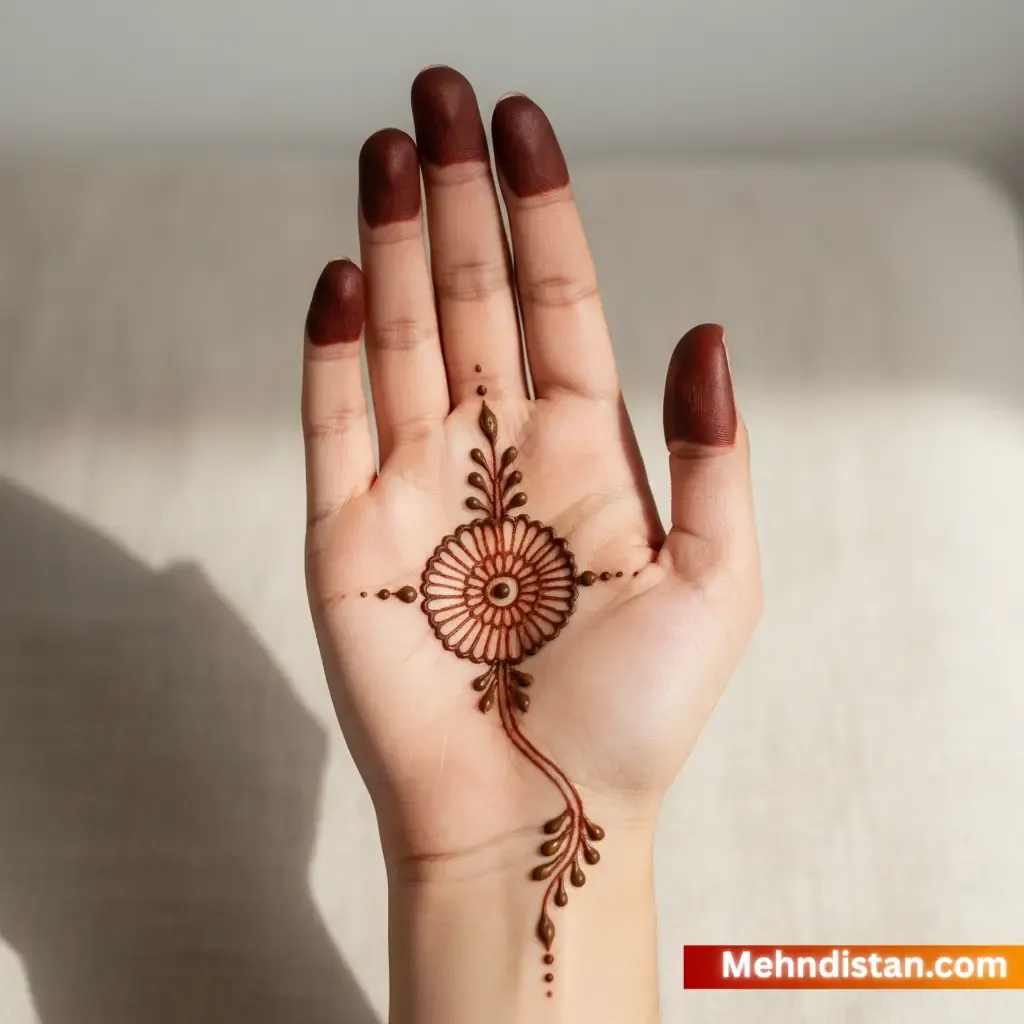
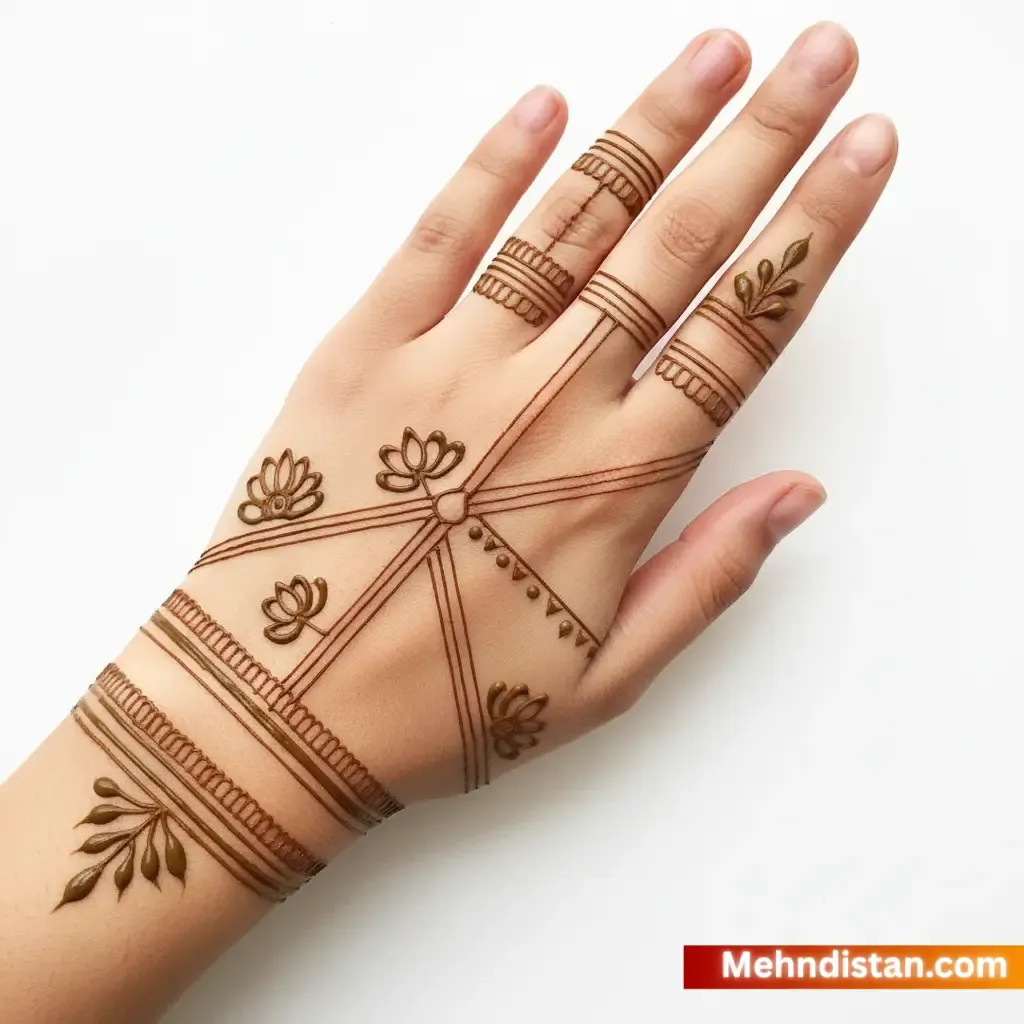
A simple Rabeeca Khan mehndi design can be just as effective as a dense pattern when the spacing and focal point are right. I prefer a design that feels easy to wear and still reflects the style I want.
Frequently Asked Questions
What kind of henna should I use?
I choose a reputable natural henna product intended for skin and follow its instructions. I avoid products or ingredients that are not clearly intended for safe skin application.
Can I adapt these ideas for another part of the body?
Yes. I can use the motifs as inspiration for the wrist or feet, but I adjust the scale and flow to match the shape of the new area.
How long does a Rabeeca Khan-inspired mehndi design take?
It depends on the coverage, detail, and artist. A small finger or simple design generally takes less time than a detailed front-hand composition, so I choose accordingly.
How should I remove dried henna paste?
I gently brush or flake away the dried paste without using sharp objects on the skin. I then follow the henna product’s aftercare guidance, because stain development can vary by product and skin.
Are these designs suitable for beginners?
Yes. I can start with a small floral, finger, or simple layout and practice the main shapes before applying them to the hand. For children, I would use only a skin-safe natural henna product and keep the design simple and age-appropriate.
How I Choose a Rabeeca Khan Mehndi Design
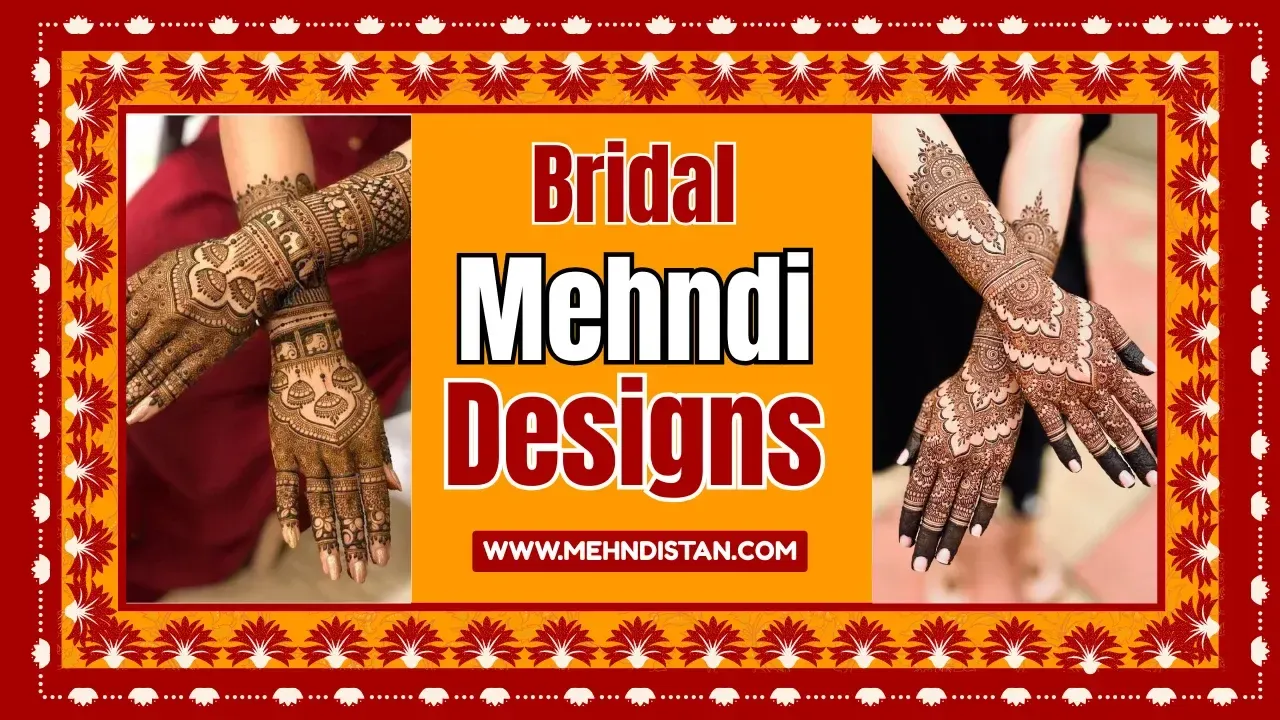
When I choose from this collection, I first decide where I want the mehndi: fingers, front hand, or a lighter open-space layout. I then compare motif size, coverage, and the amount of detail I can comfortably wear. For Eid or a wedding, I may choose a fuller arrangement; for a smaller event, I usually prefer a simple or Arabic-inspired design with more breathing room.
- For a minimal look: I choose finger details, small florals, dots, or a short trail.
- For Eid: I look for festive florals, balanced fillers, and neat fingertip work.
- For a front hand: I check that the central motif and surrounding details form a balanced composition.
- For an Arabic style: I look for flowing trails, larger motifs, and intentional empty space.
Common Mehndi Application Troubleshooting
If my lines spread, I check whether the cone pressure is too strong or the paste is too loose. If a design looks crowded, I remove or simplify a few filler elements rather than adding more detail. If the stain is lighter than expected, I remember that results can vary with the henna product, skin, application, and aftercare, so I follow the product guidance instead of relying on a guaranteed color or timing.
- Uneven lines: I slow down and use steadier, lighter pressure.
- Smudged details: I keep the hand still while the paste is drying.
- Overcrowded pattern: I leave more open space around the main motif.
- Unclear motif: I simplify the surrounding fillers so the focal design remains visible.
- Skin irritation: I stop using the product and avoid applying questionable or non-skin-safe ingredients.
Last Words
I use these Rabeeca Khan mehndi design ideas as a visual starting point rather than treating every photo as an exact celebrity-worn design. By comparing simple, Arabic, Eid, finger, and front-hand patterns, I can pick the motifs and coverage that fit my own occasion, outfit, and comfort.