Looking for a cute mehndi design for kids that looks pretty without taking too long to apply? I have gathered simple, playful, and age-appropriate ideas for little hands, including front-hand, back-hand, full-hand, easy, and floral styles. For children, I prefer comfortable designs with open spaces and gentle lines rather than very dense patterns.
In this guide, I have organized the ideas by style so you can quickly choose something that suits the child’s age, patience, and occasion. I also recommend using only a product intended for skin, avoiding black henna or unknown chemical mixes, and doing a small patch test before a full application.
Cute Mehndi Design for Kids
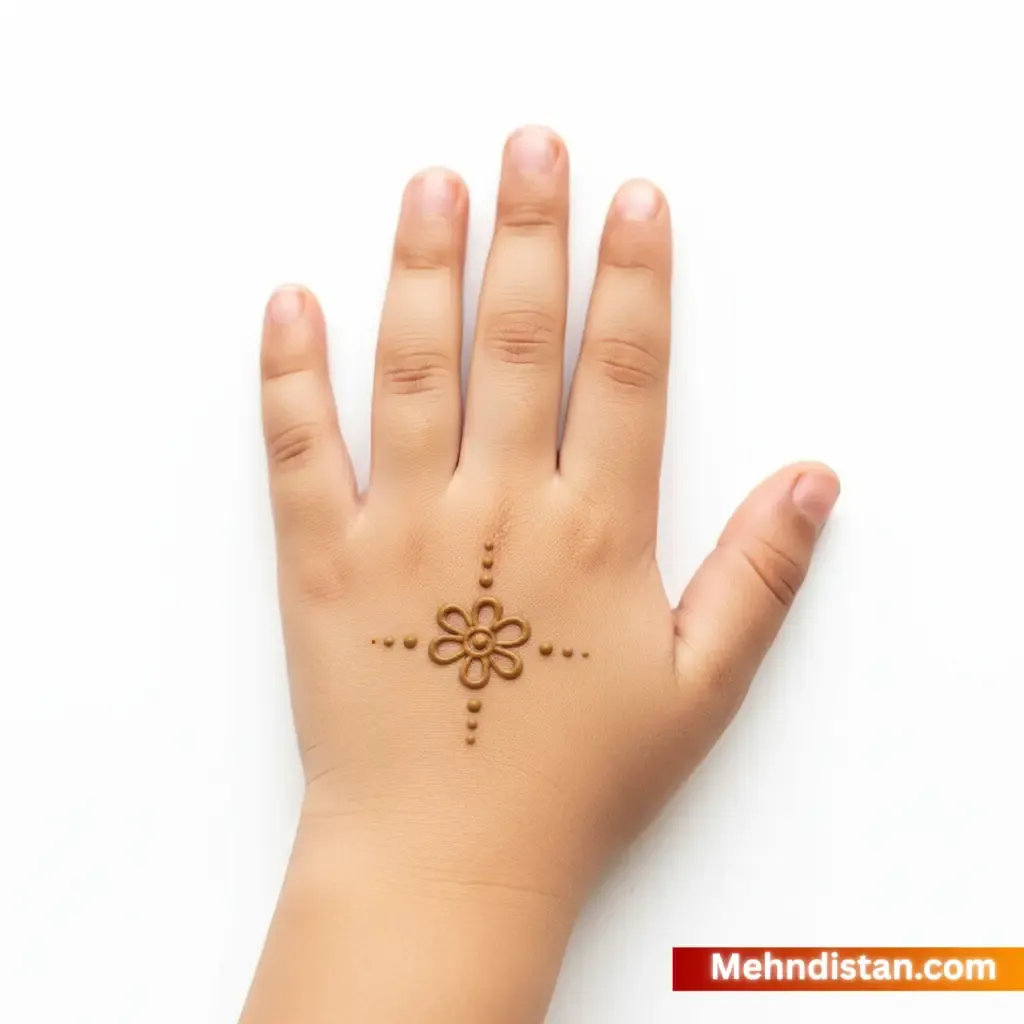
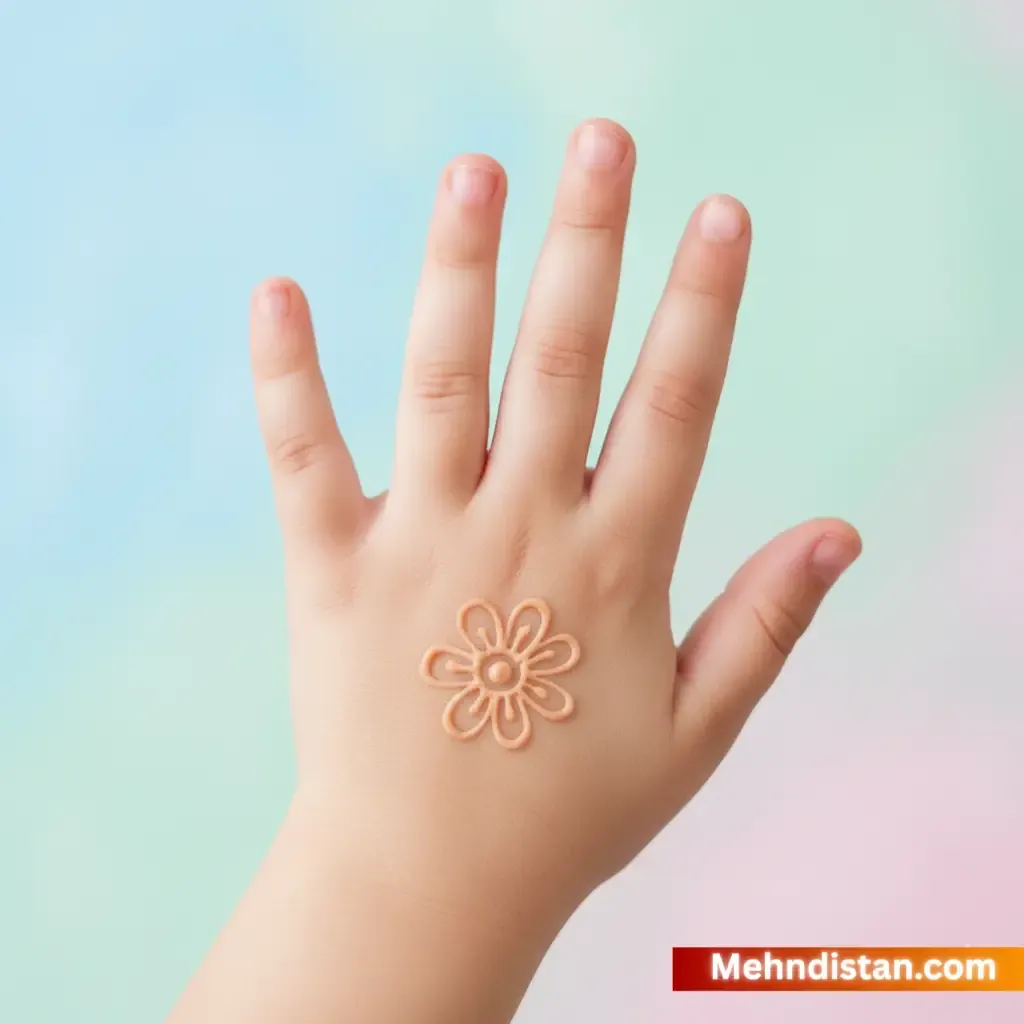
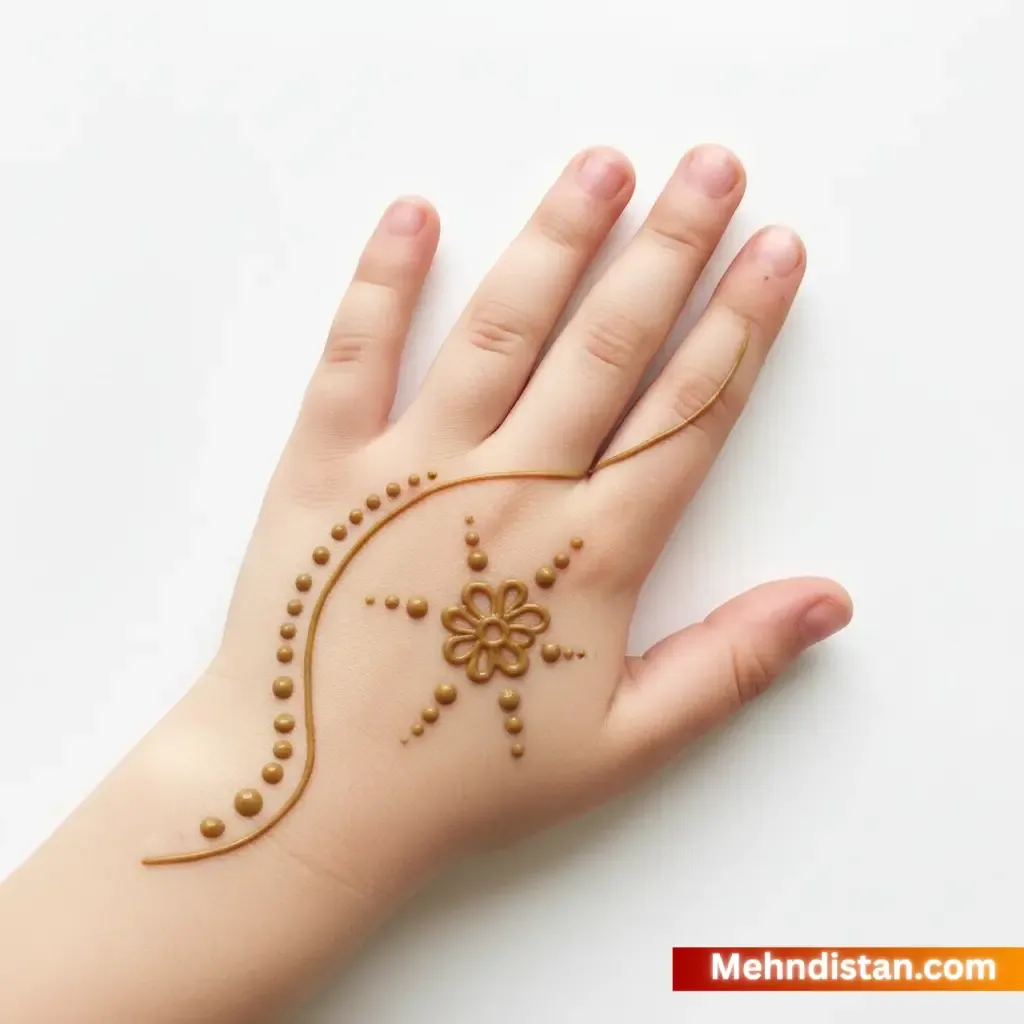
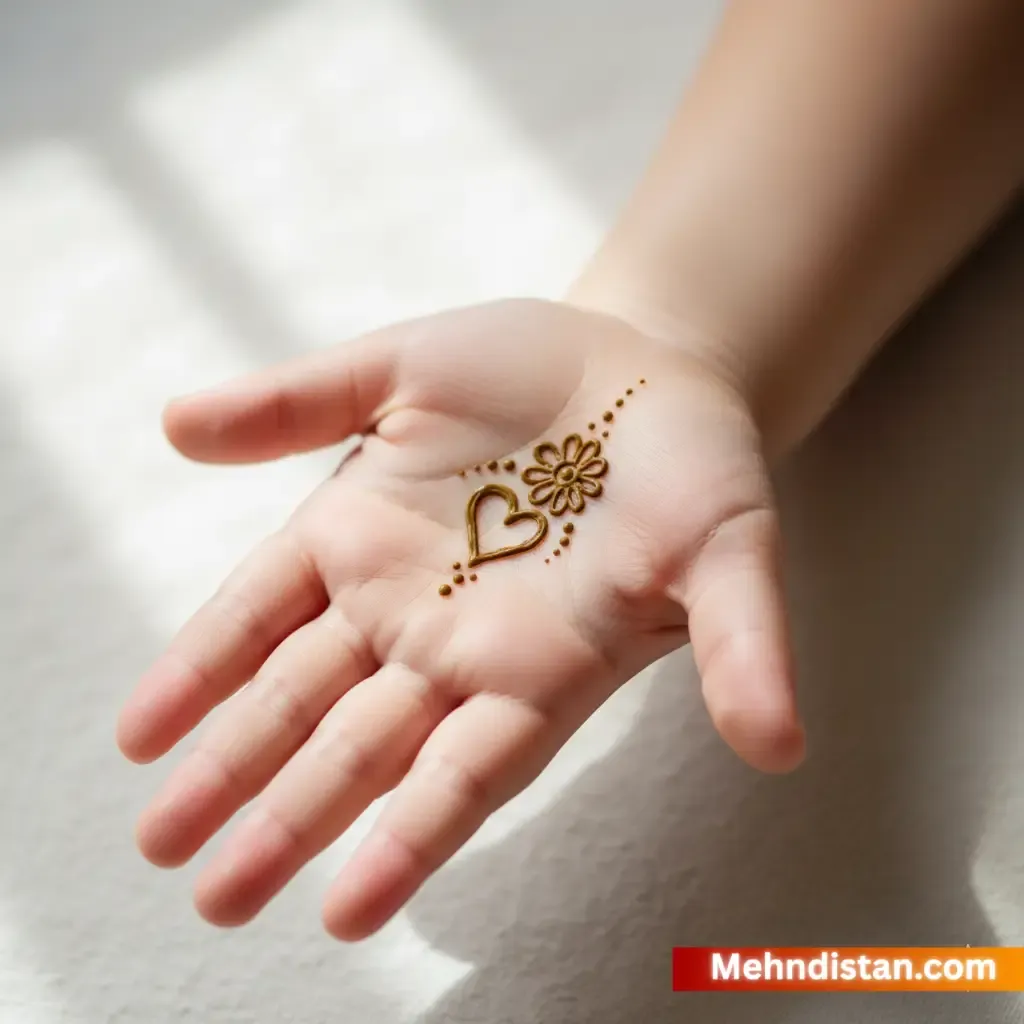
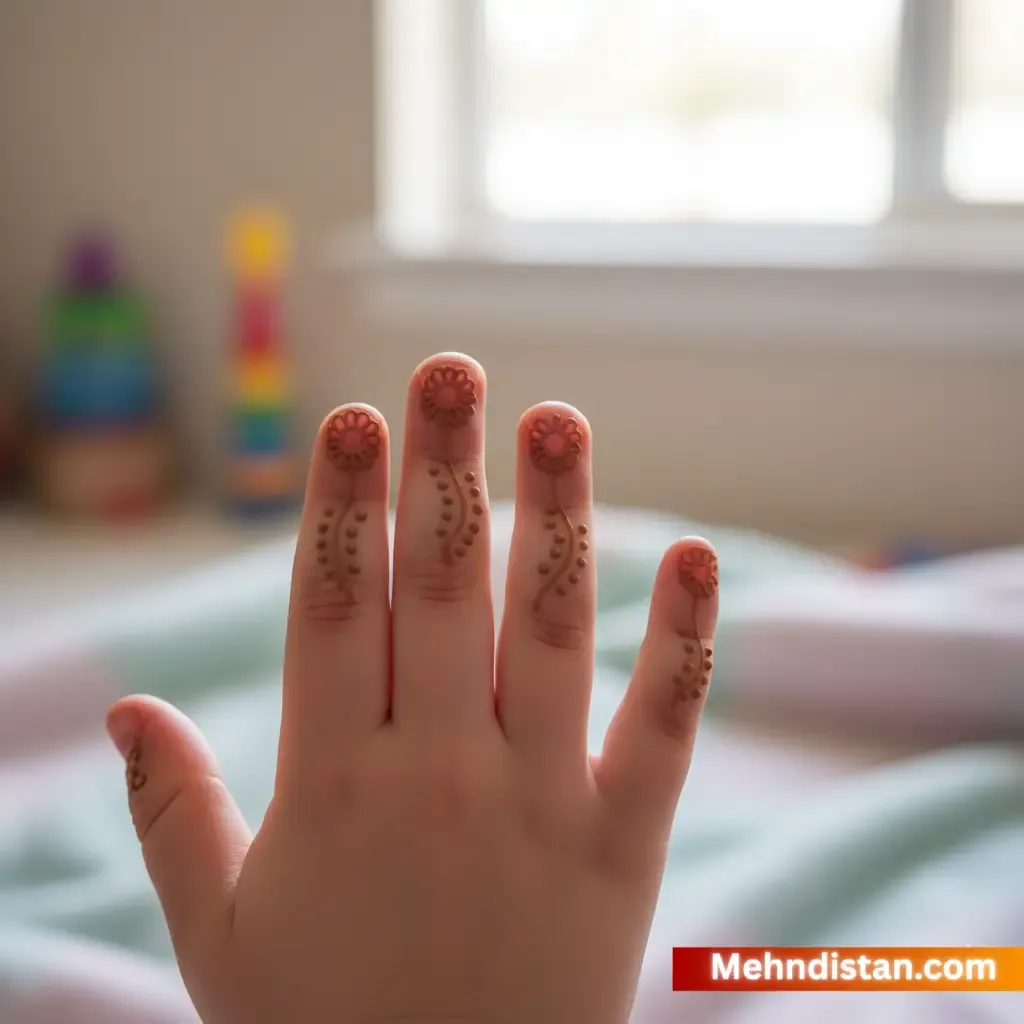
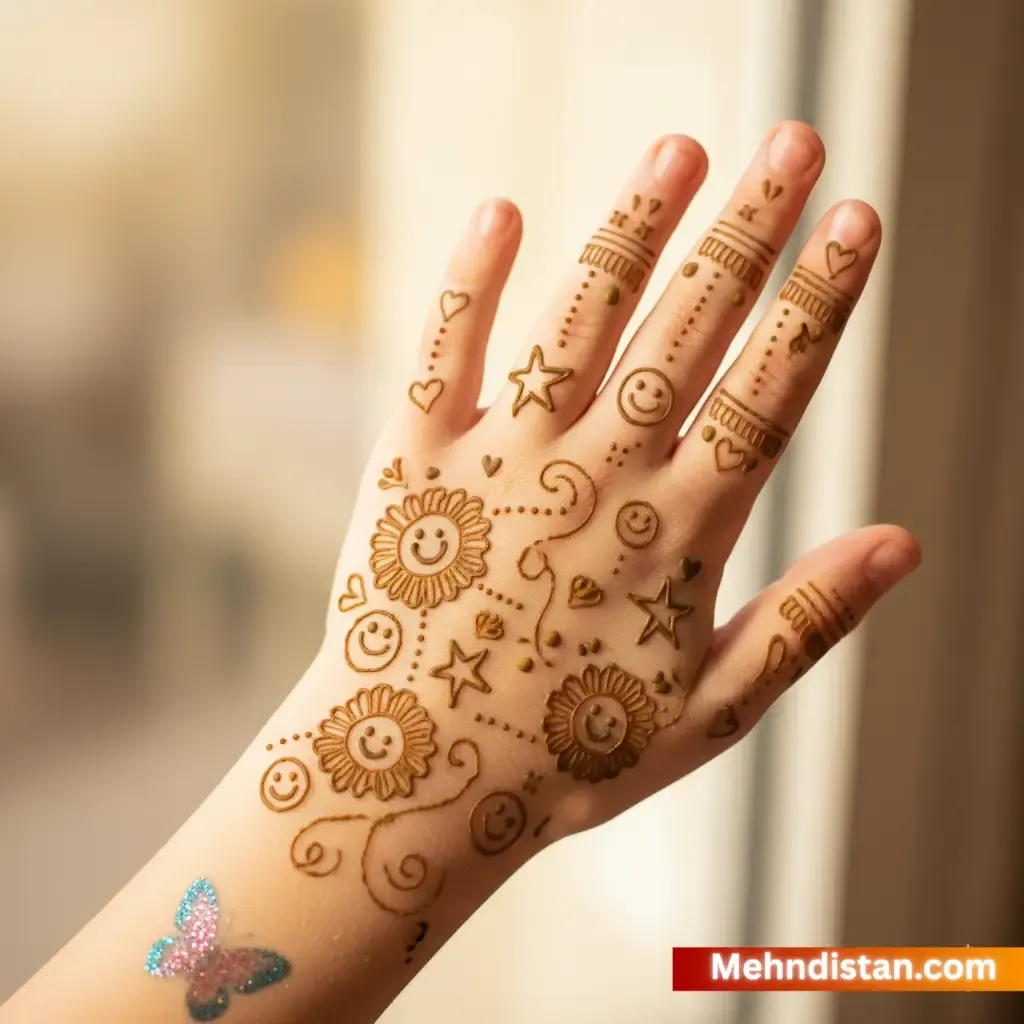
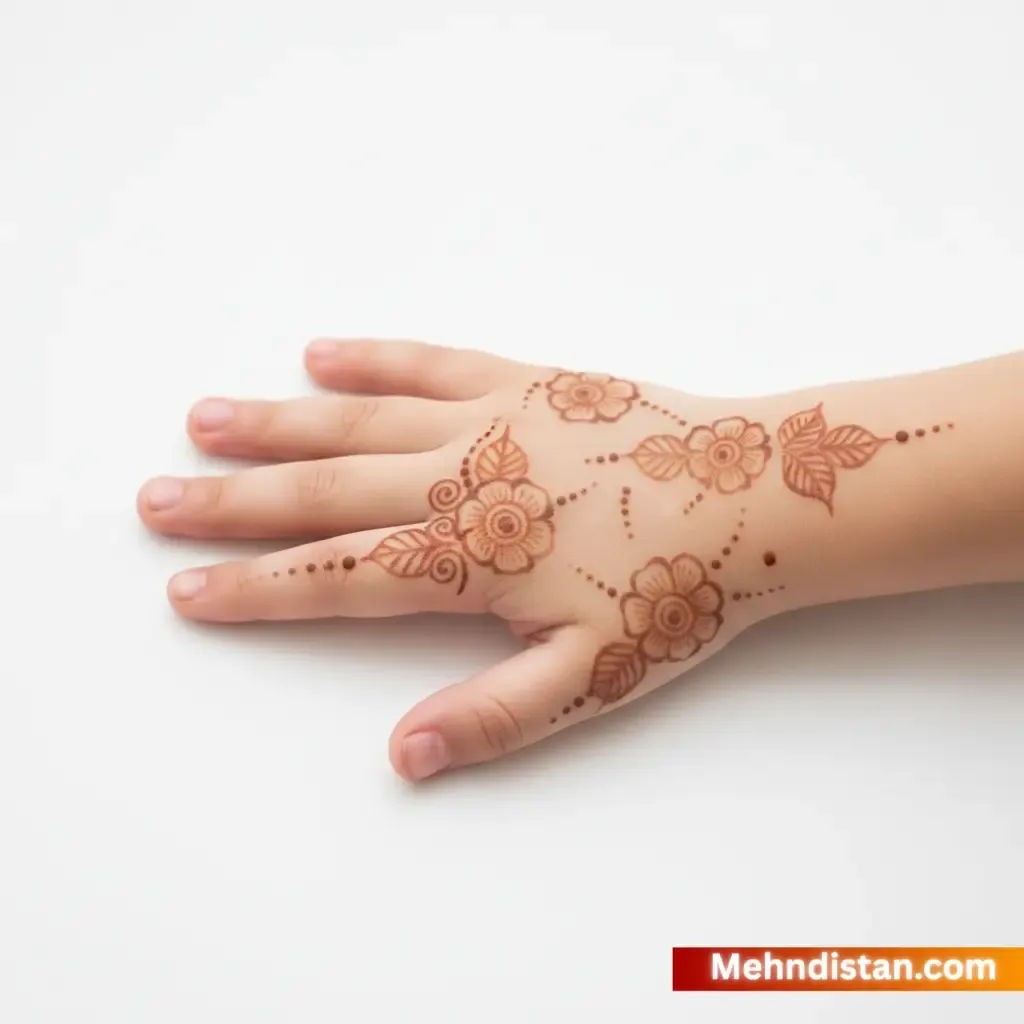
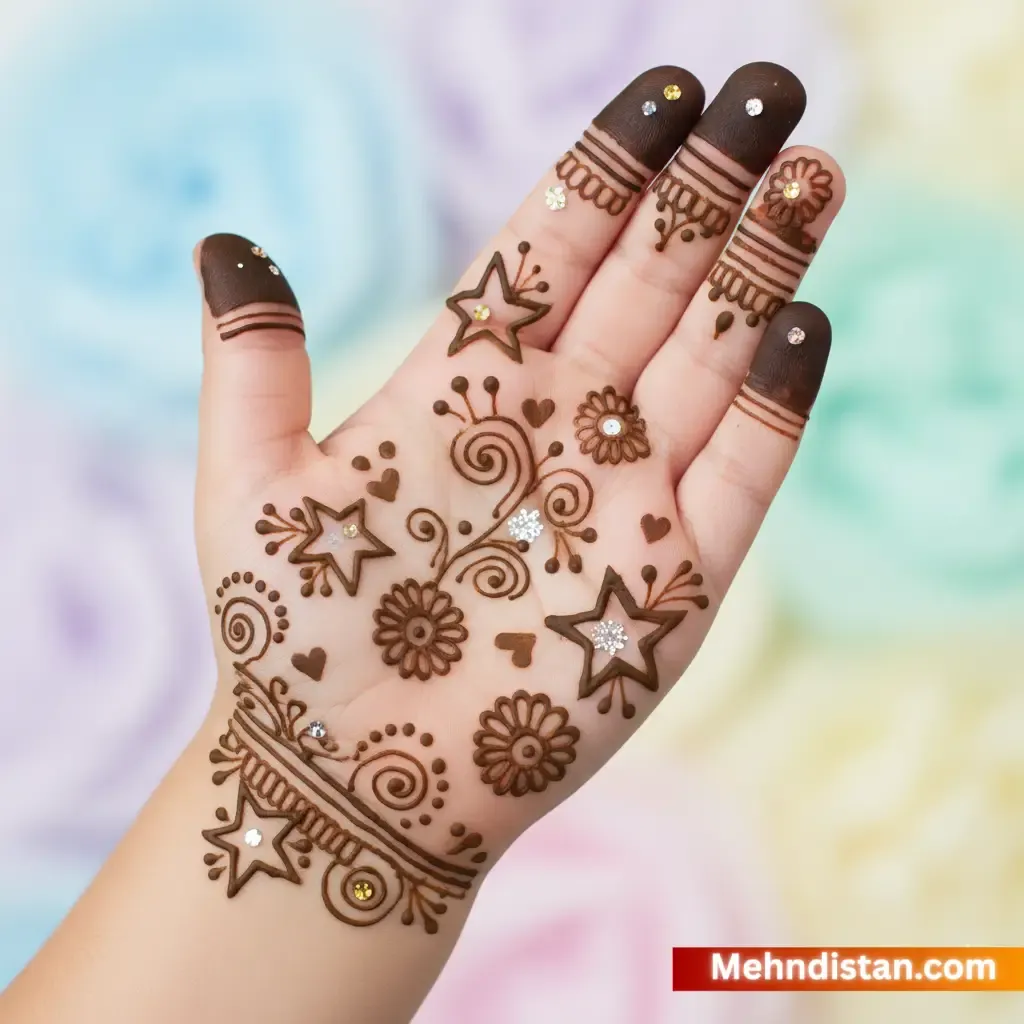
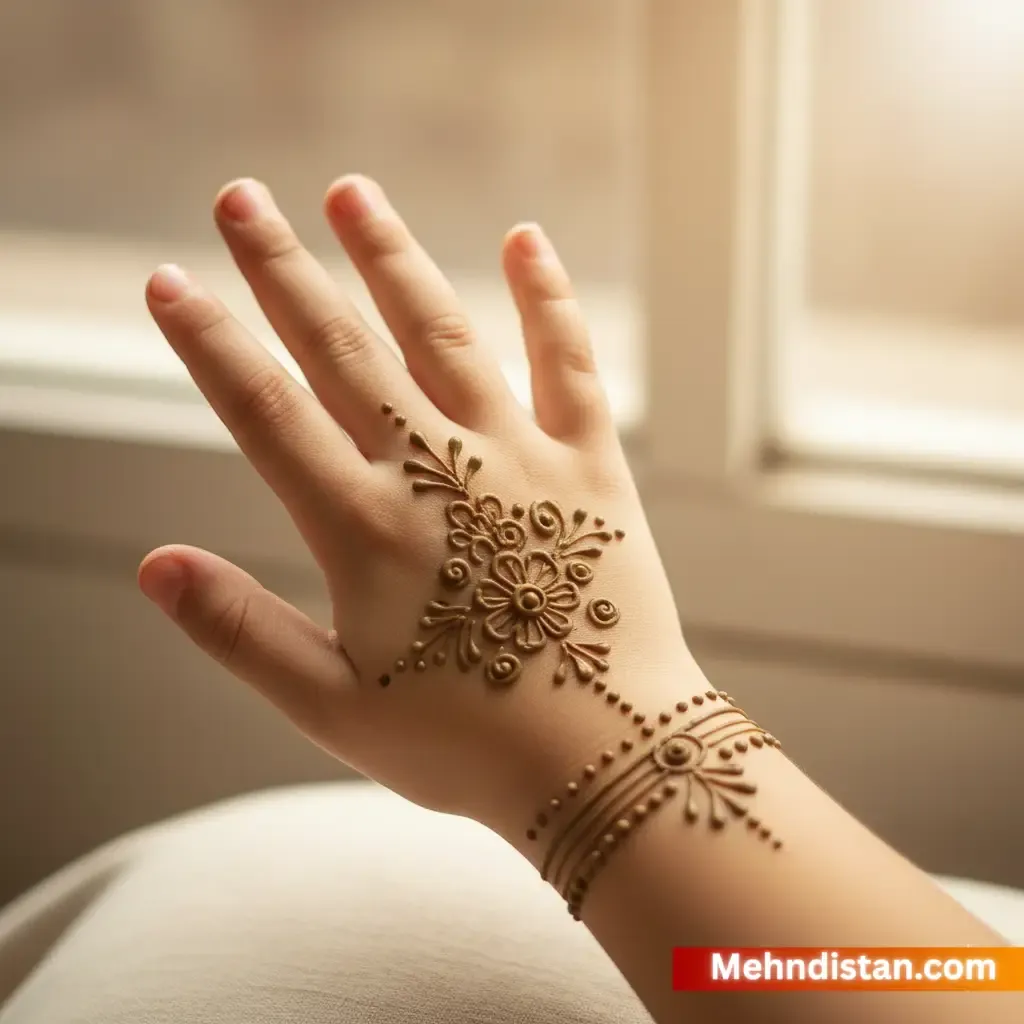
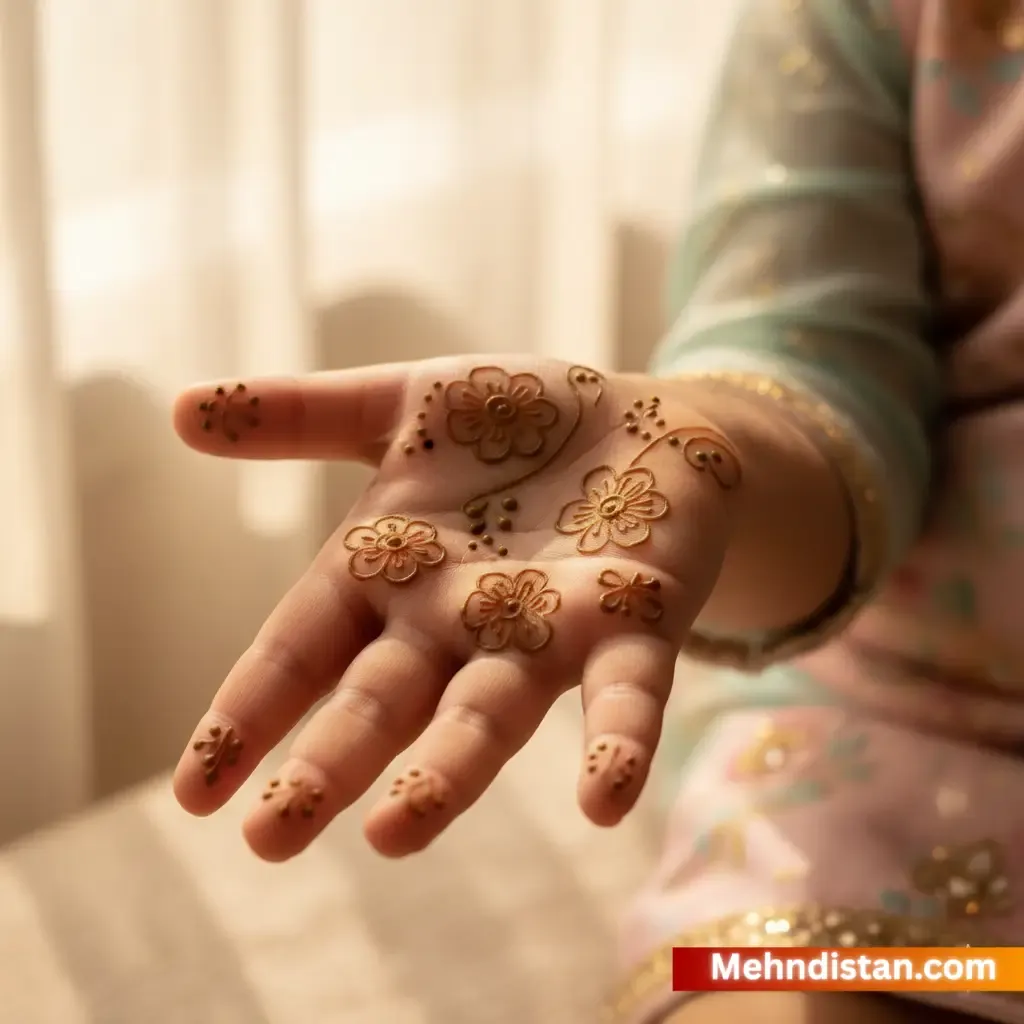
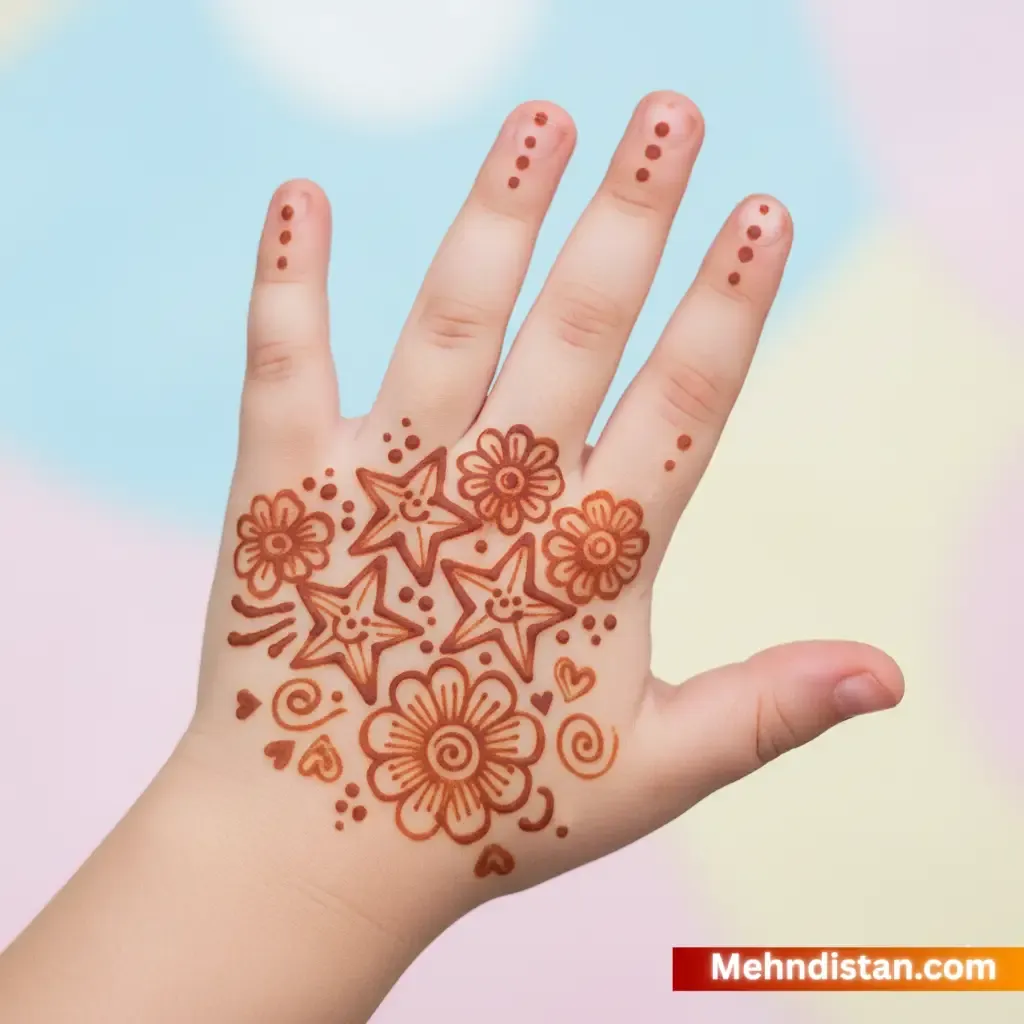
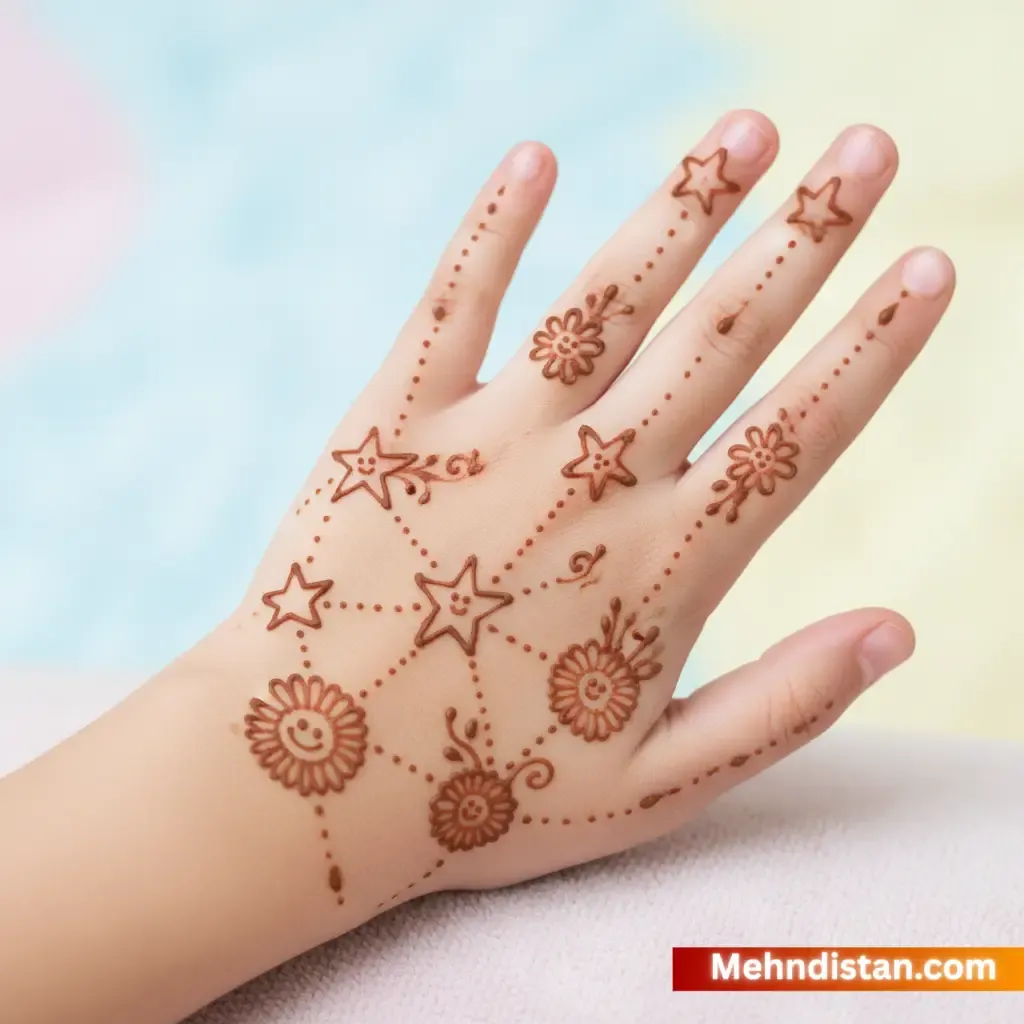
When I choose a design for a child, I look for cheerful motifs such as tiny flowers, hearts, stars, leaves, dots, and simple vines. These elements are easy to understand and can be adjusted to fit a small hand without making the pattern feel crowded.
Cute Mehndi Design for Kids Front Hand
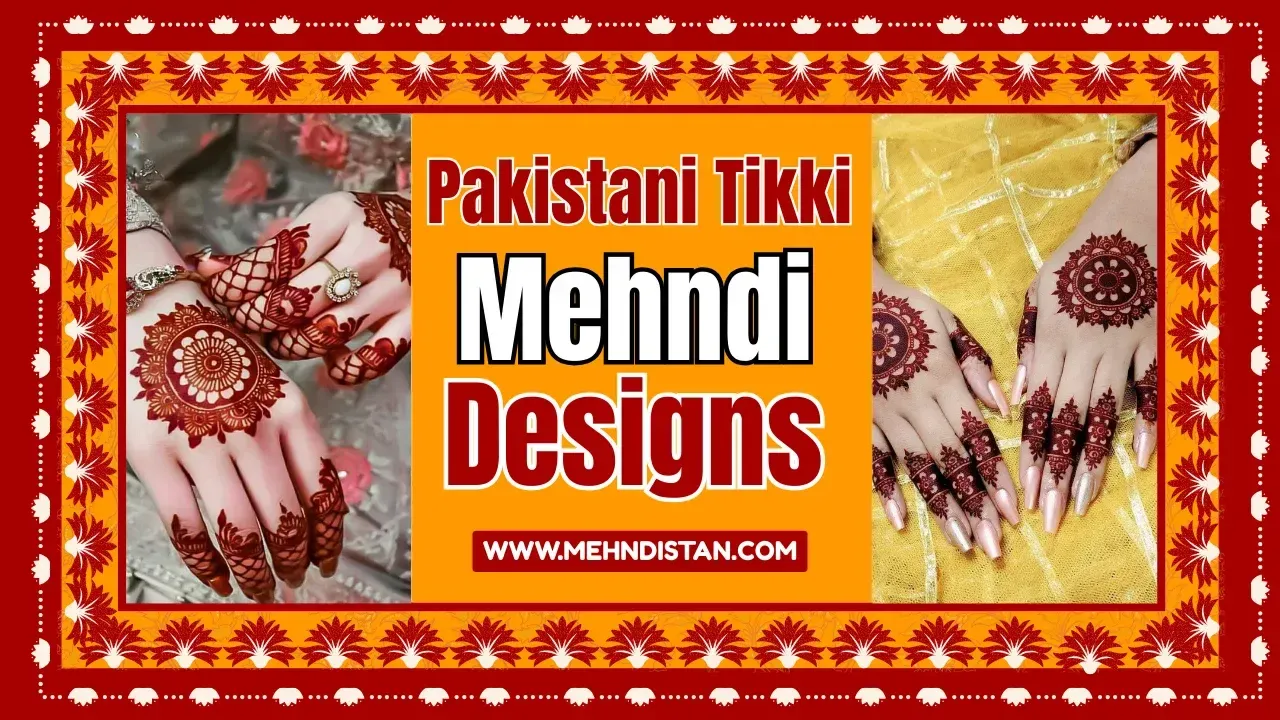
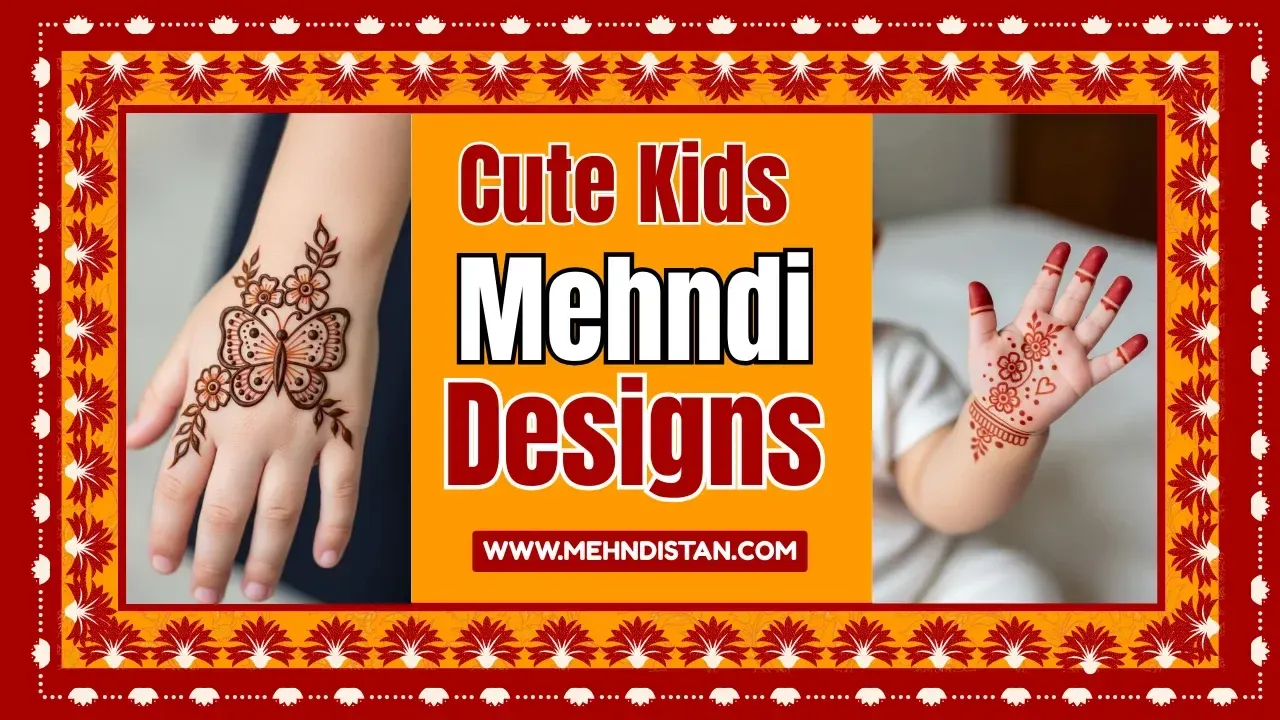
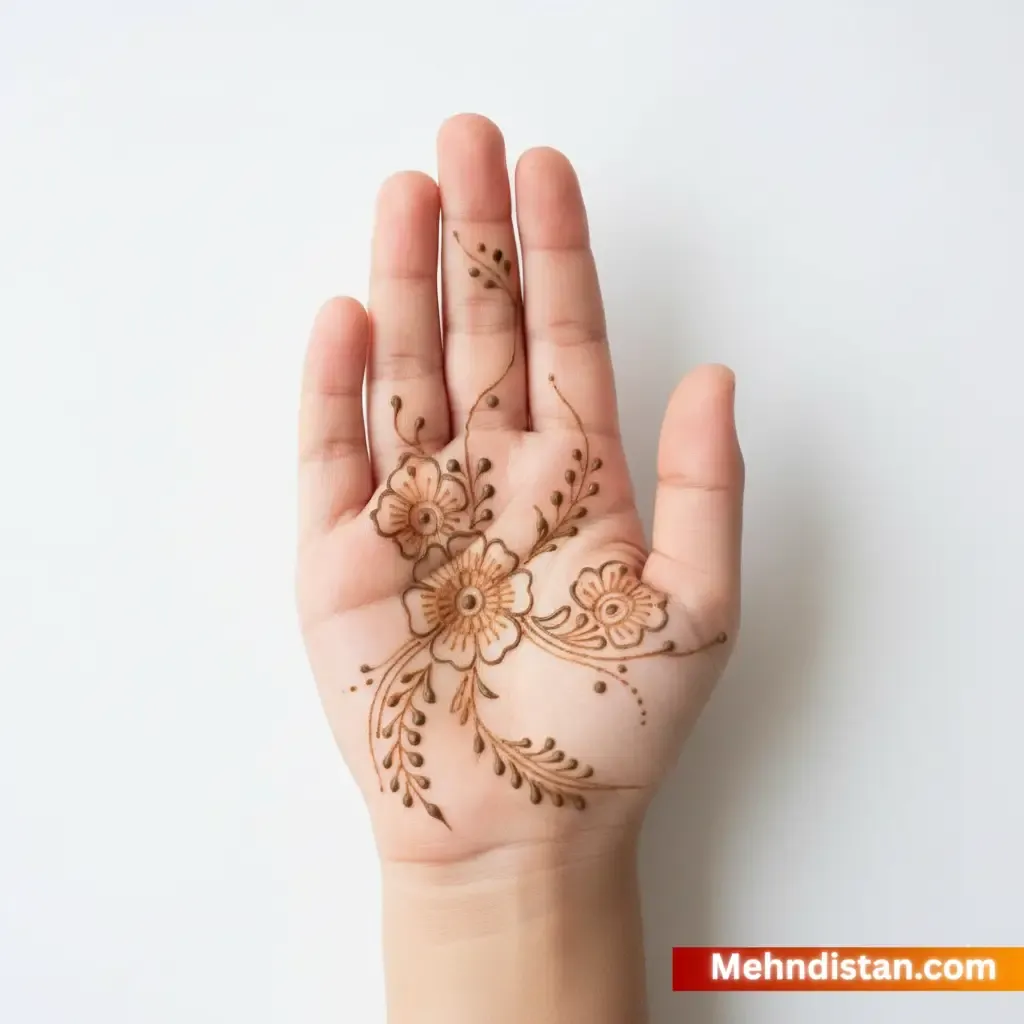
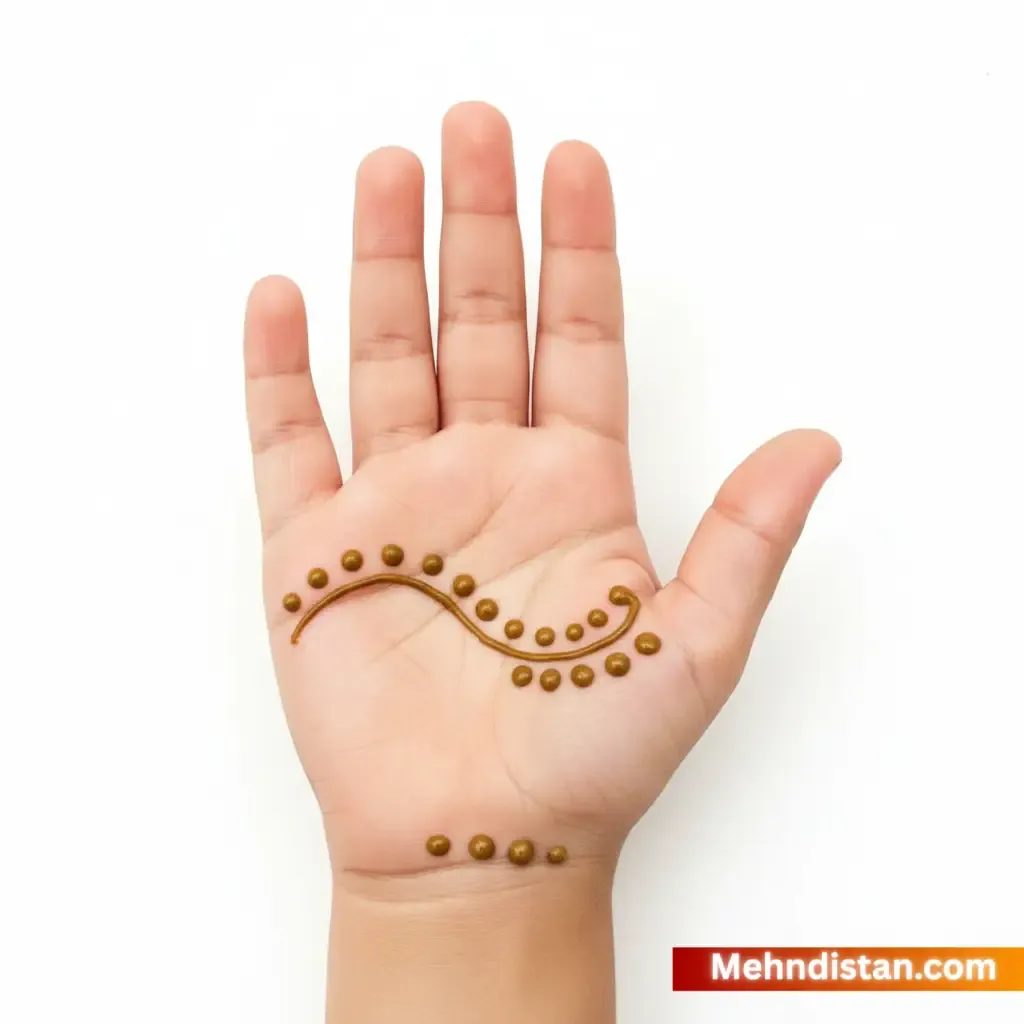
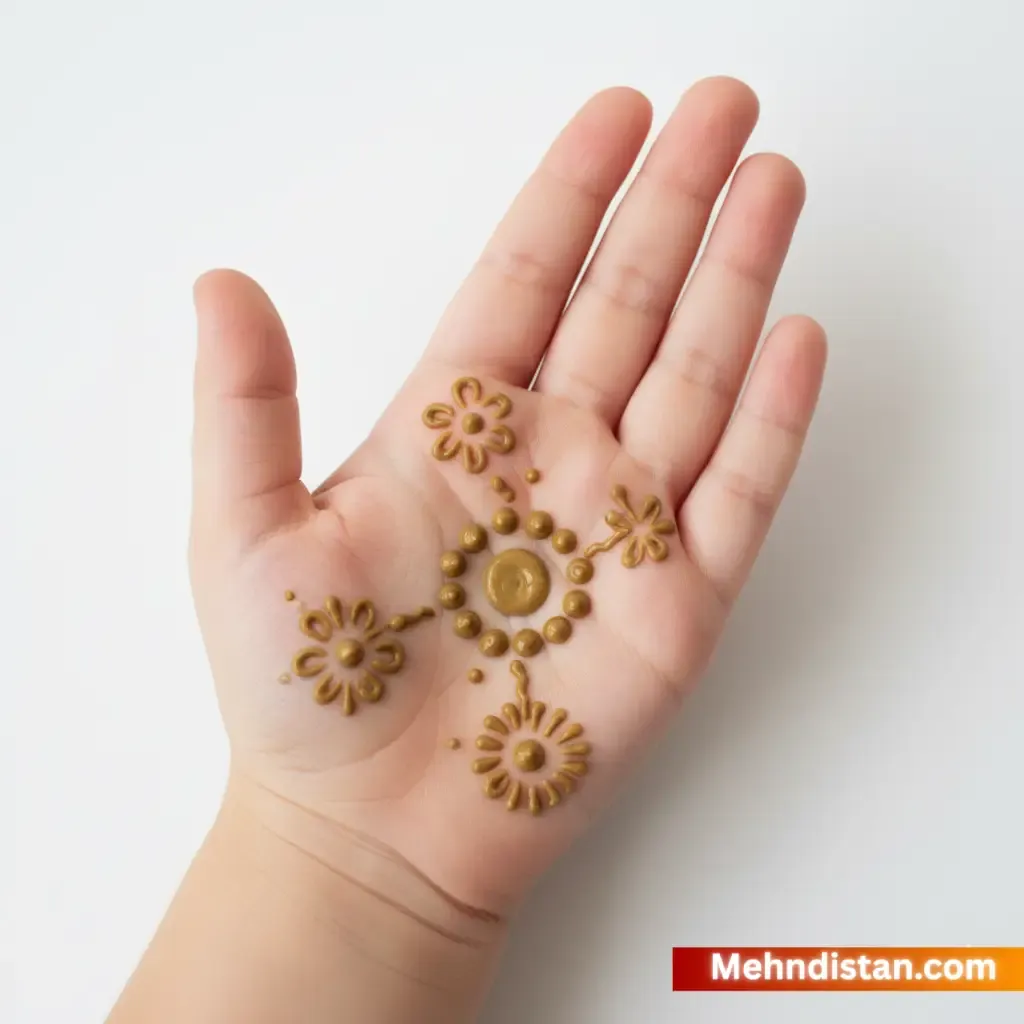
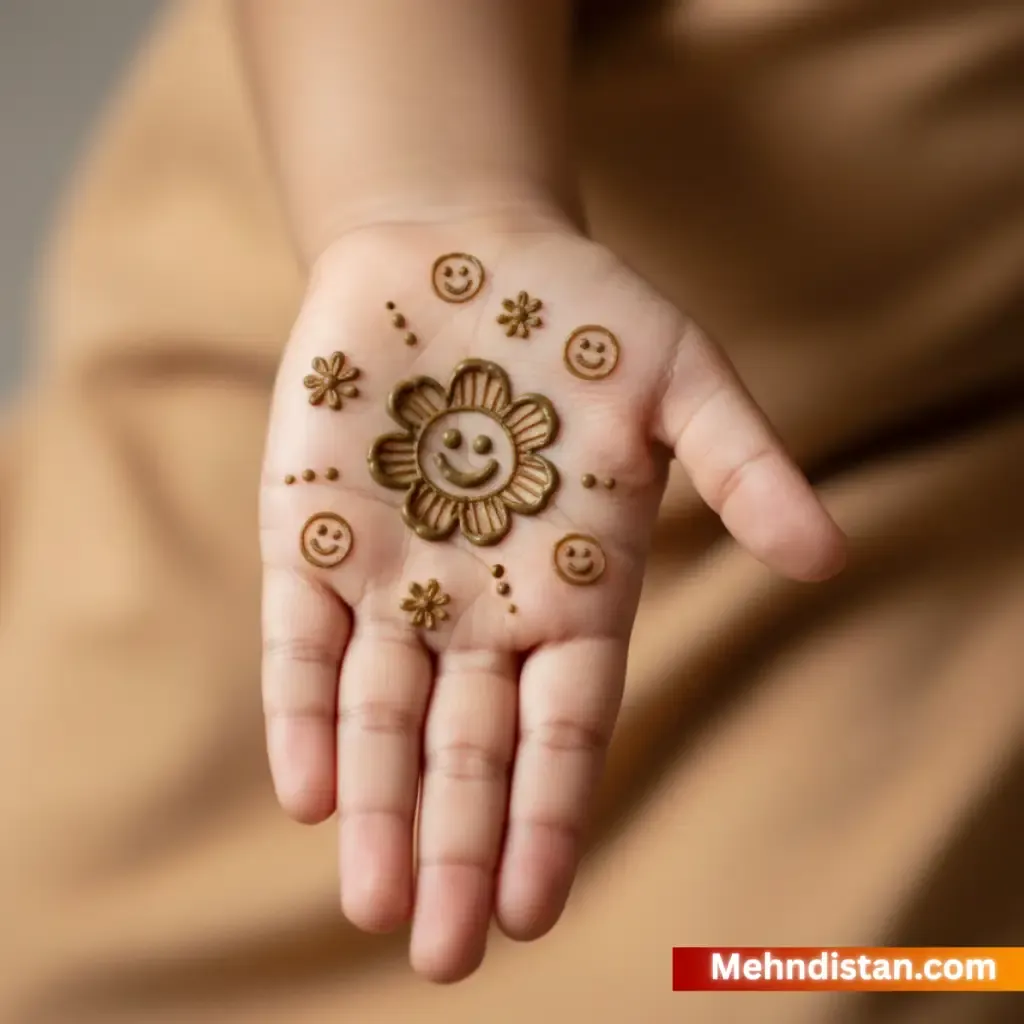
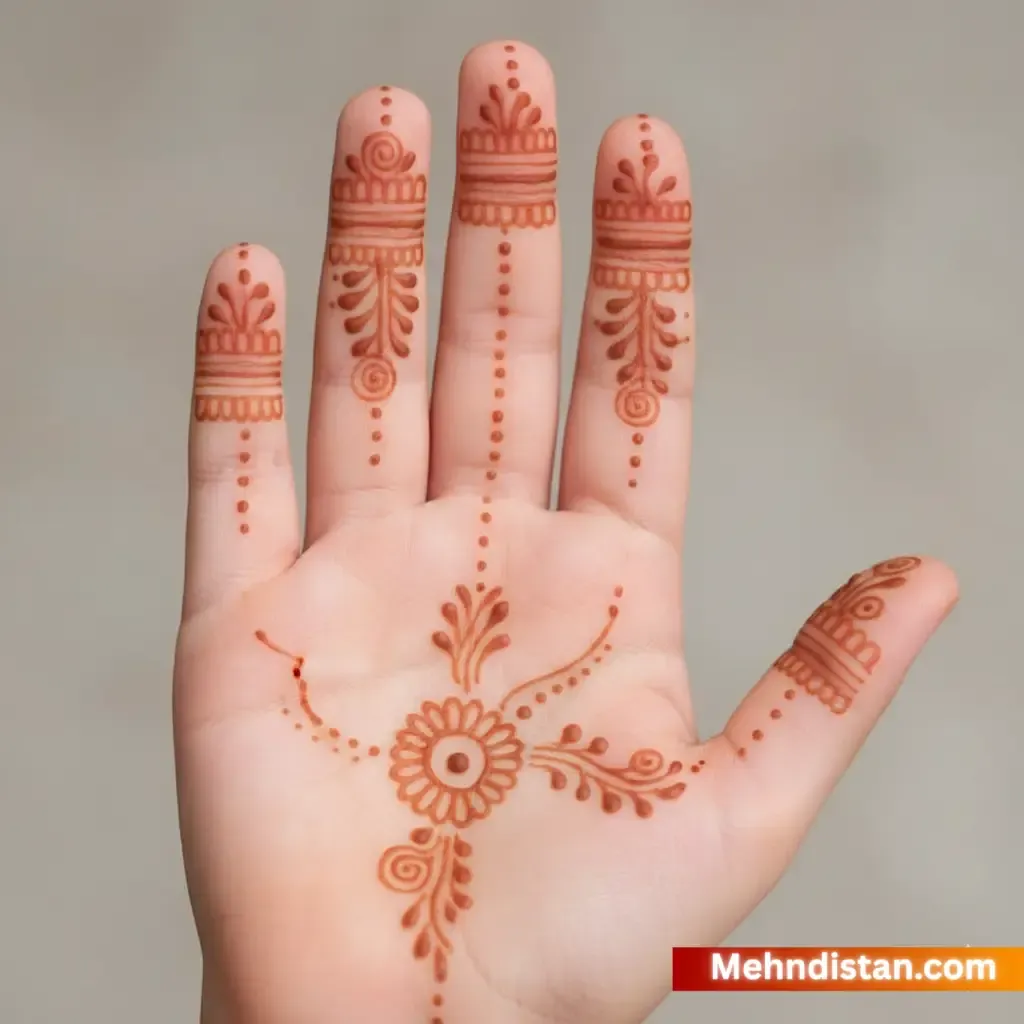
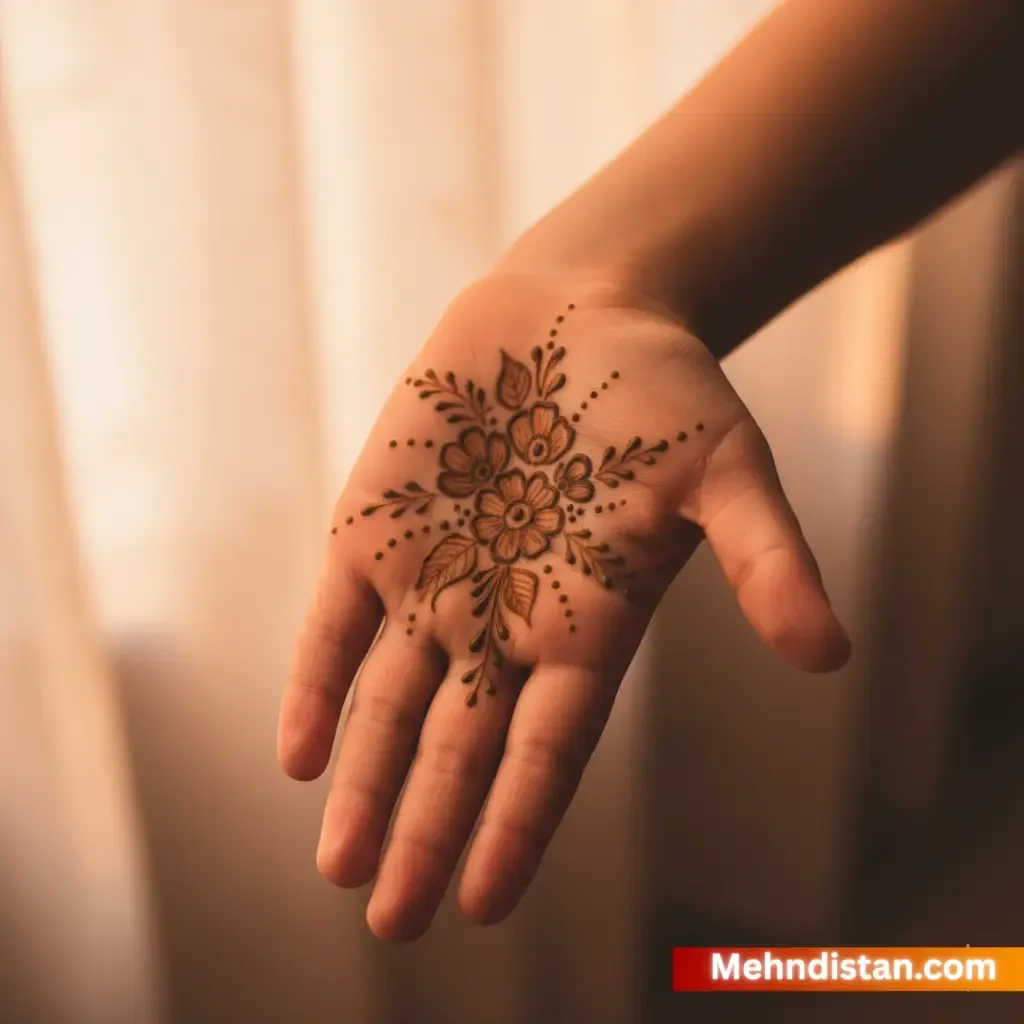
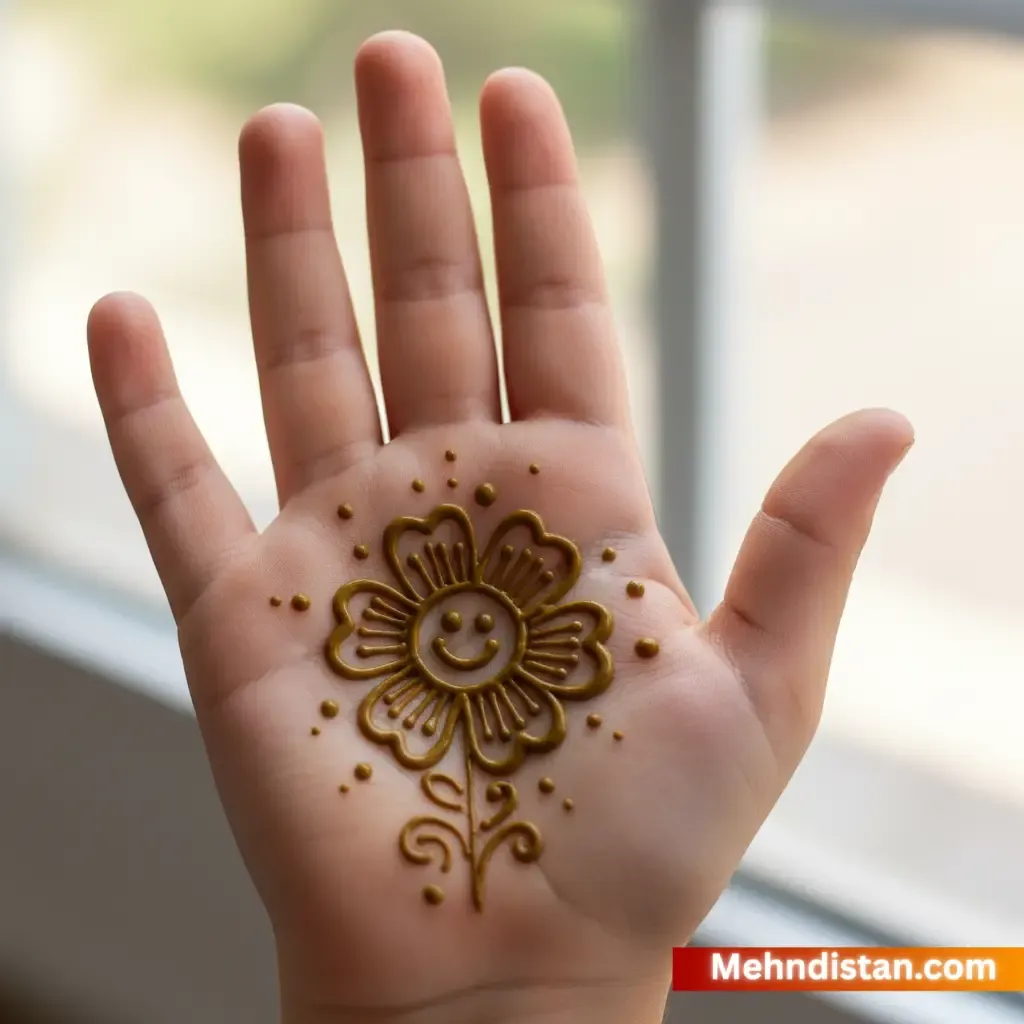
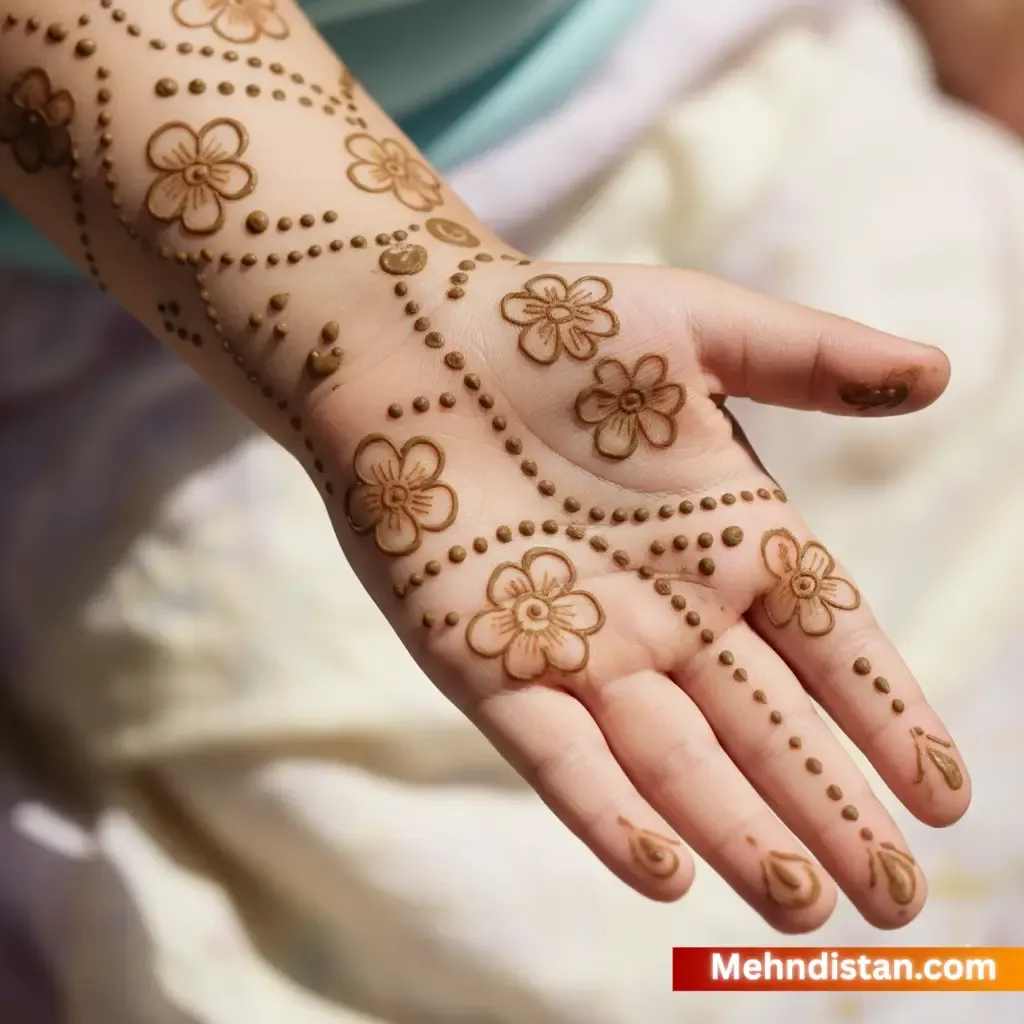
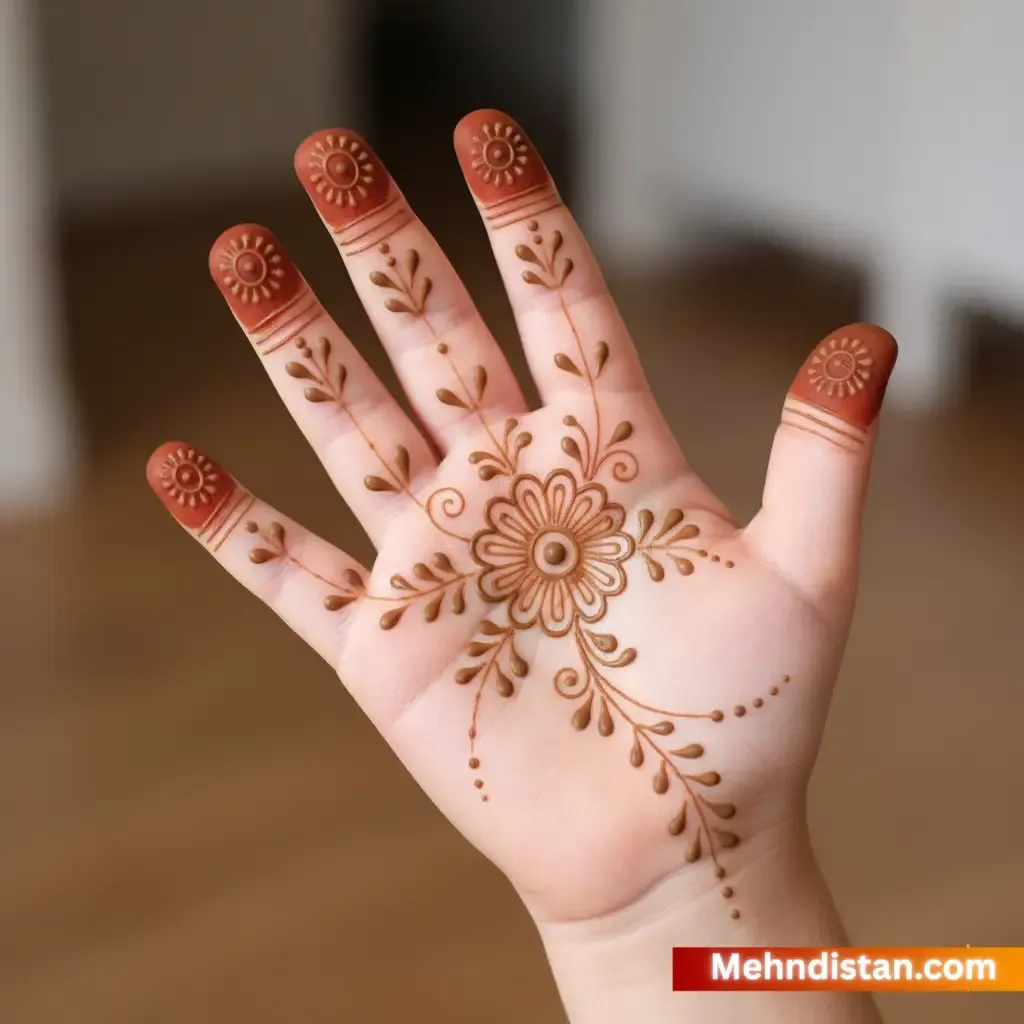
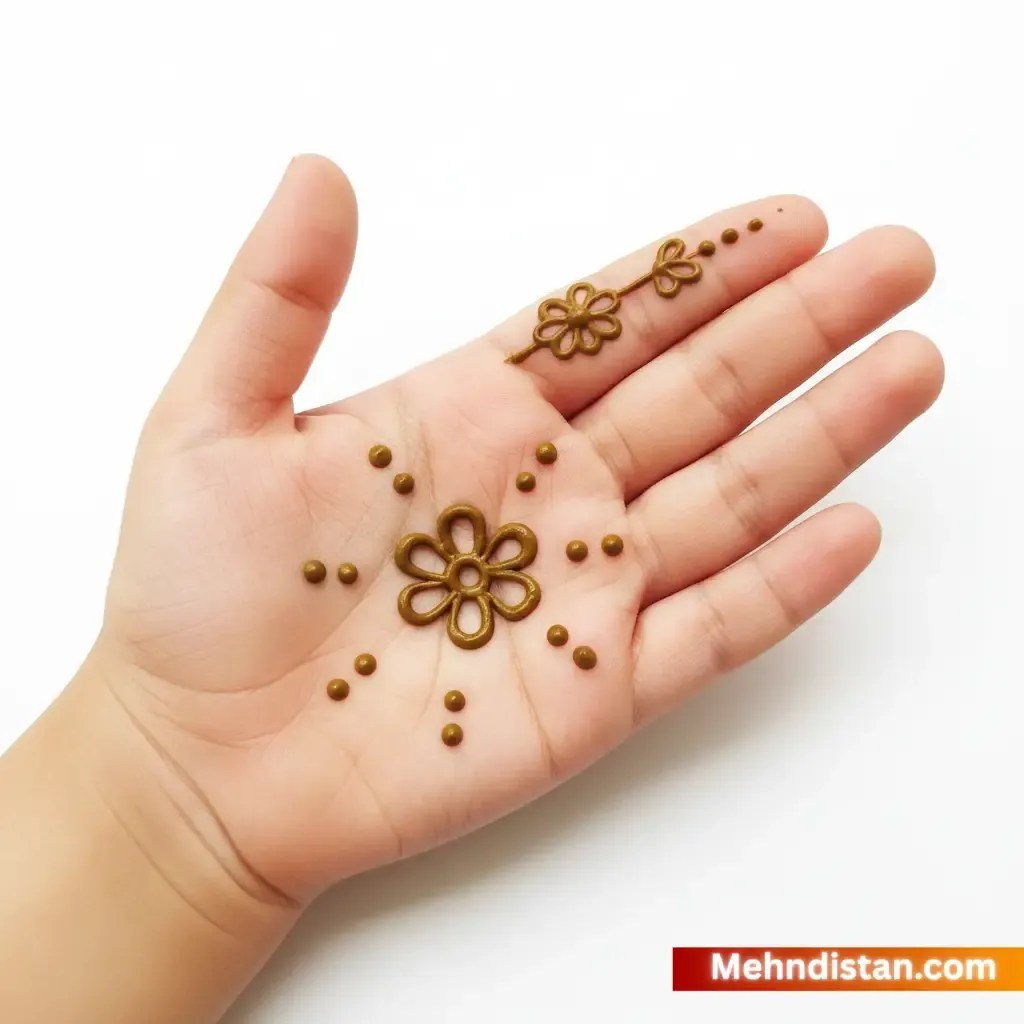
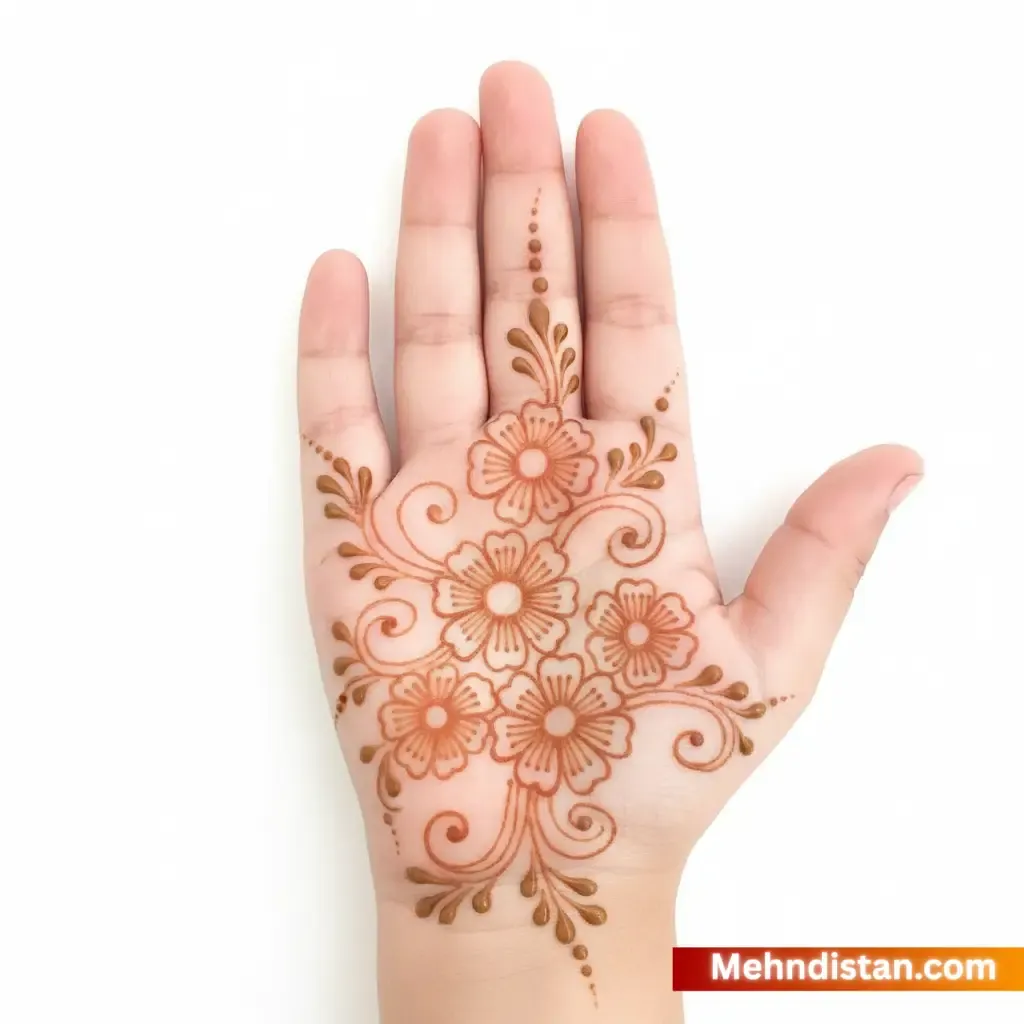
For the front hand, I usually recommend a small central motif with a few supporting details around it. A mini mandala, flower, butterfly, heart, or leafy vine can make the palm look decorated while leaving enough open skin to keep the design light. This is especially useful when a child cannot sit still for a long application.
- Choose a simple center motif instead of filling the whole palm.
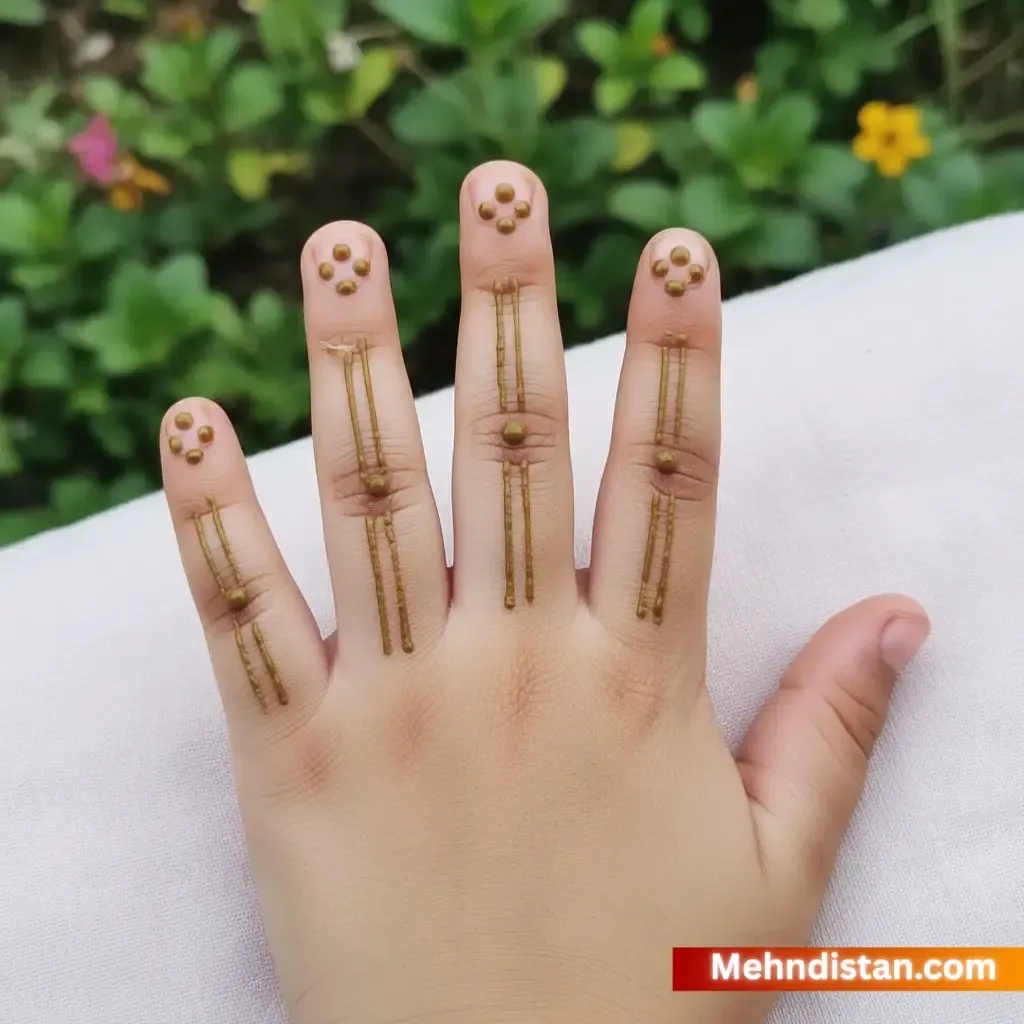
- Keep finger patterns short and comfortable.
- Use clear lines, dots, and small leaves to finish the look.
Baby Girl and Younger Kids: Keep It Minimal
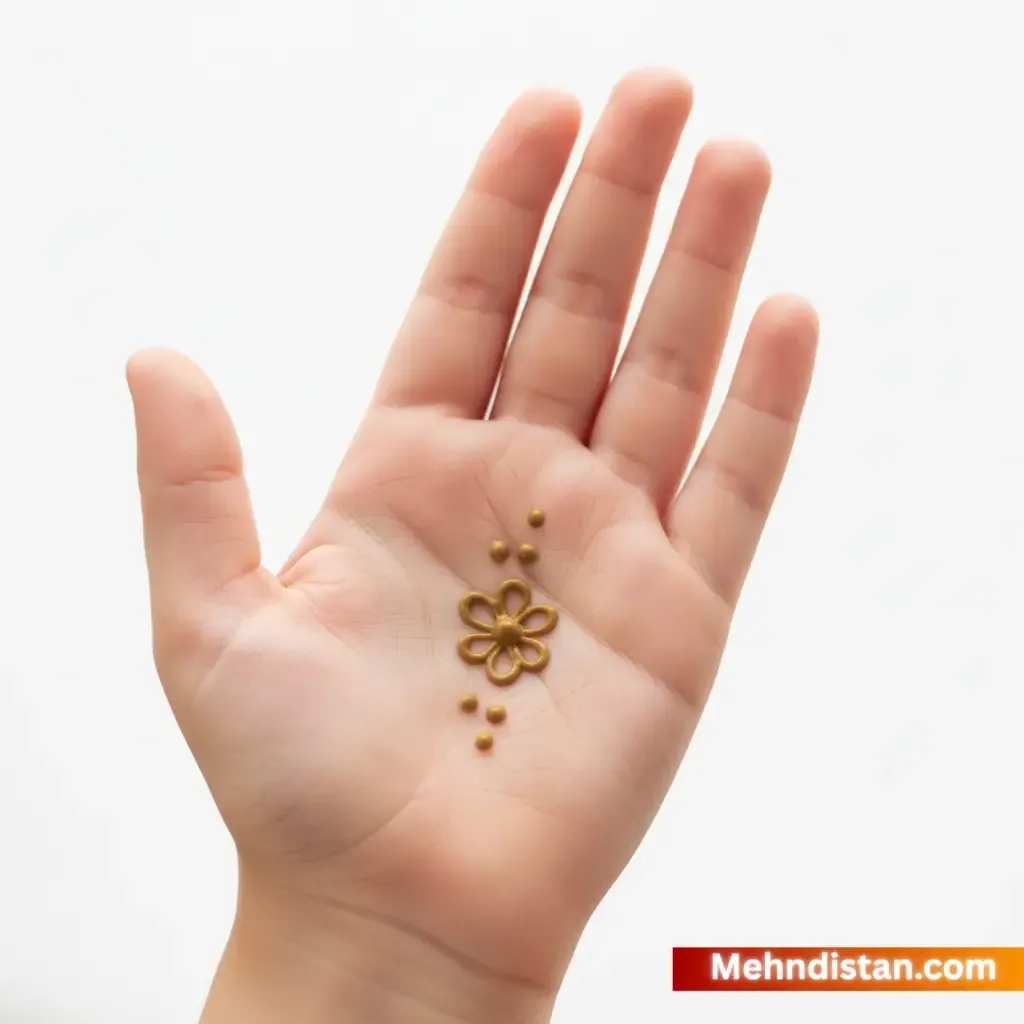
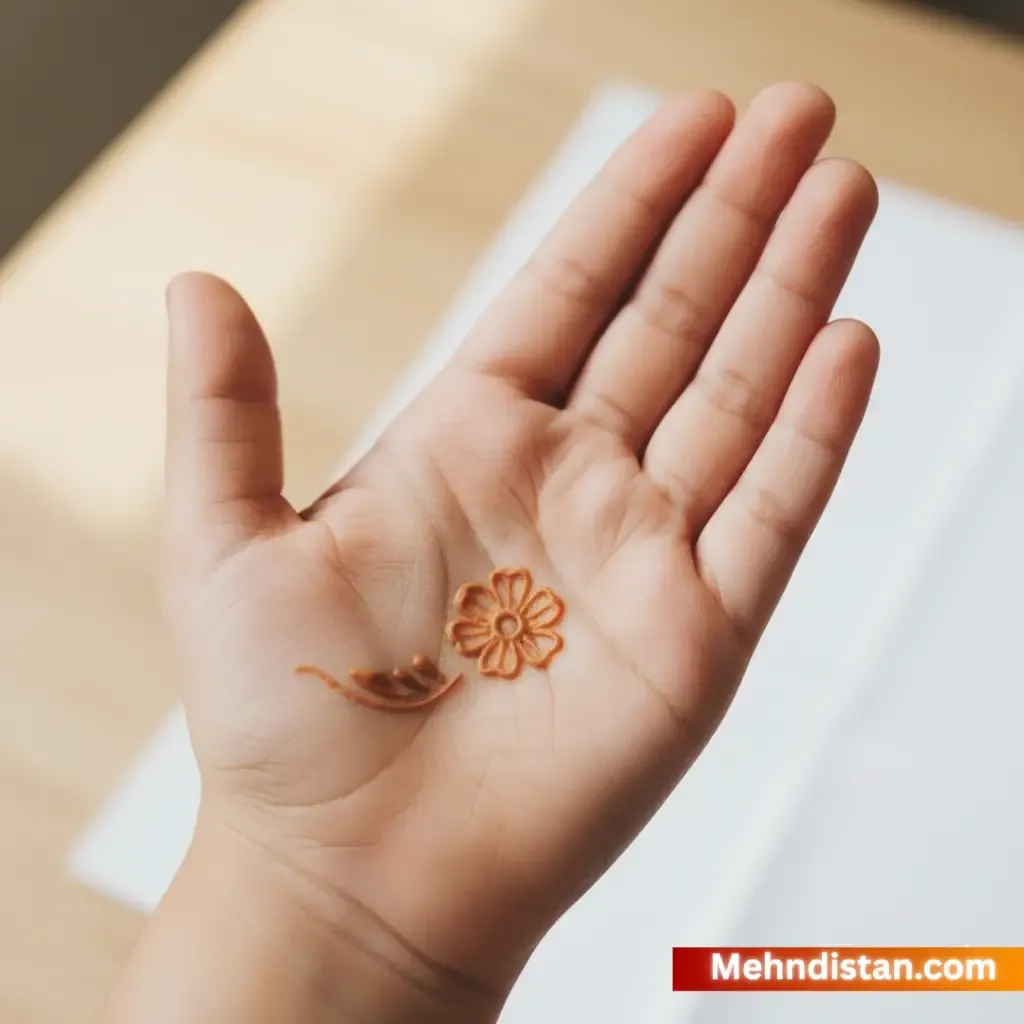
For very young children, I would keep the idea extremely small and simple rather than treating a baby’s hand like an adult canvas. If the child is too young to understand the process or cannot remain comfortable, it is better to skip the application. For an older child who wants a tiny pattern, a single flower, star, heart, or short vine is enough.
- Use a skin-safe, natural henna product from a trustworthy source.
- Do a small patch test first and stop if irritation appears.
- Never use black henna or products containing unknown dyes or chemicals.
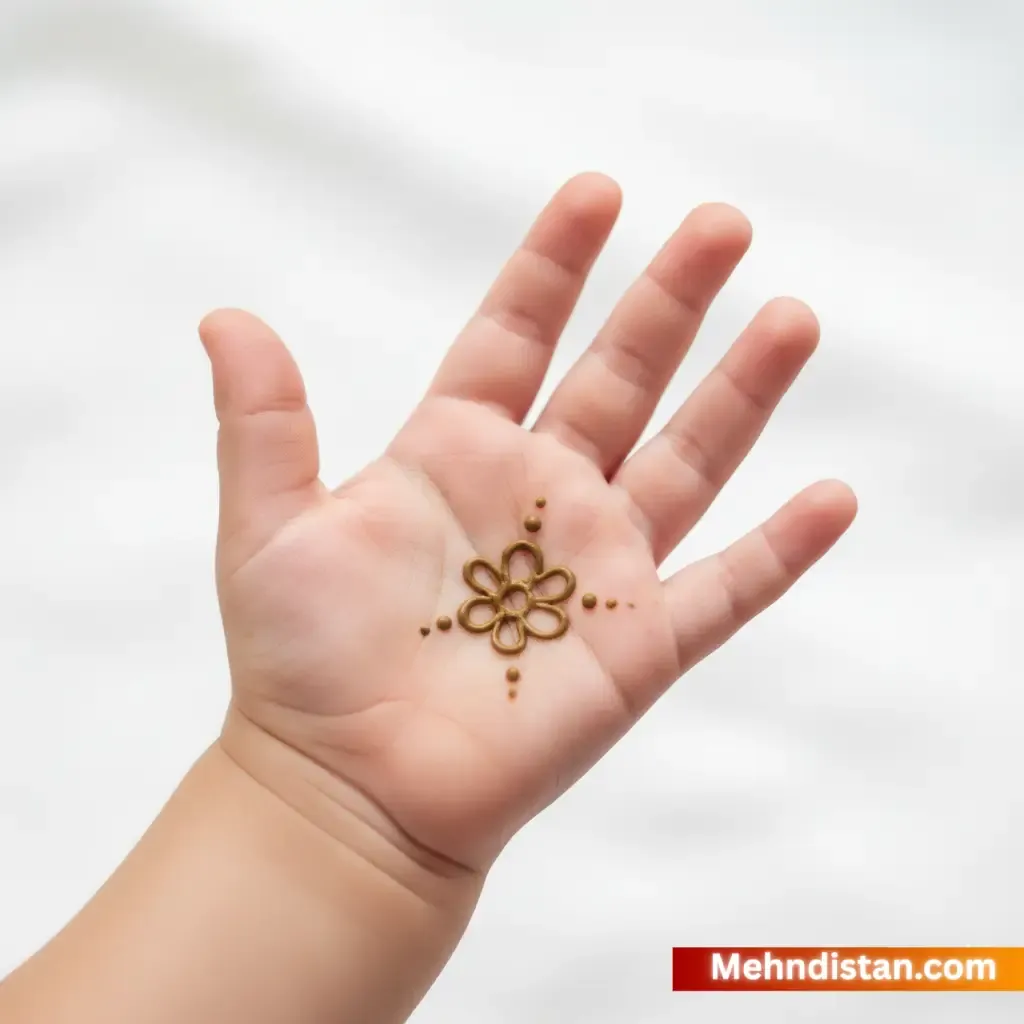
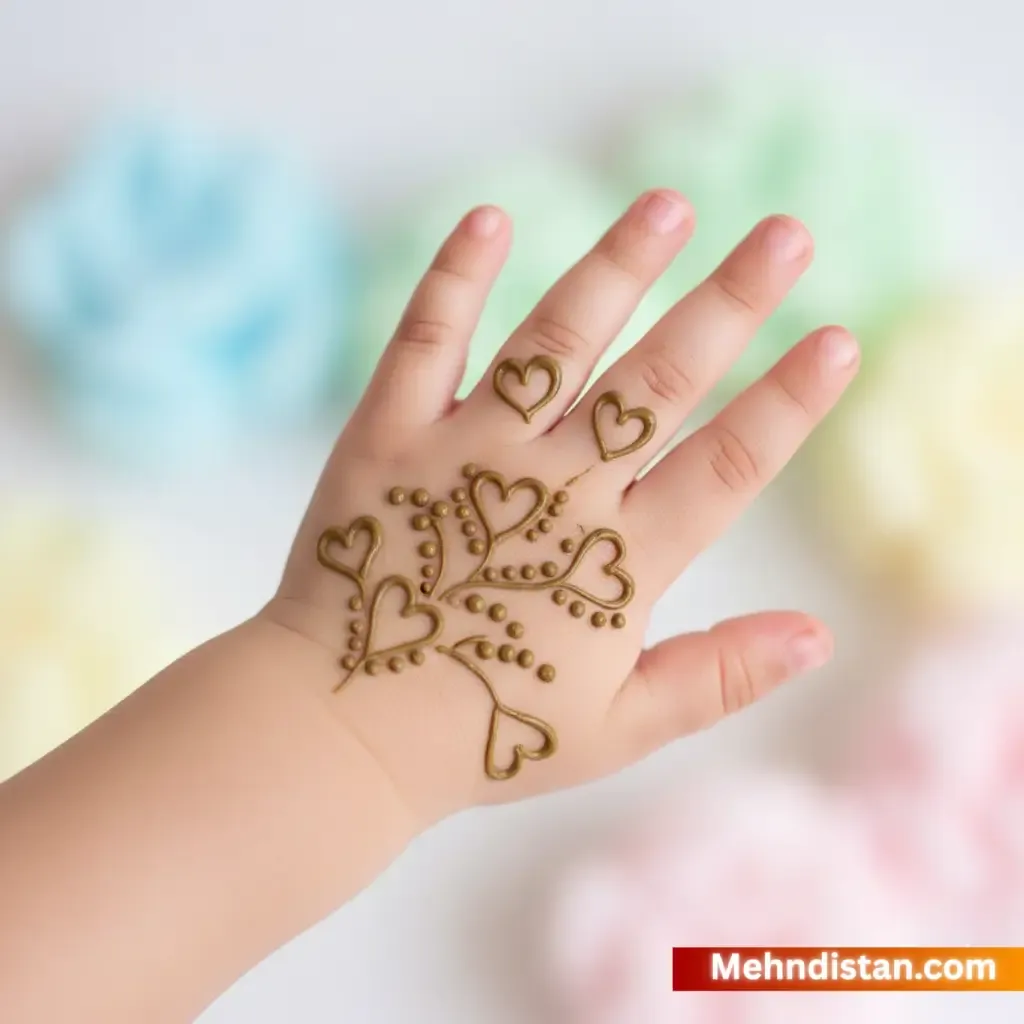
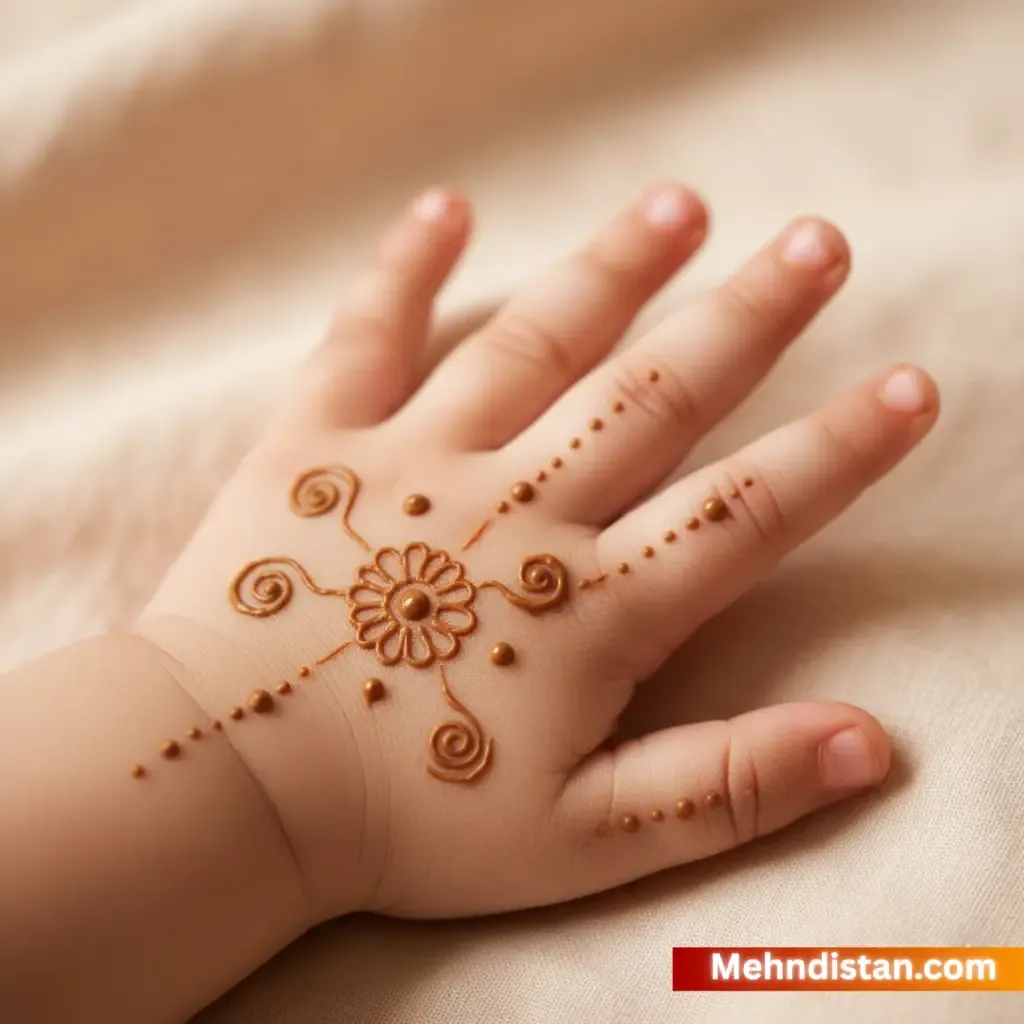
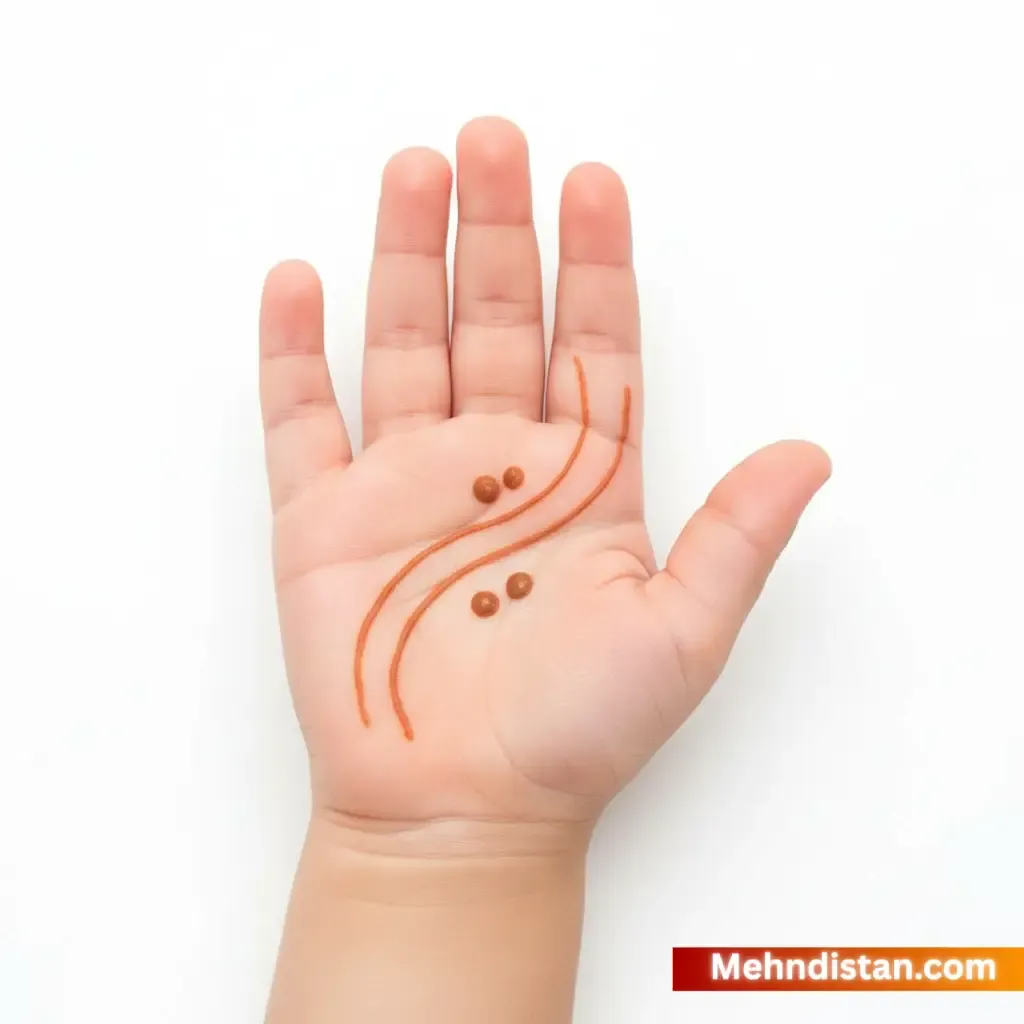
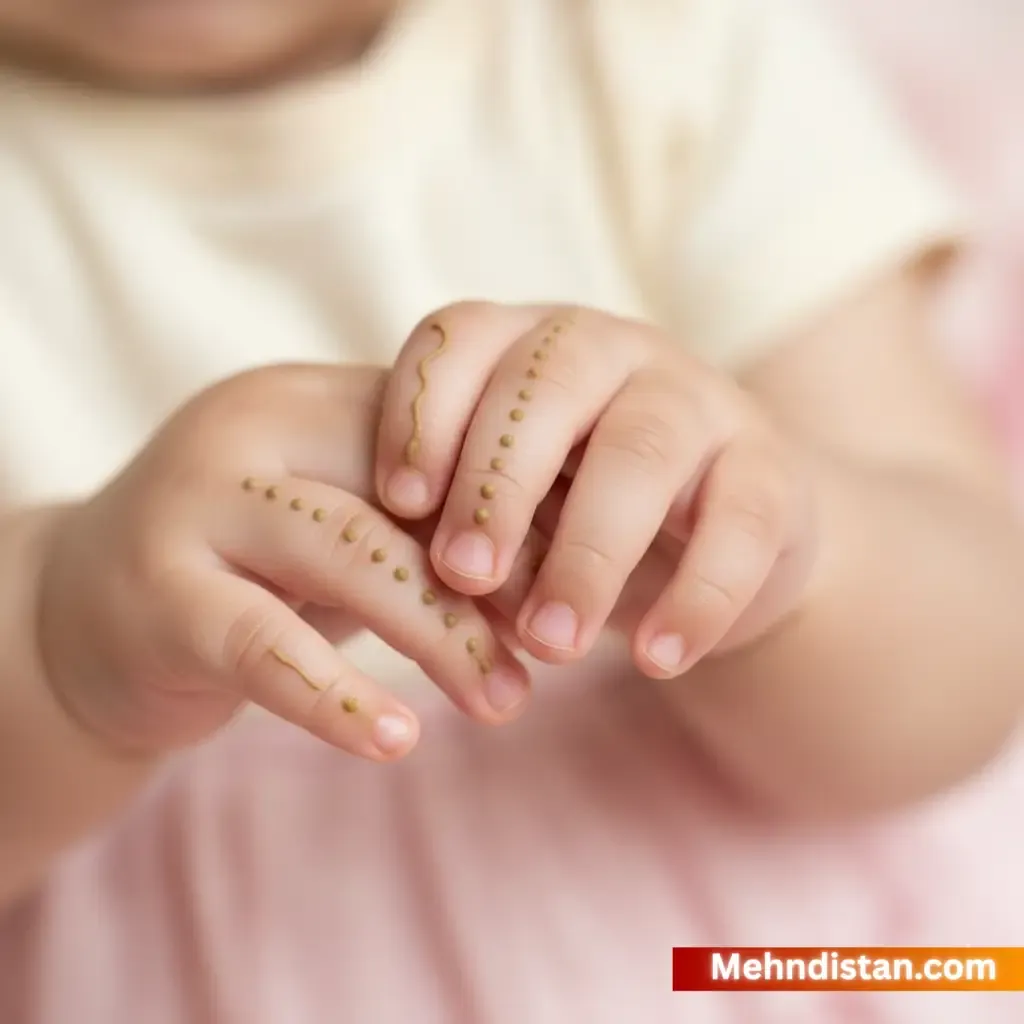
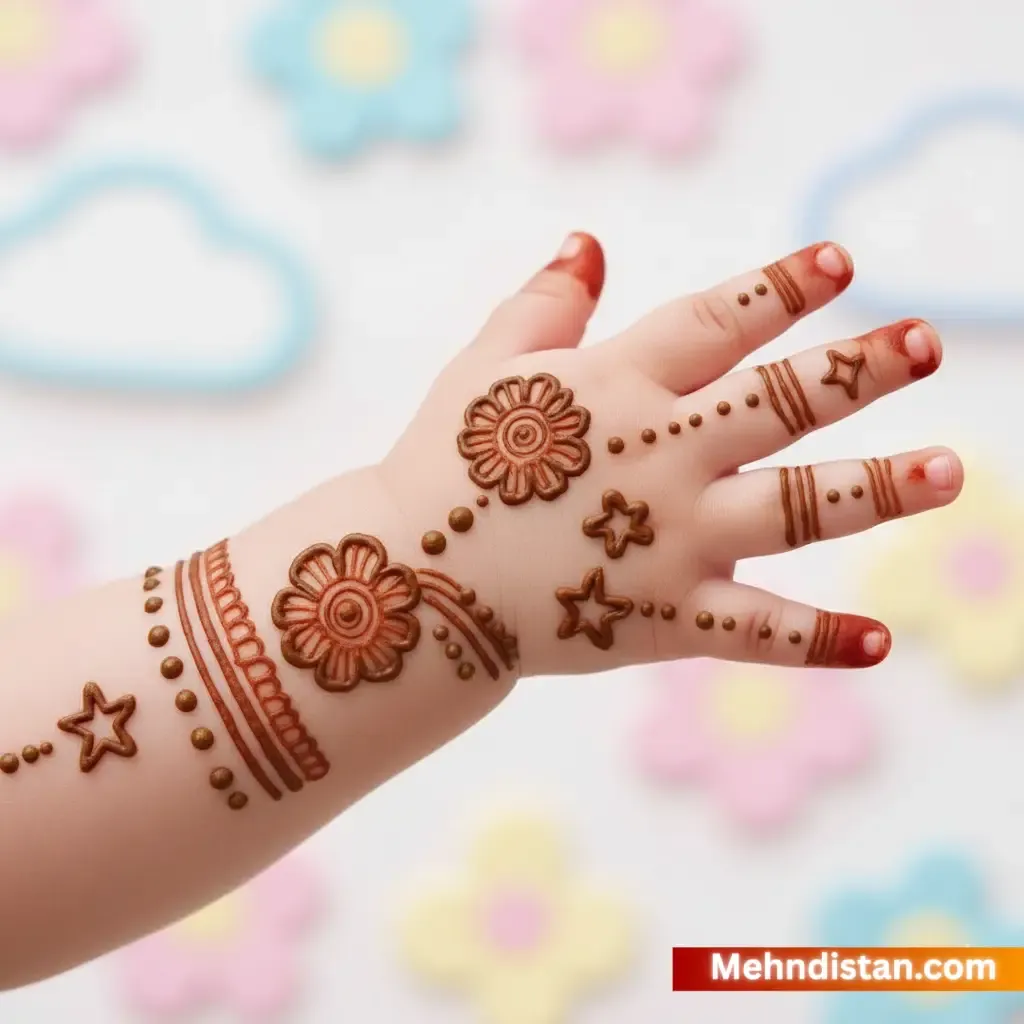
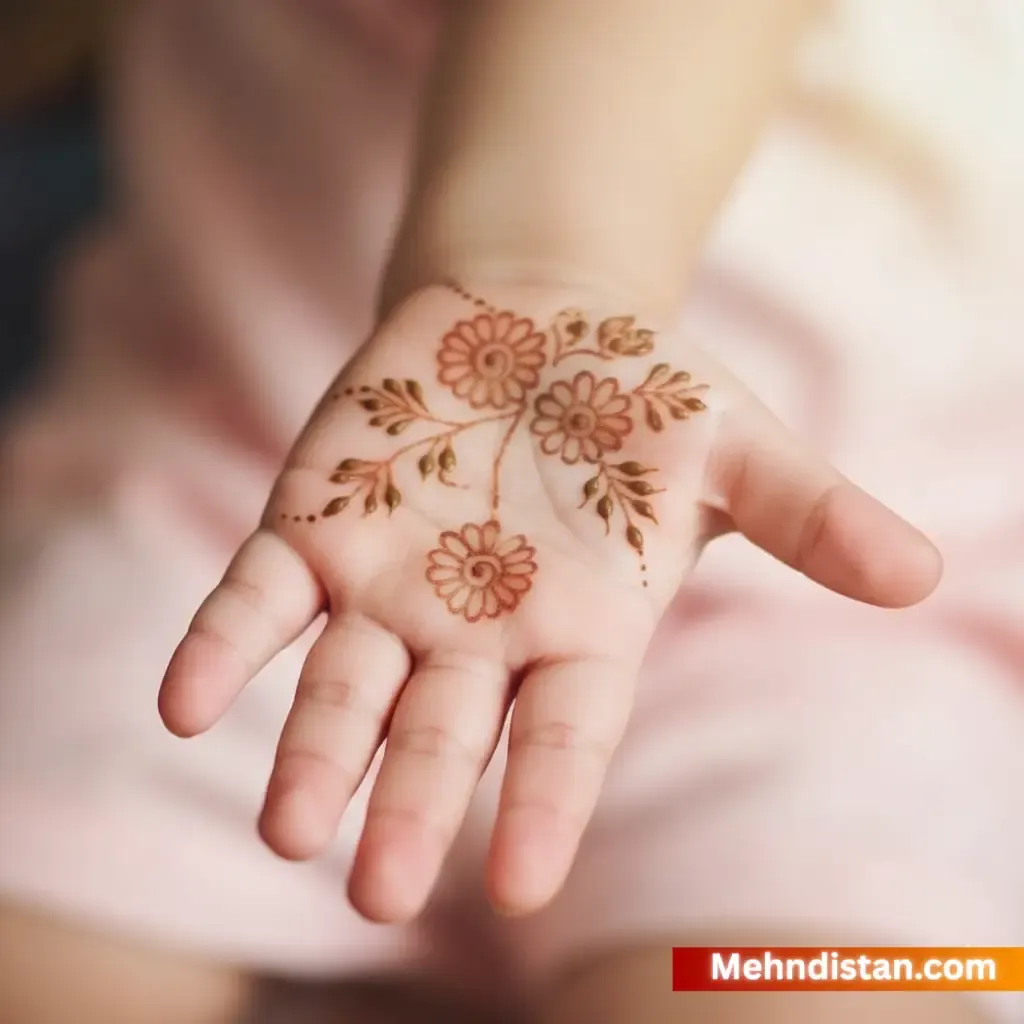
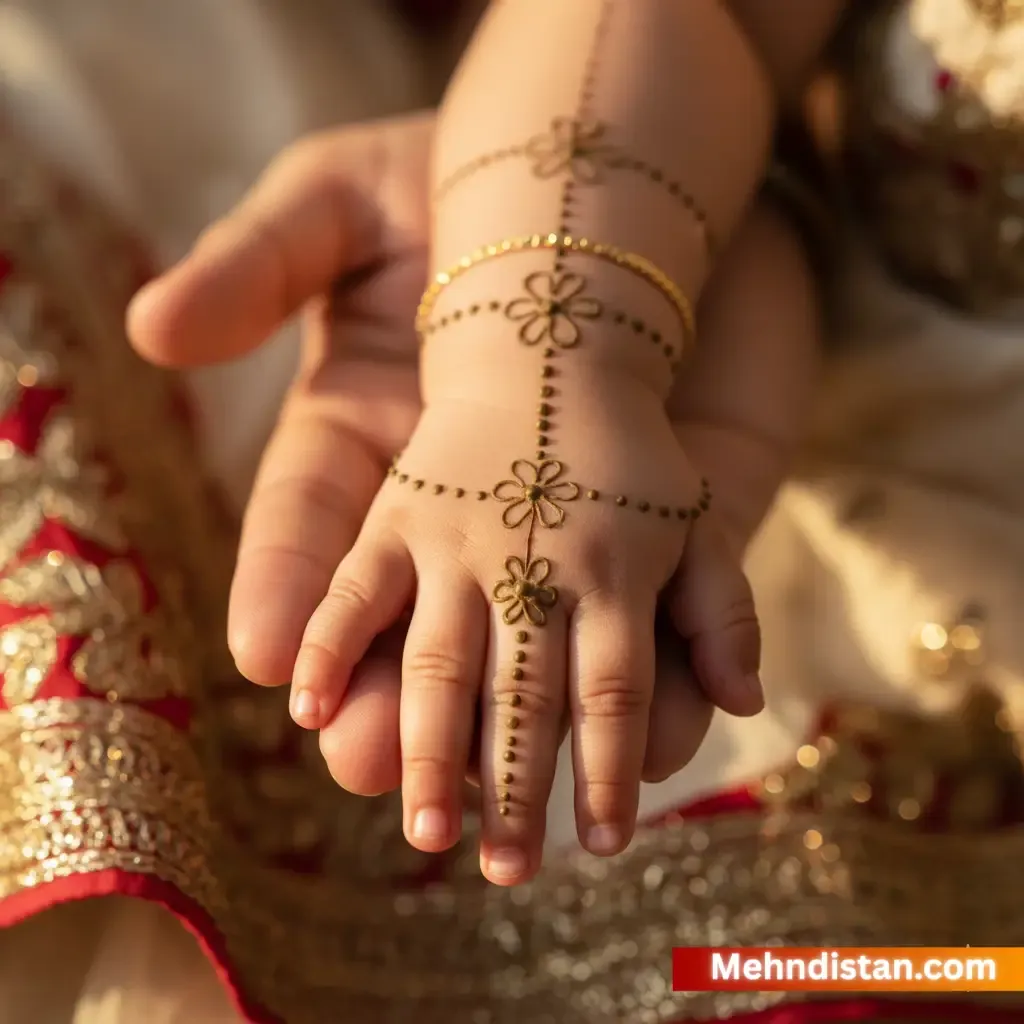
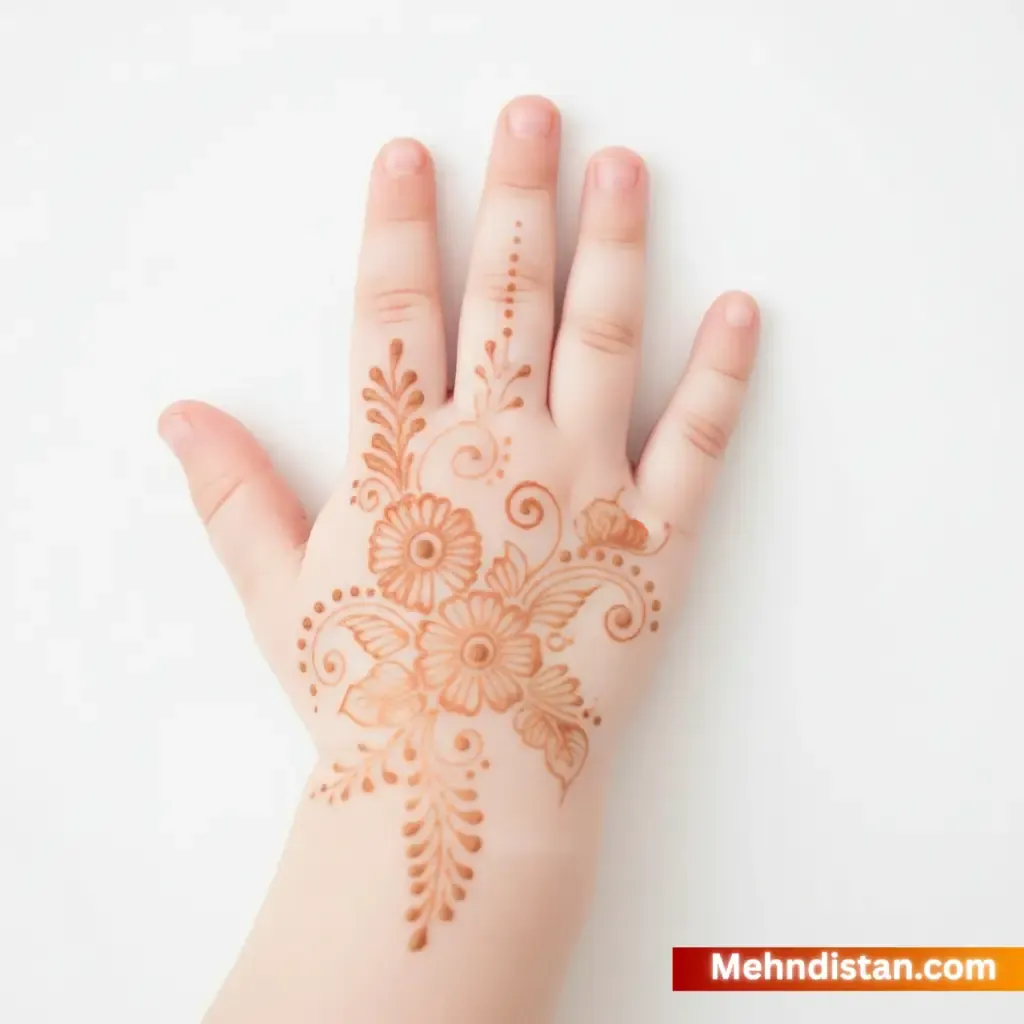
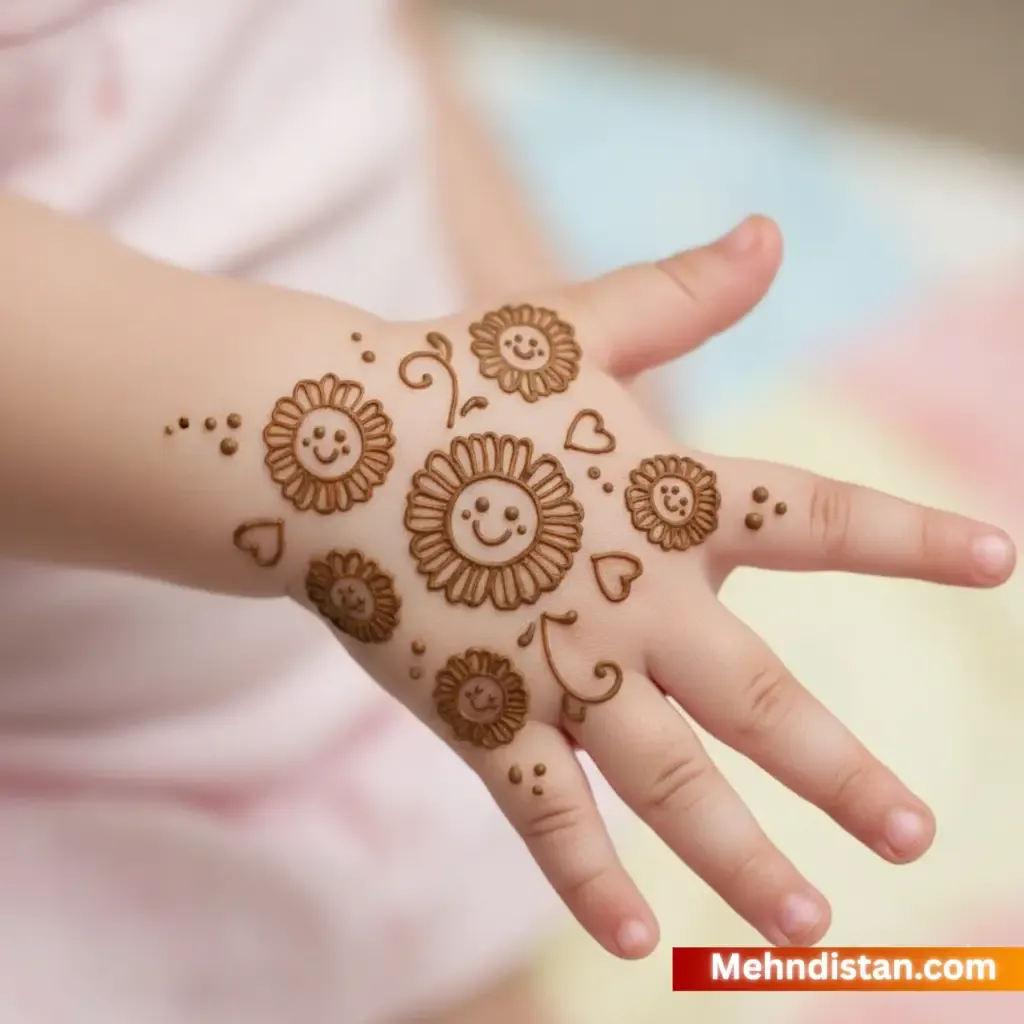
Cute Mehndi Design for Kids Back Hand
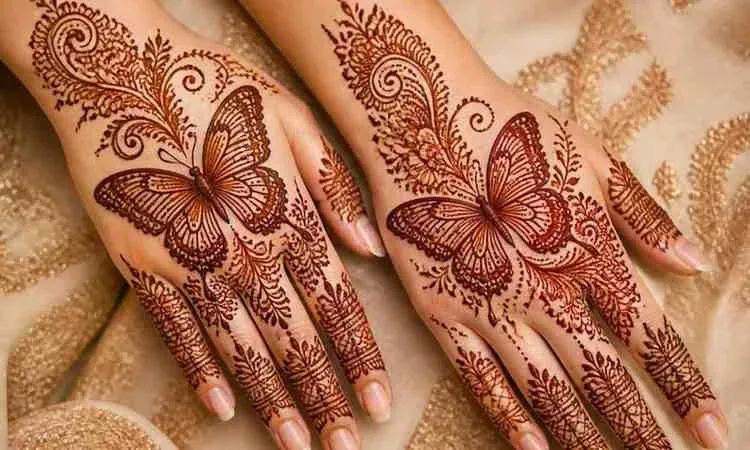
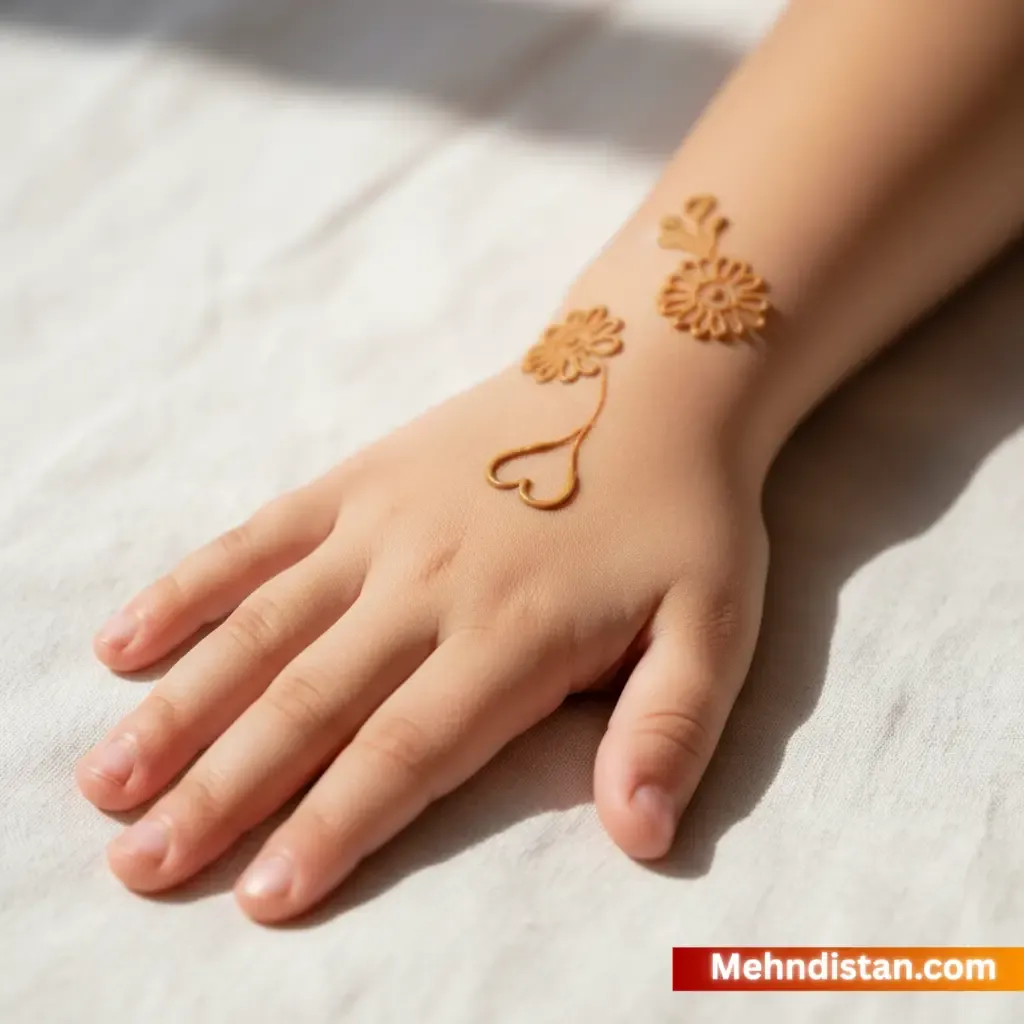
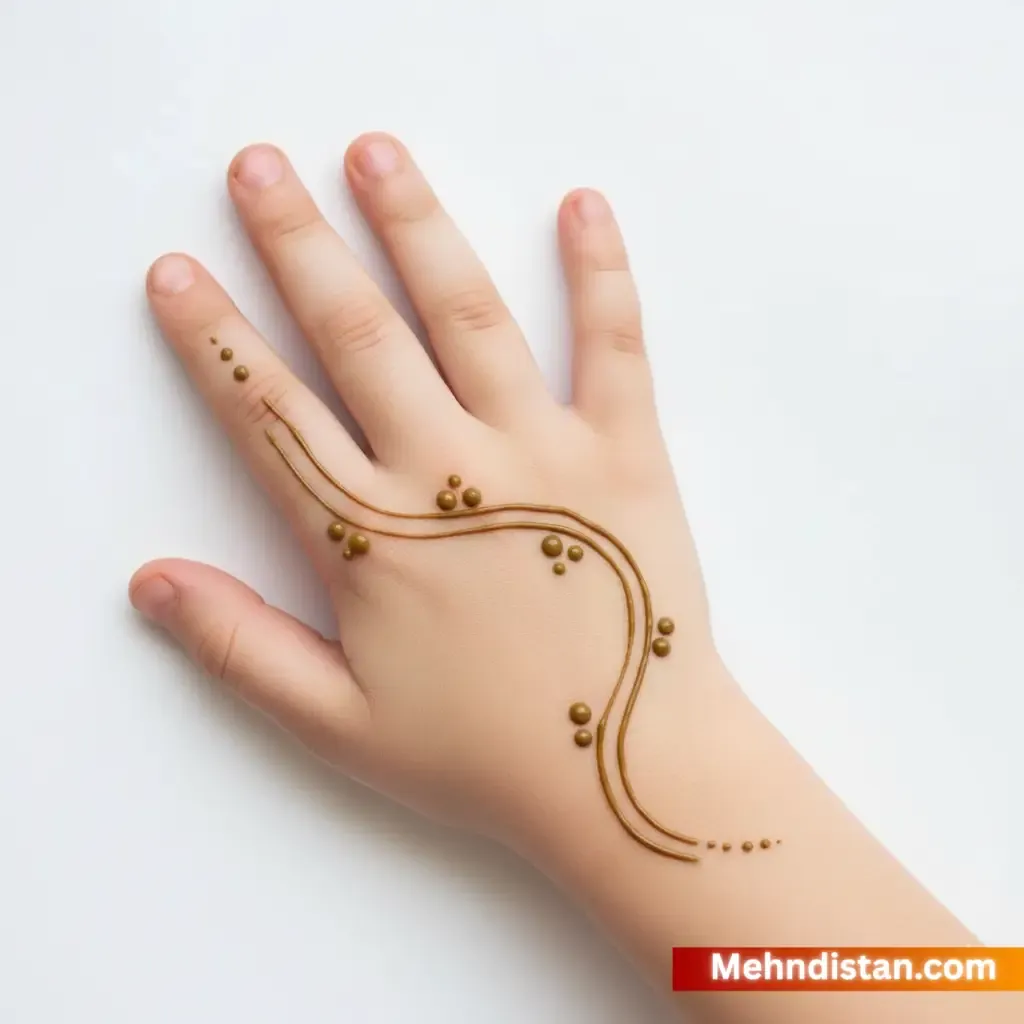
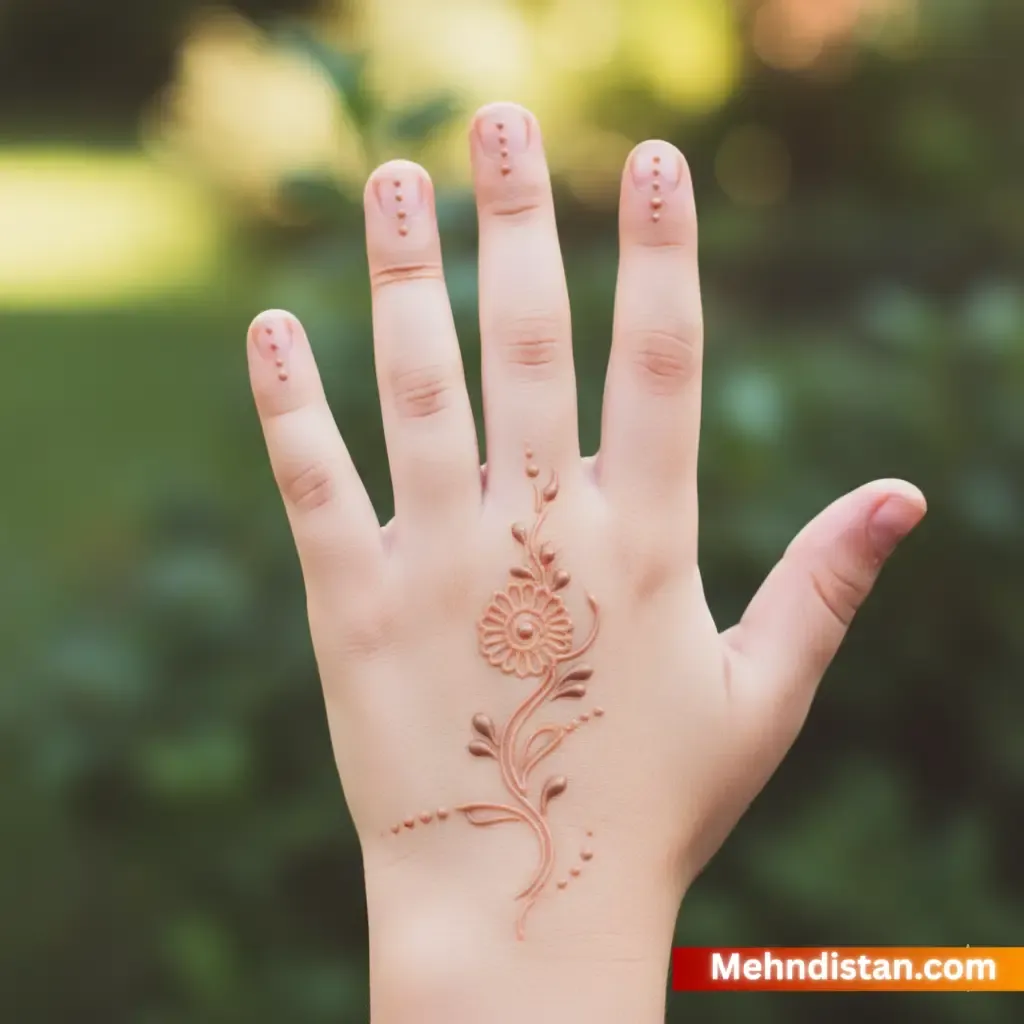
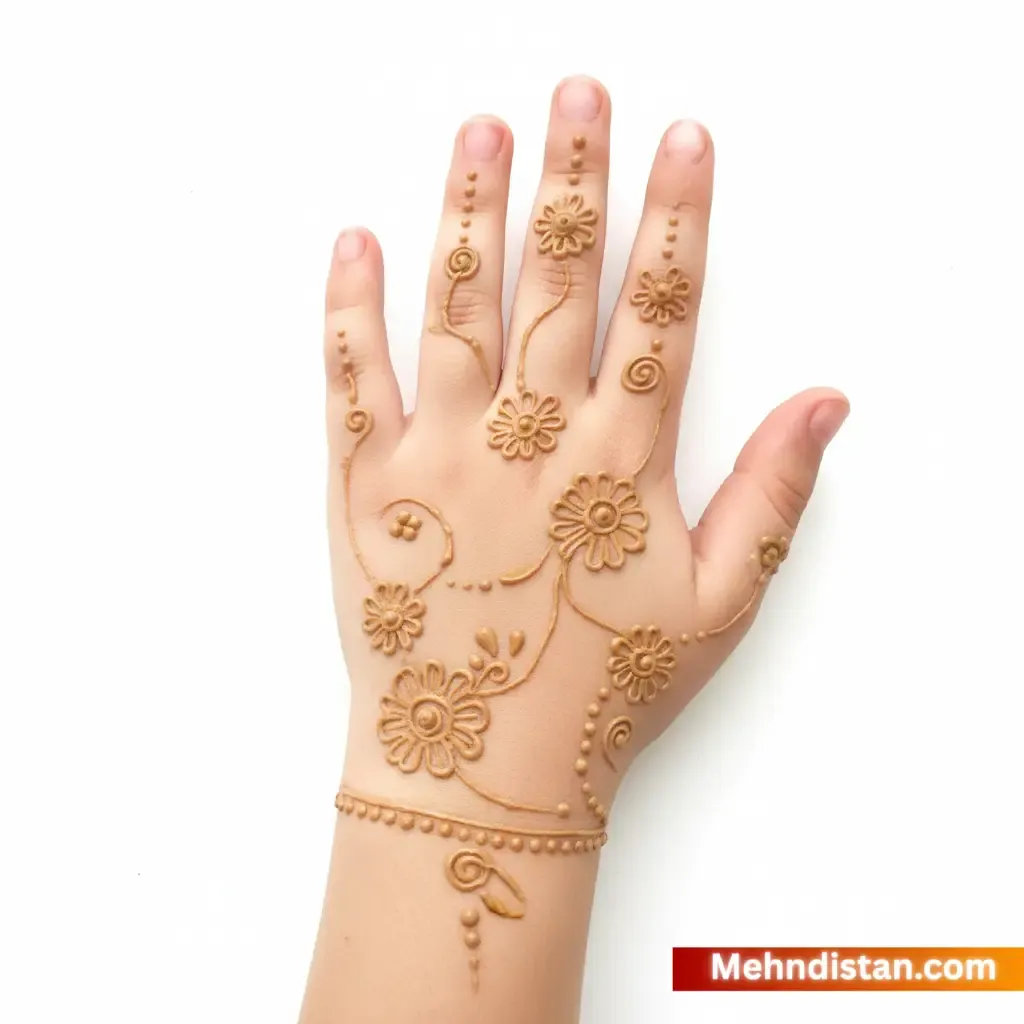
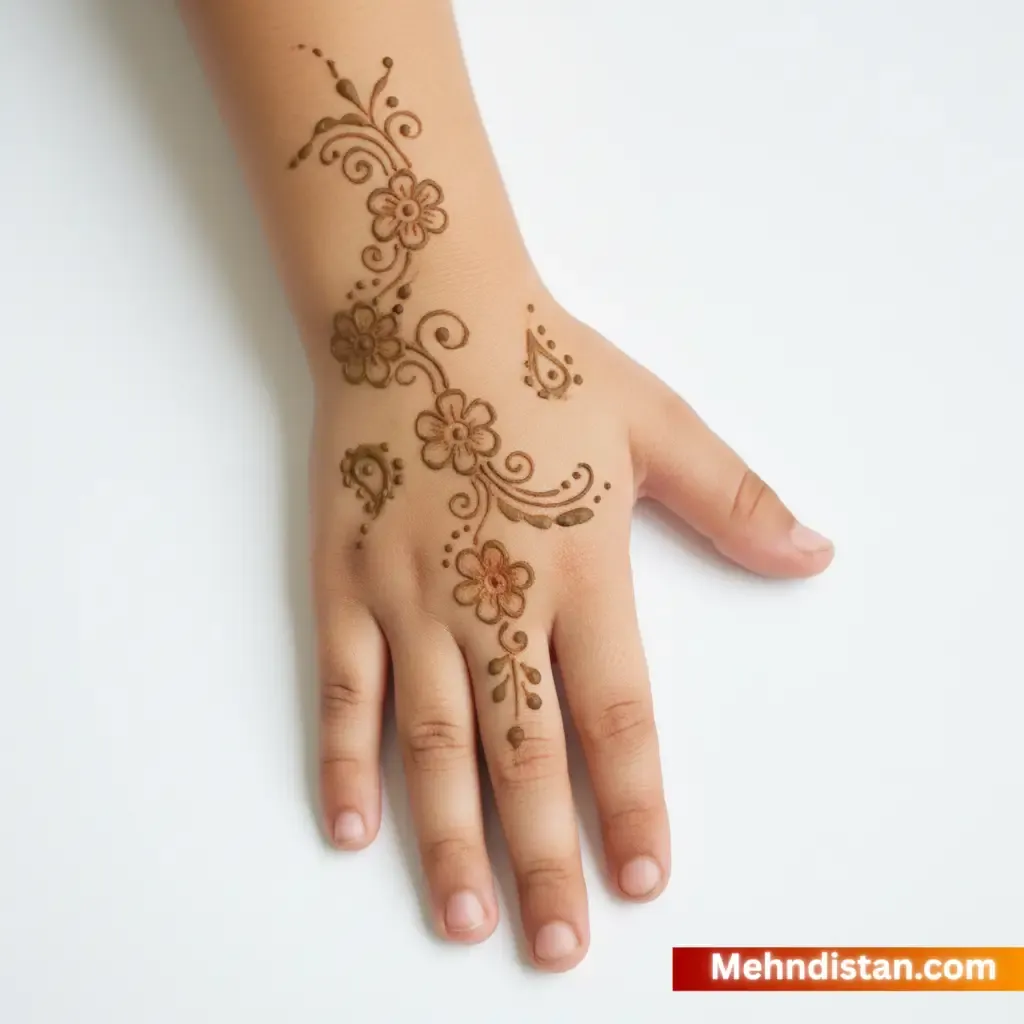
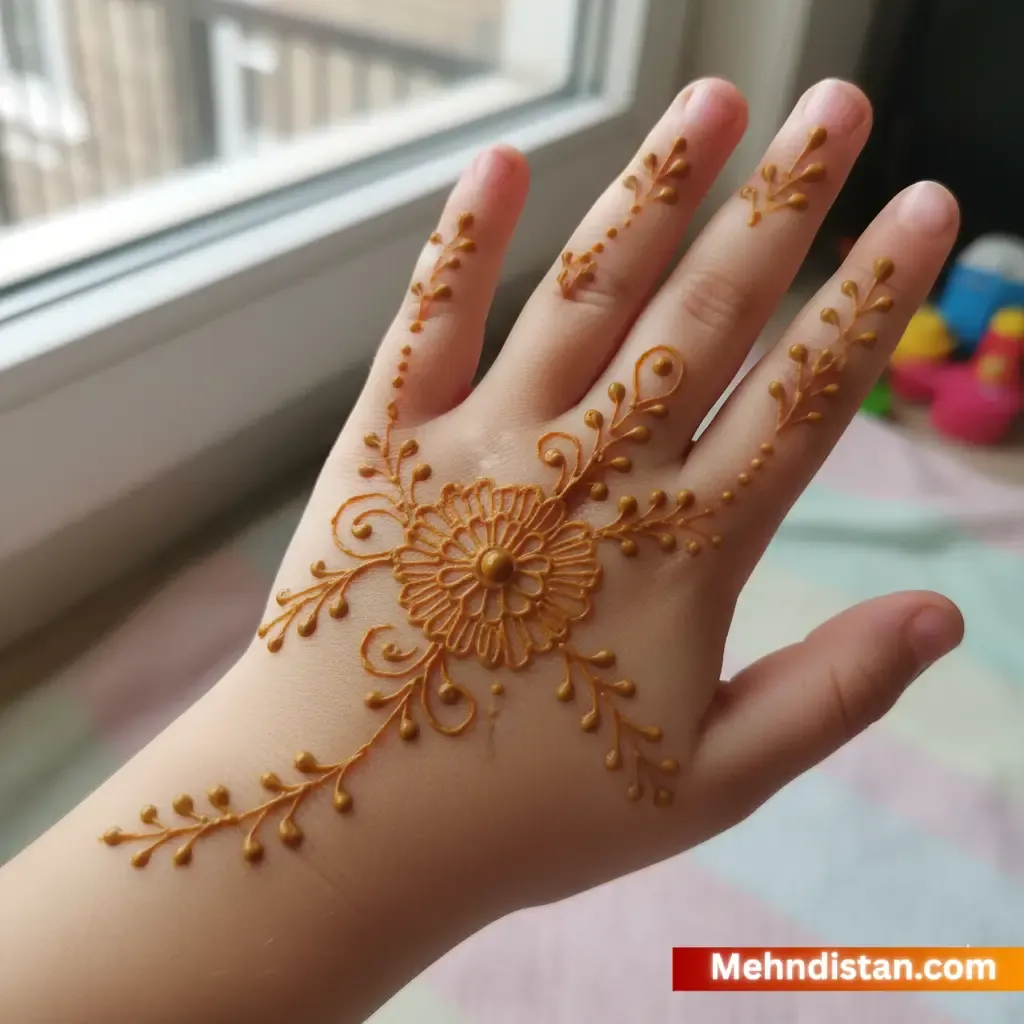
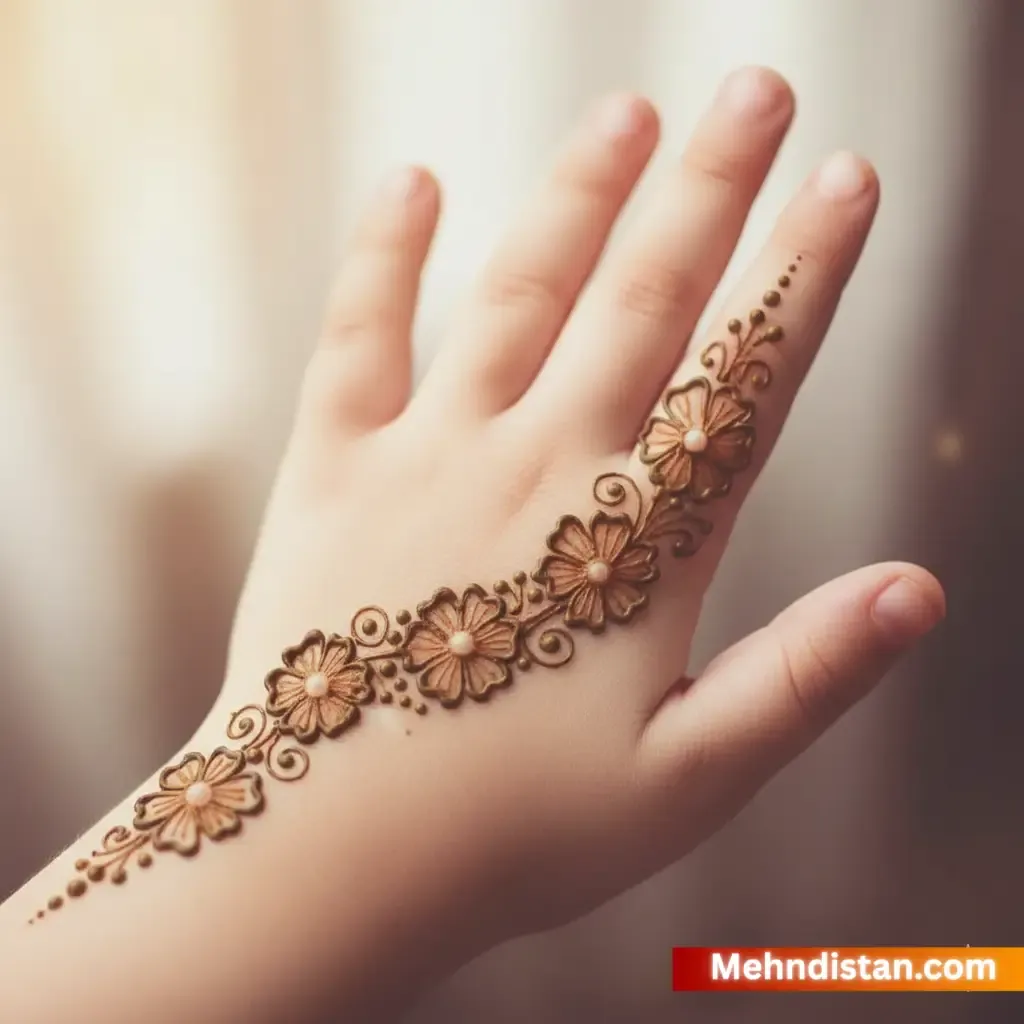
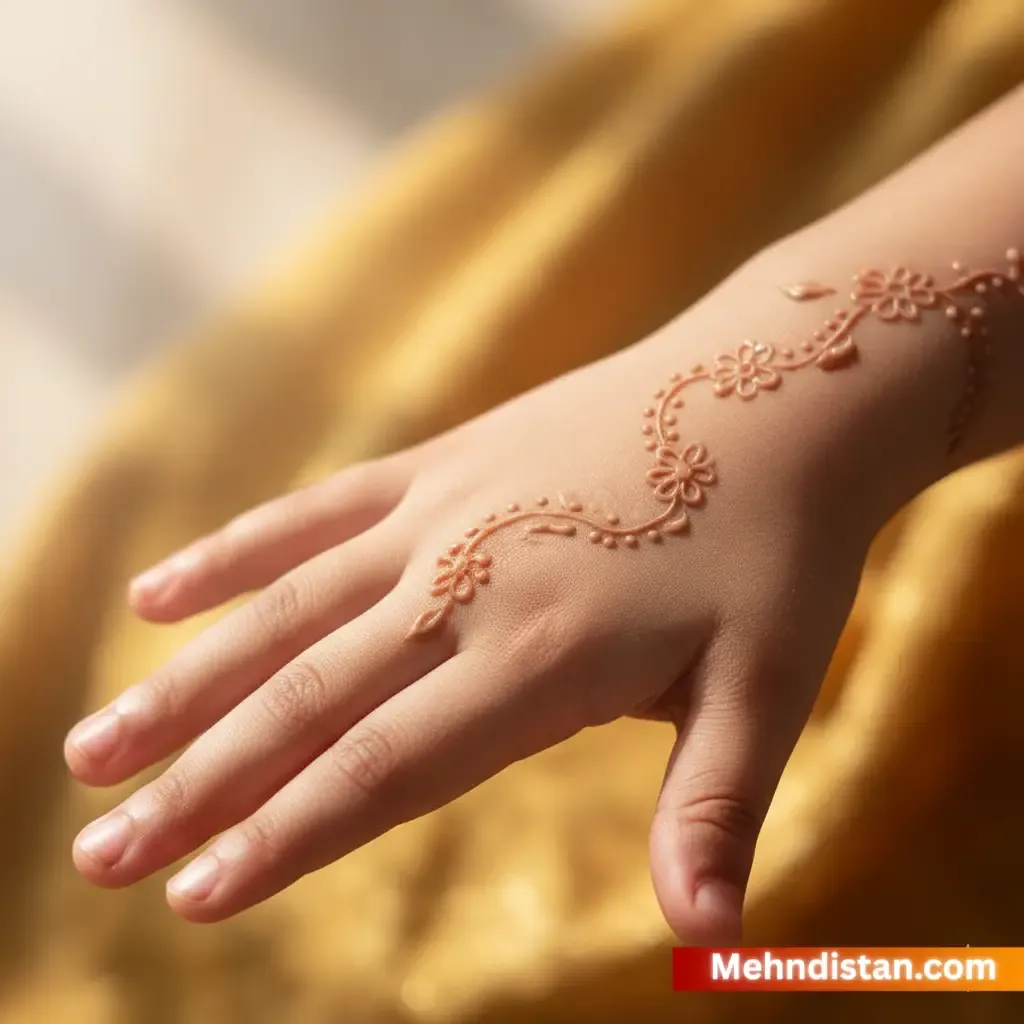
The back of the hand gives me more room for a clean little vine, flower trail, butterfly, or bracelet-inspired pattern. I like this placement when a child wants something stylish but does not want a heavy palm design. A few dots around the main motif can add detail without making the pattern busy.
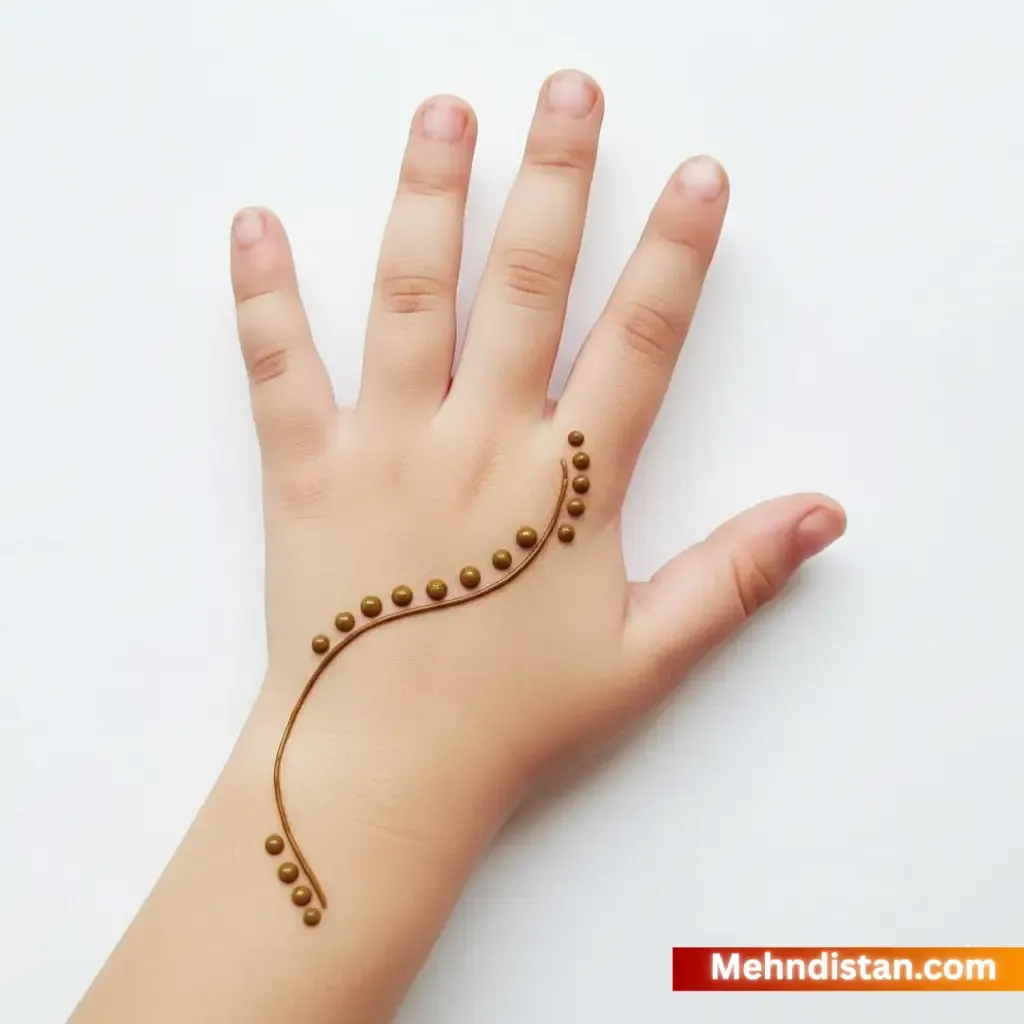
- Try a single vine from the wrist toward one finger.
- Use a small flower or mandala as the focal point.
- Keep the wrist border short for active children.
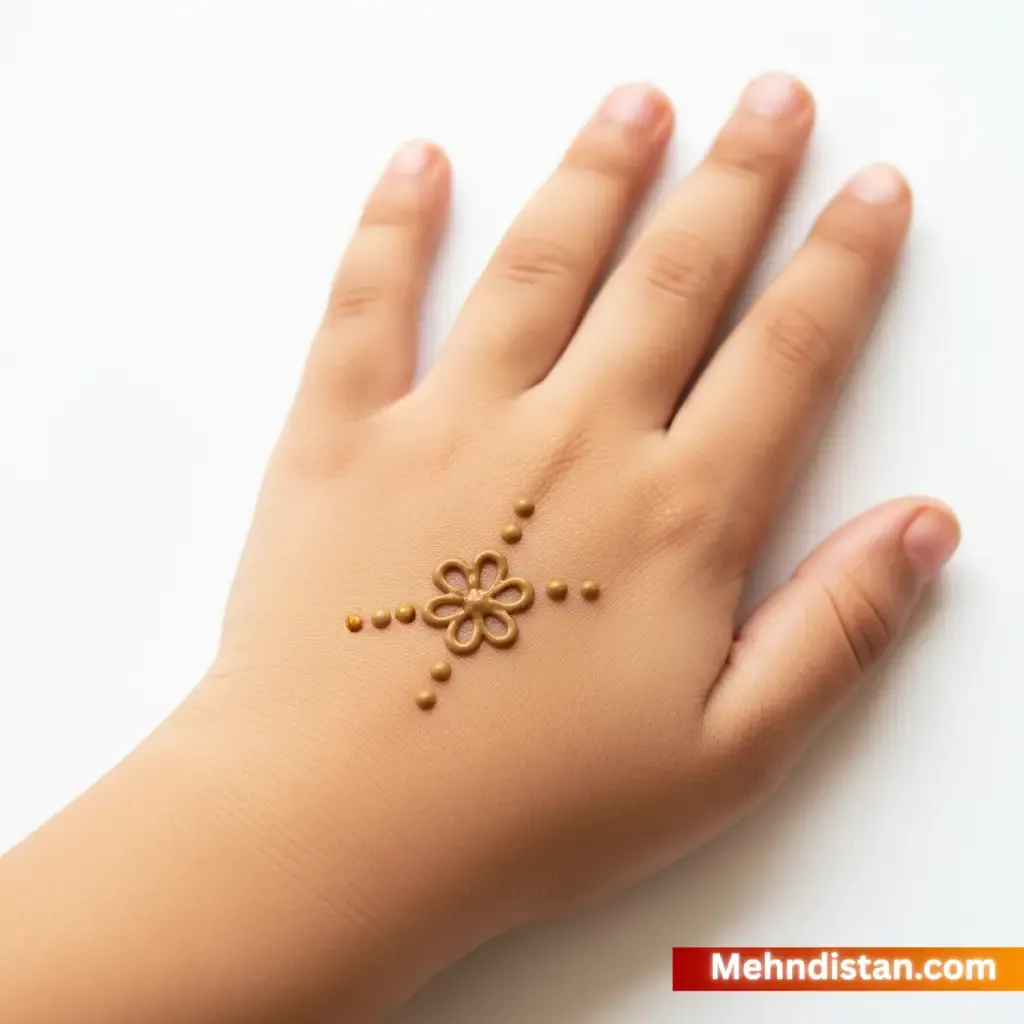
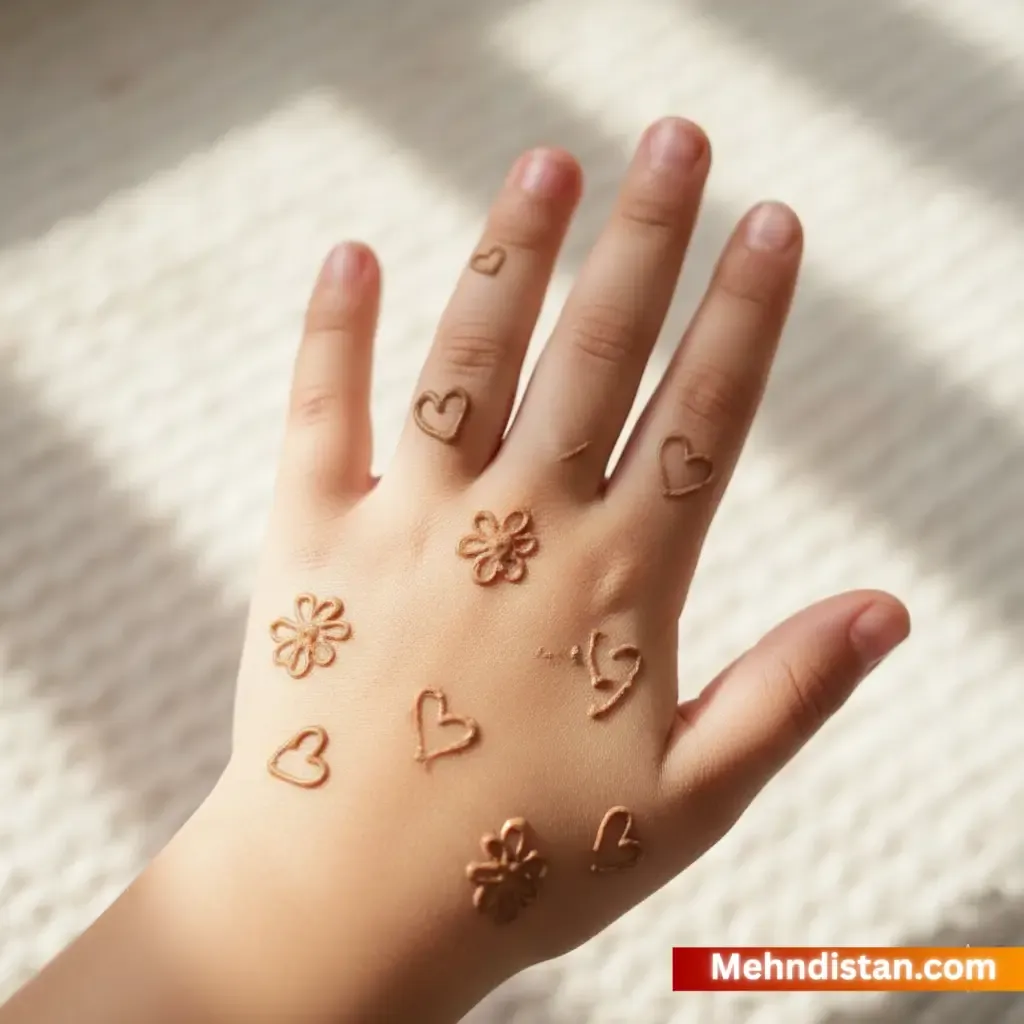
Cute Mehndi Design for Kids Full Hand
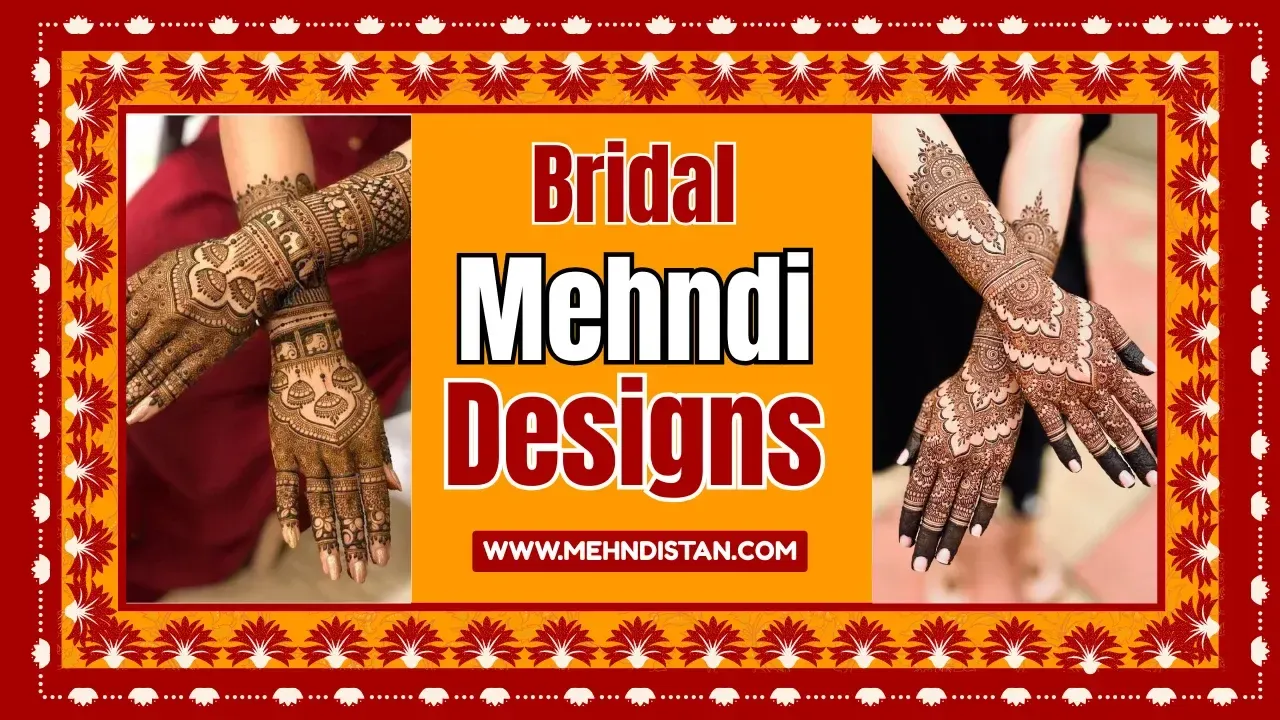
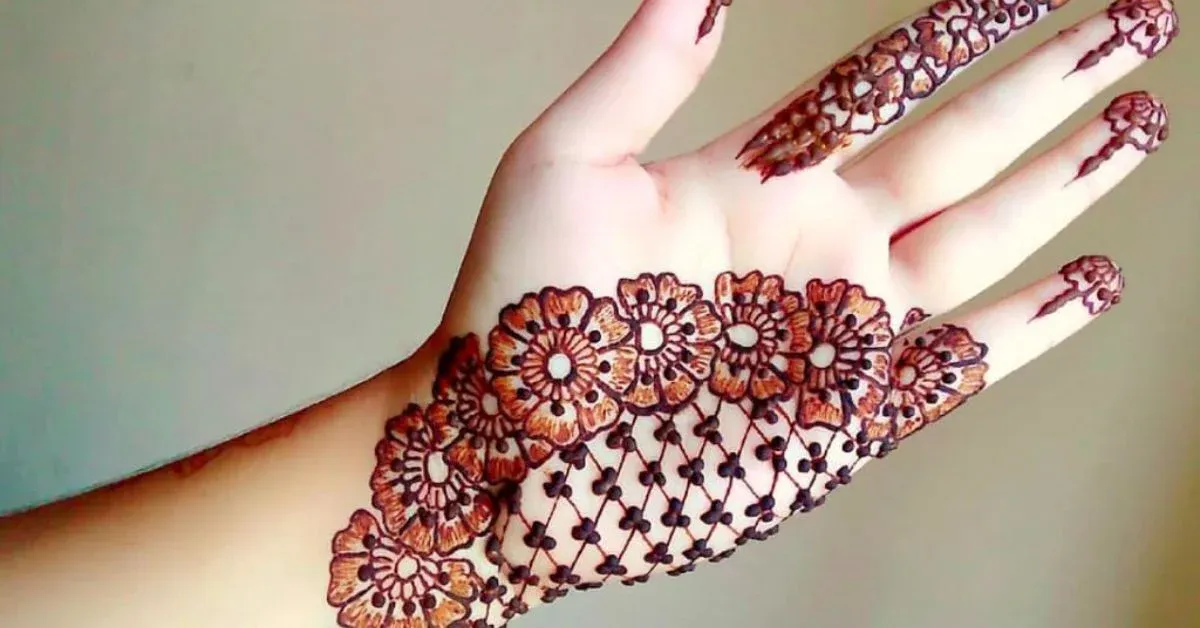
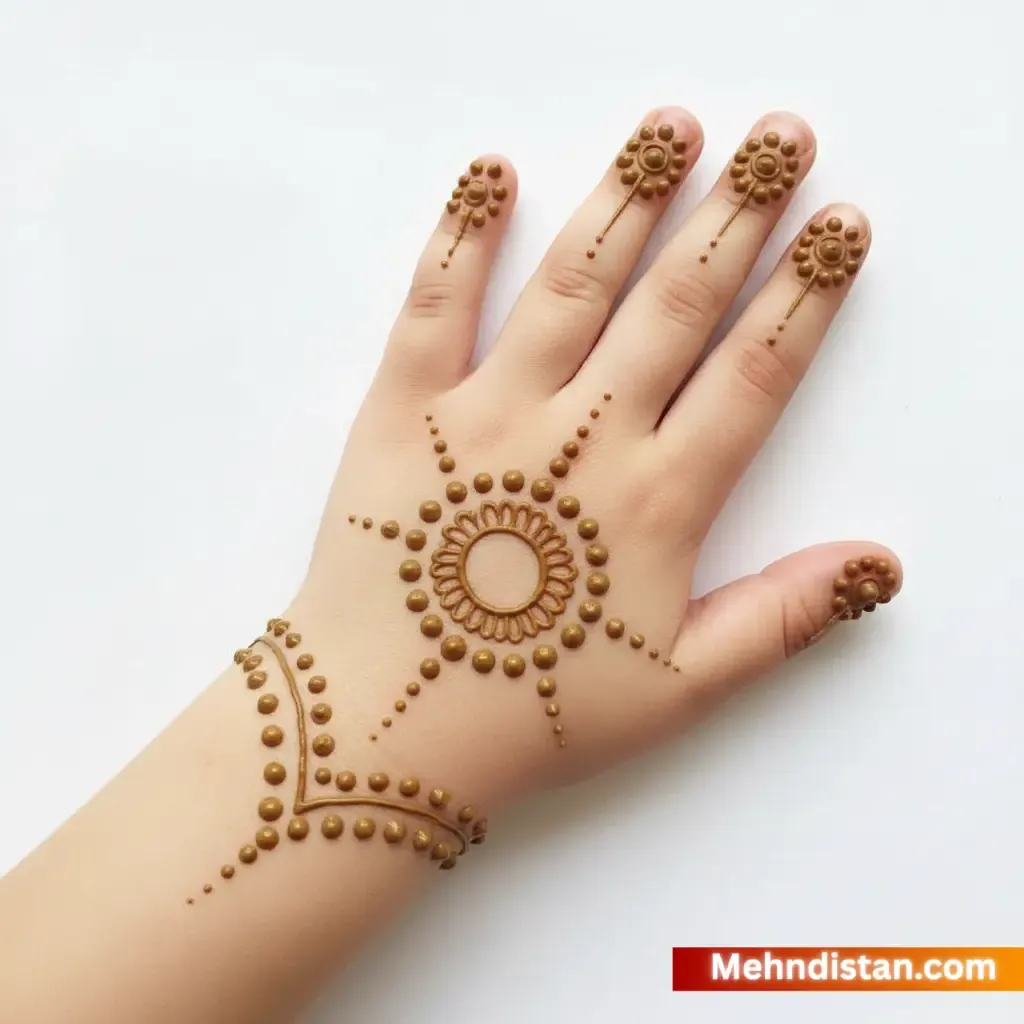
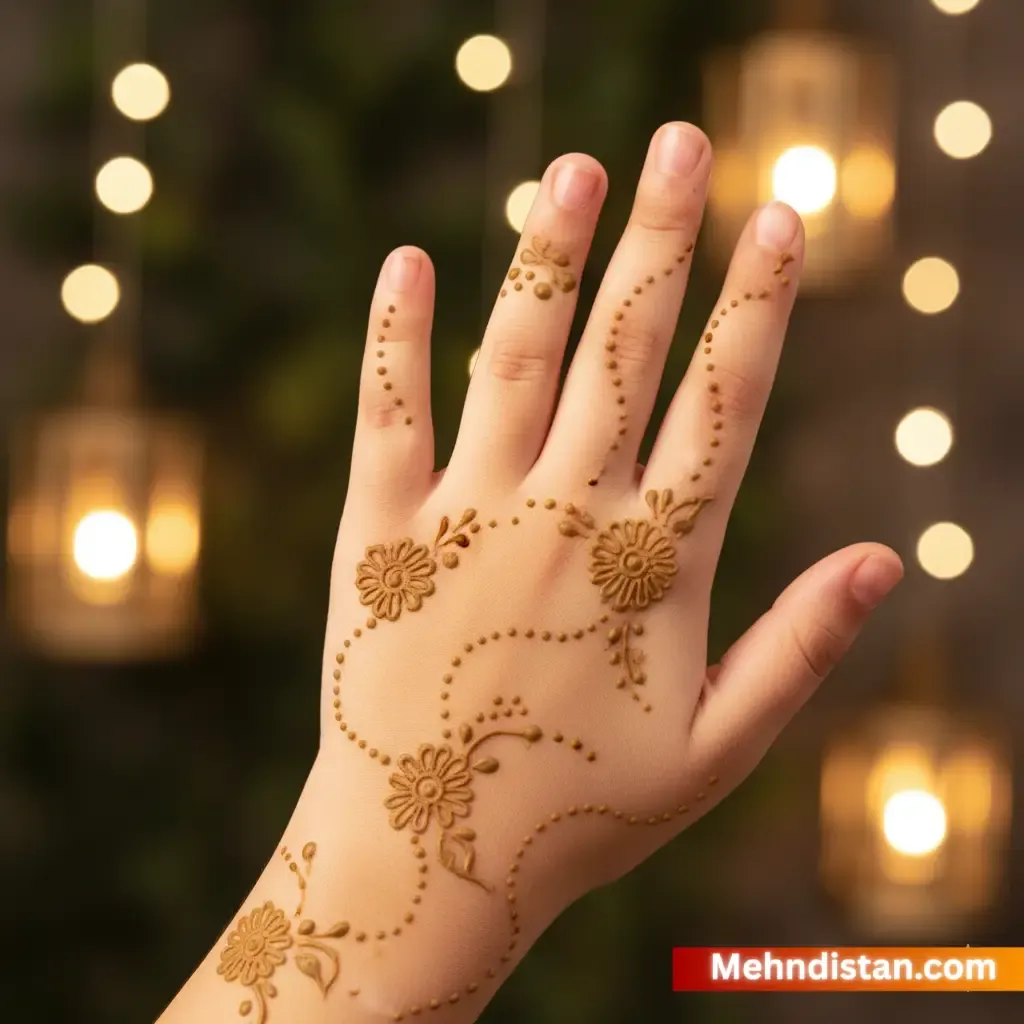
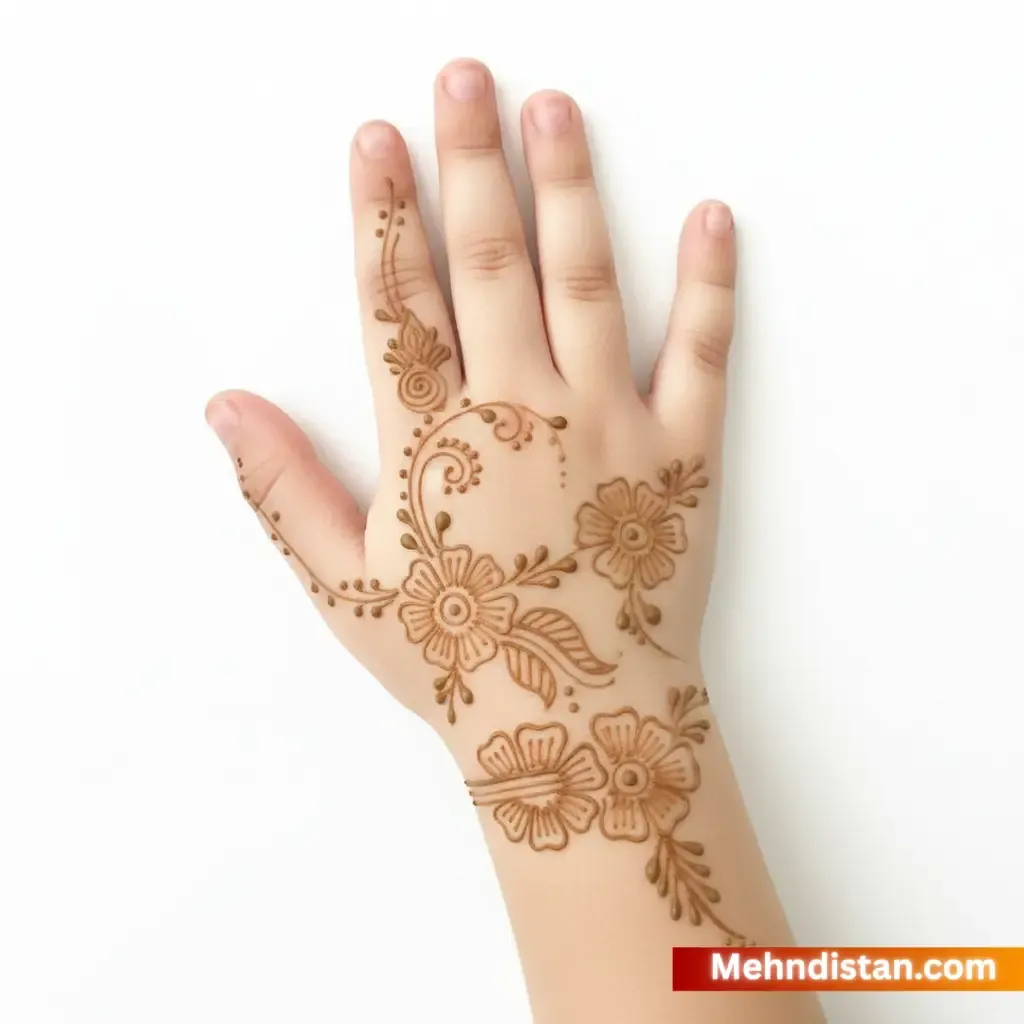
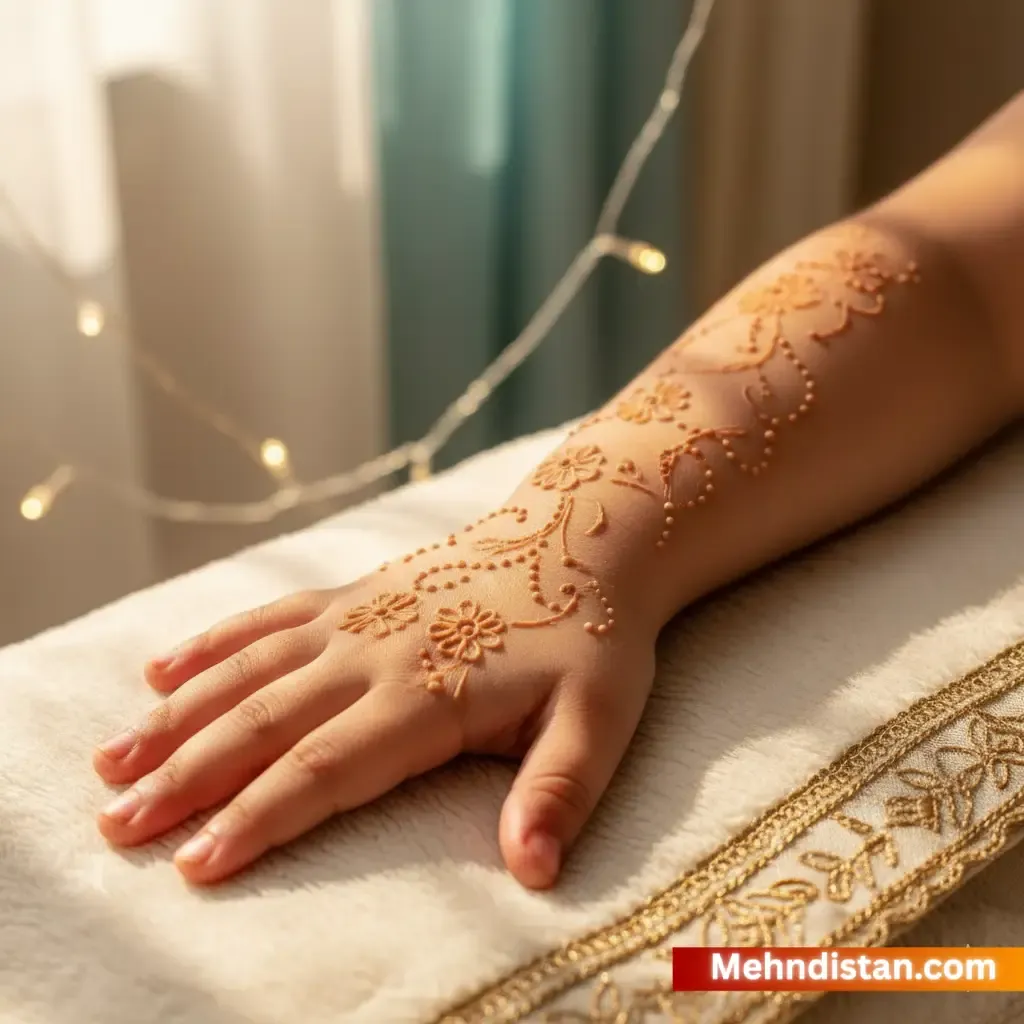
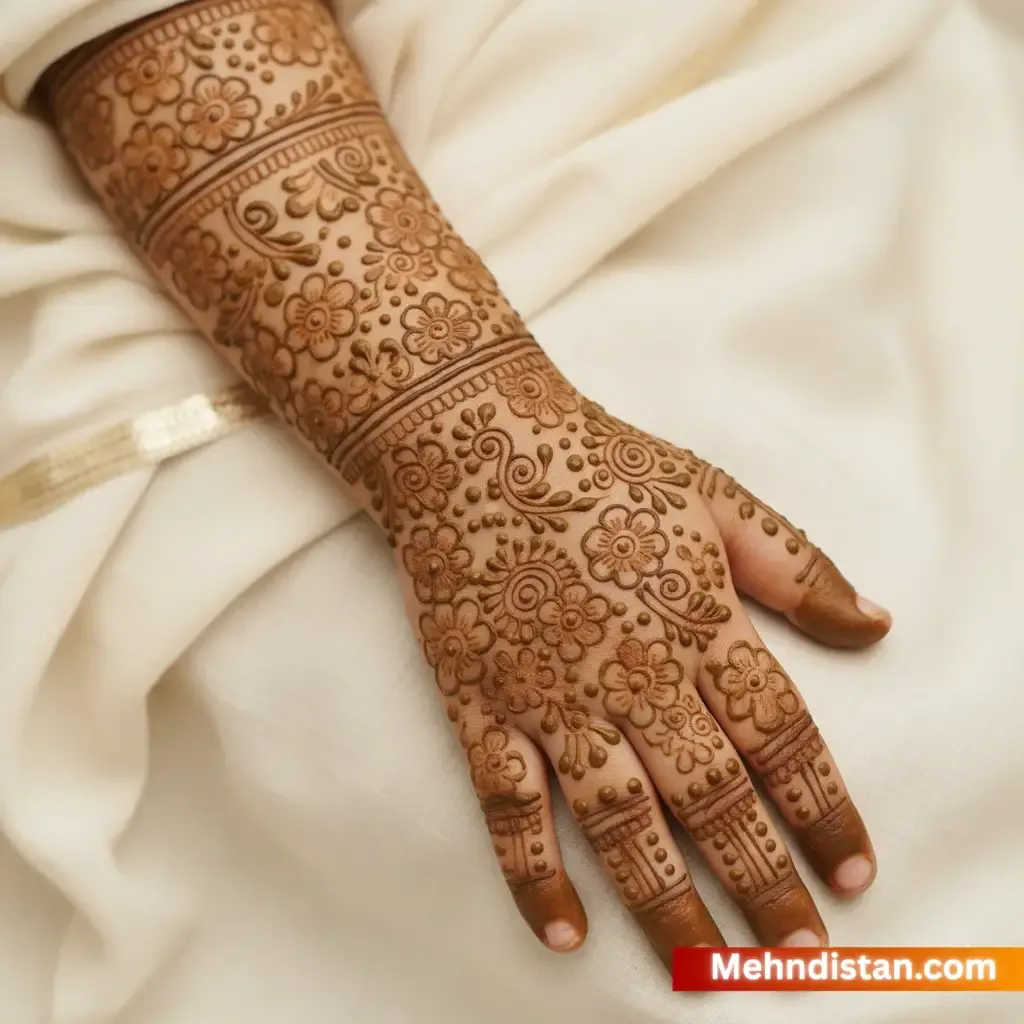
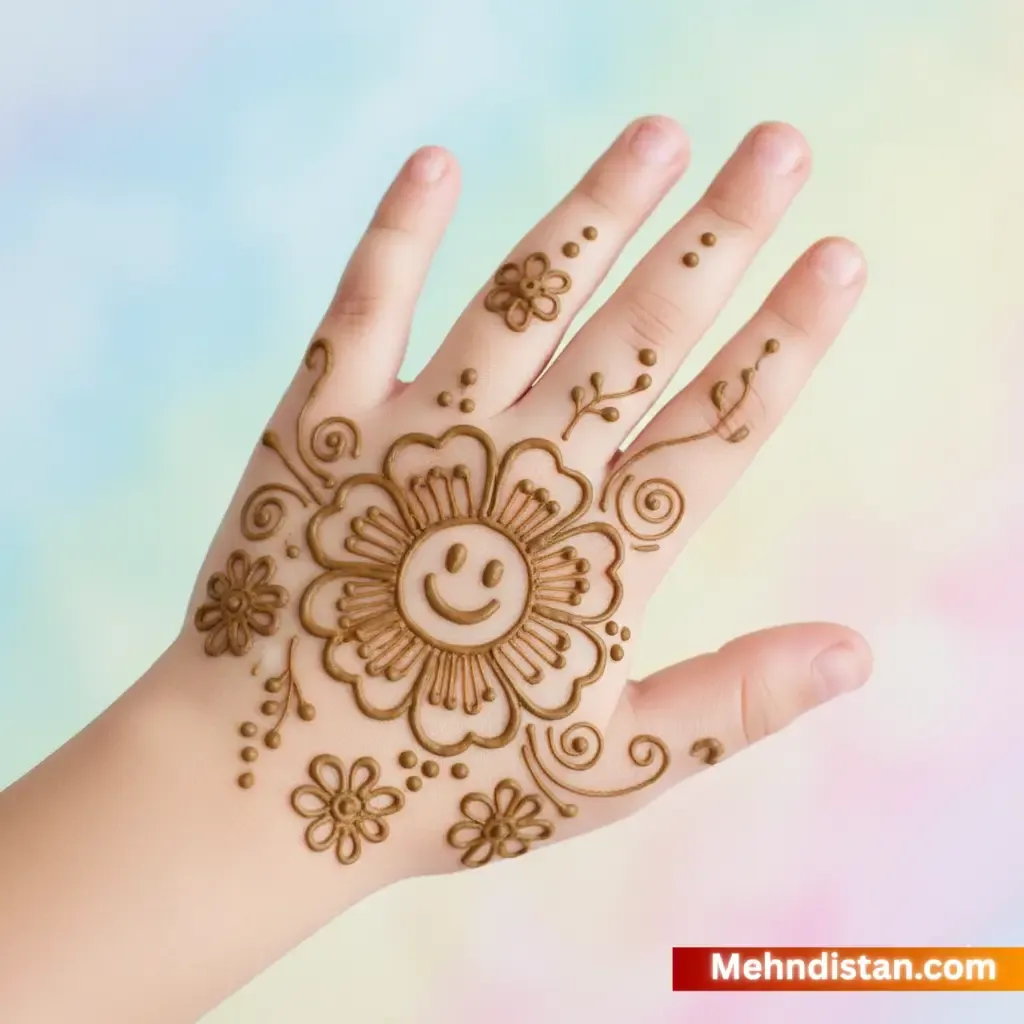
A full-hand pattern can work for an older child during a wedding, Eid, Diwali, or another celebration, but I would keep the composition lighter than a bridal design. Instead of filling every gap, I prefer repeating flowers, leaves, dots, and simple bands with comfortable breaks between sections.
- Break a longer application into short sessions.
- Ask the child to stay comfortable before starting detailed work.
- Leave open spaces so the finished pattern does not feel too heavy.
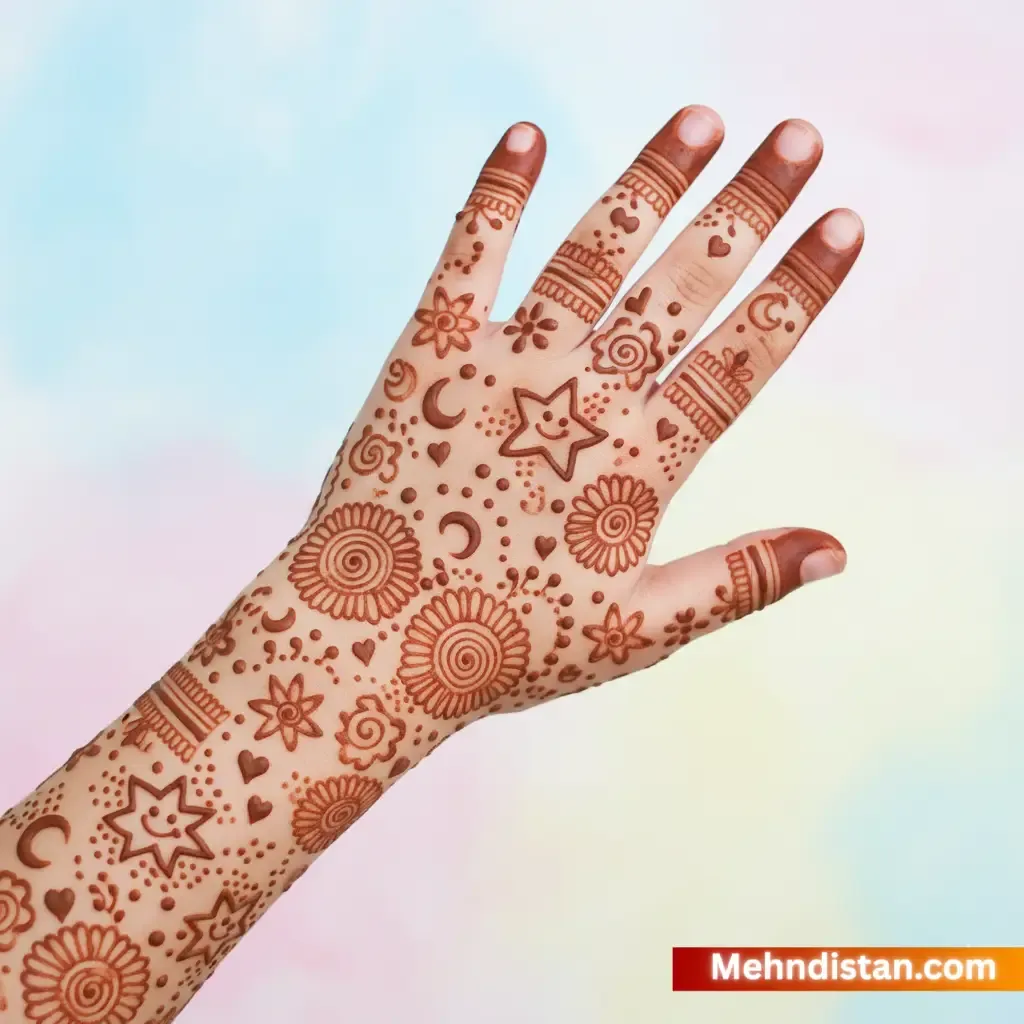
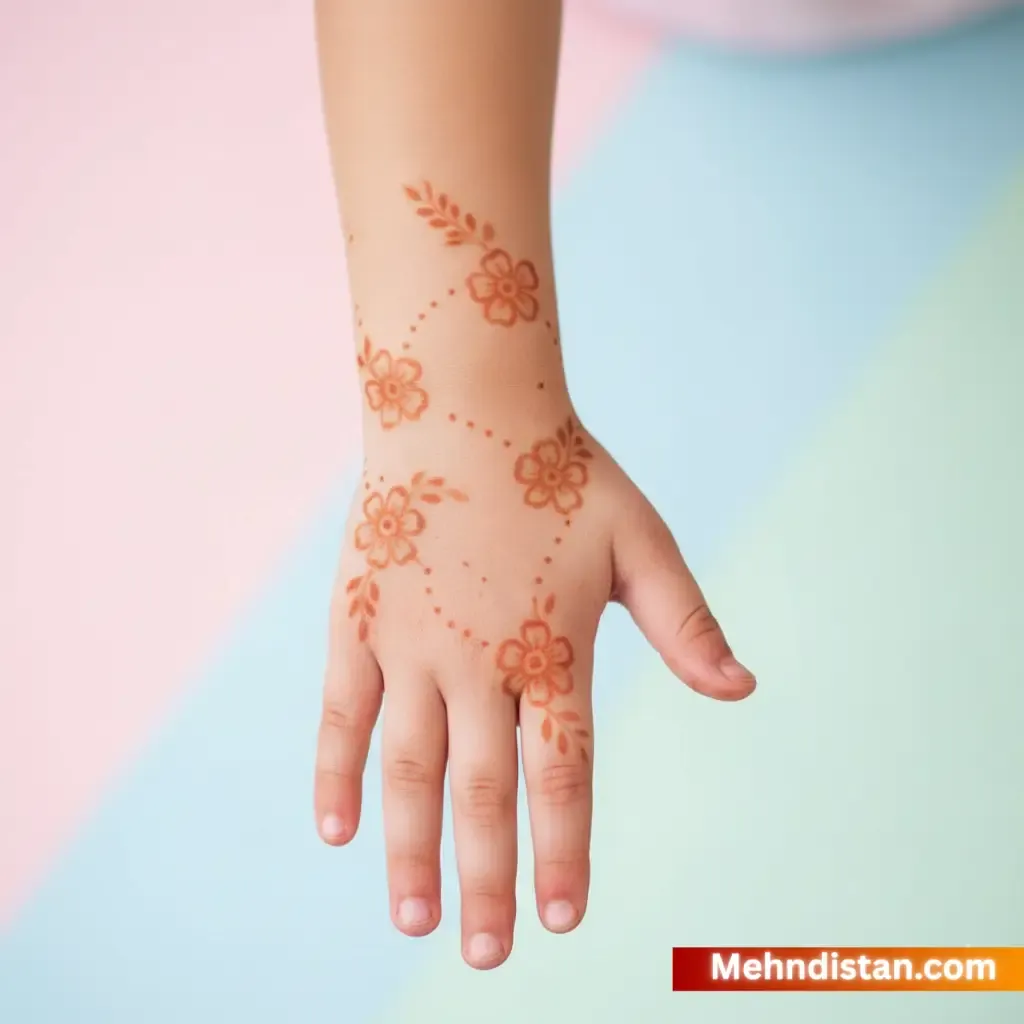
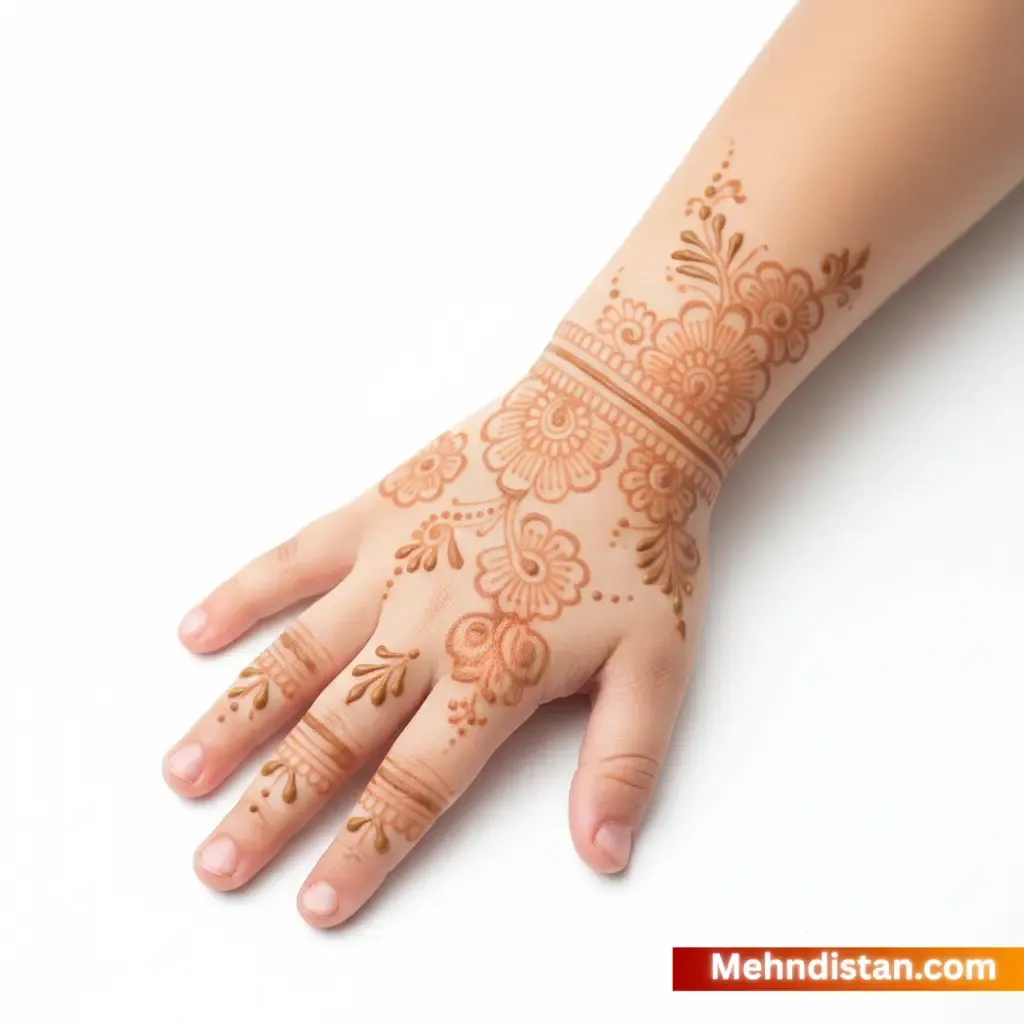
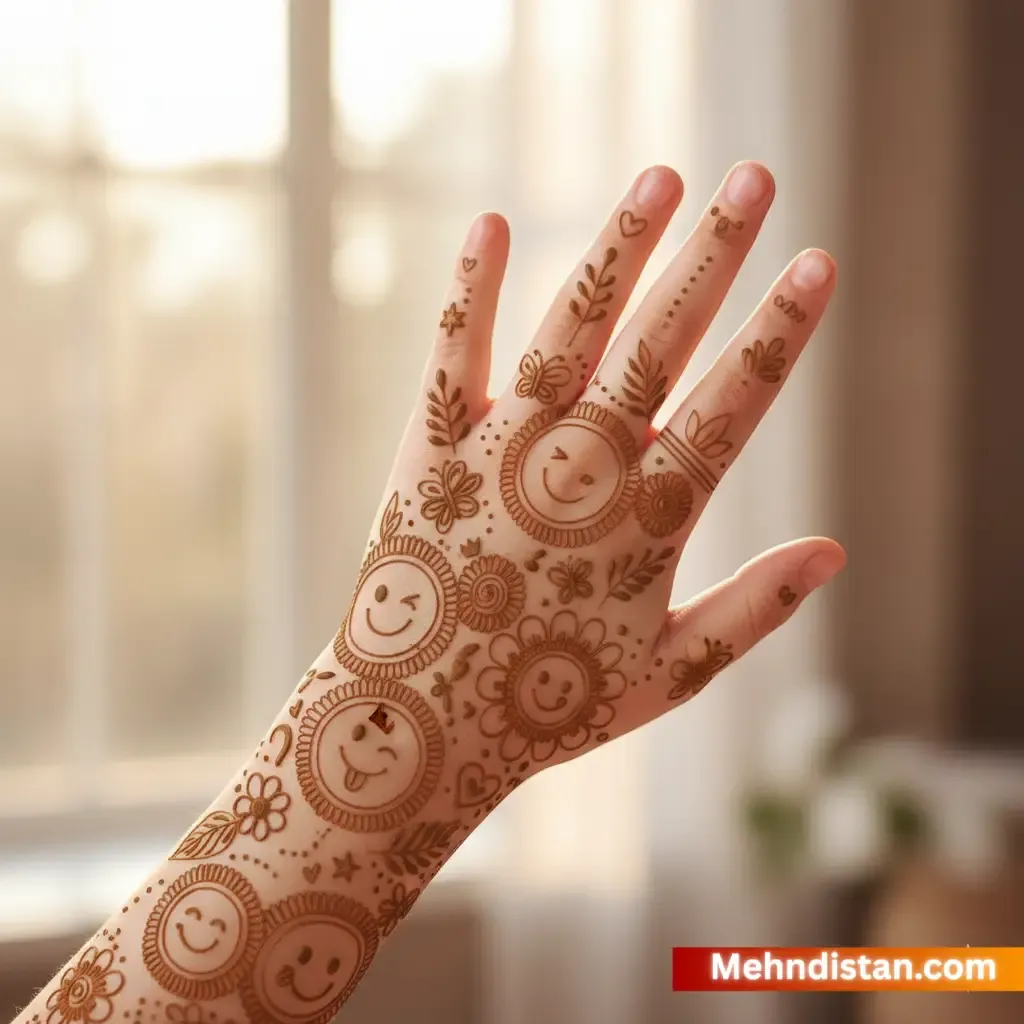
Cute Mehndi Design for Kids Easy
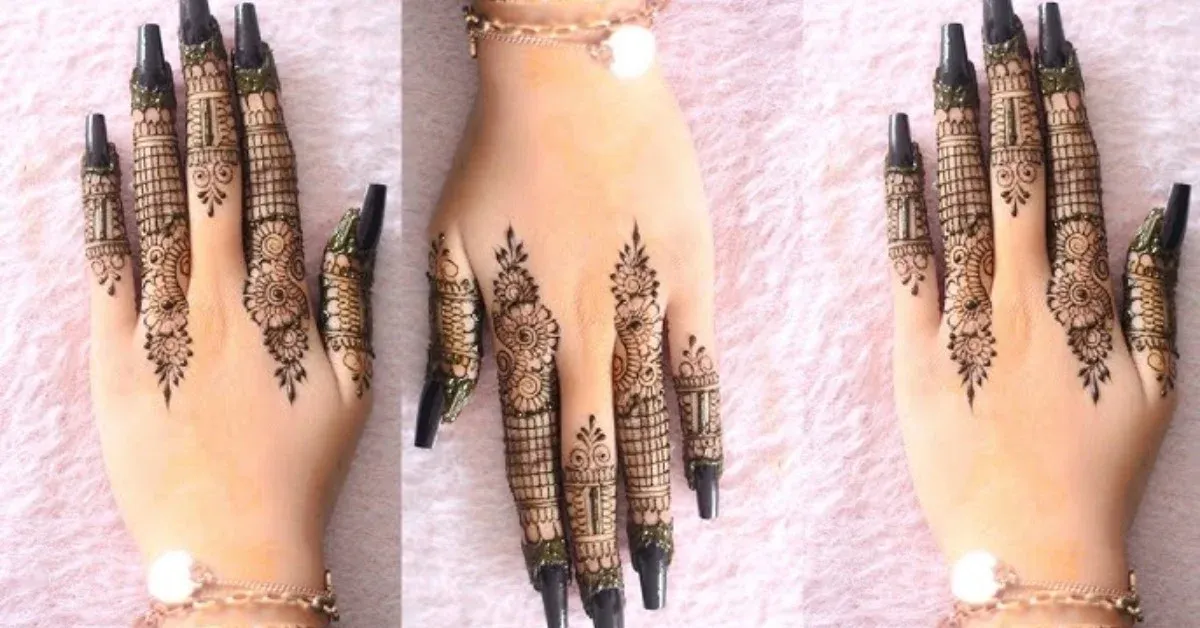
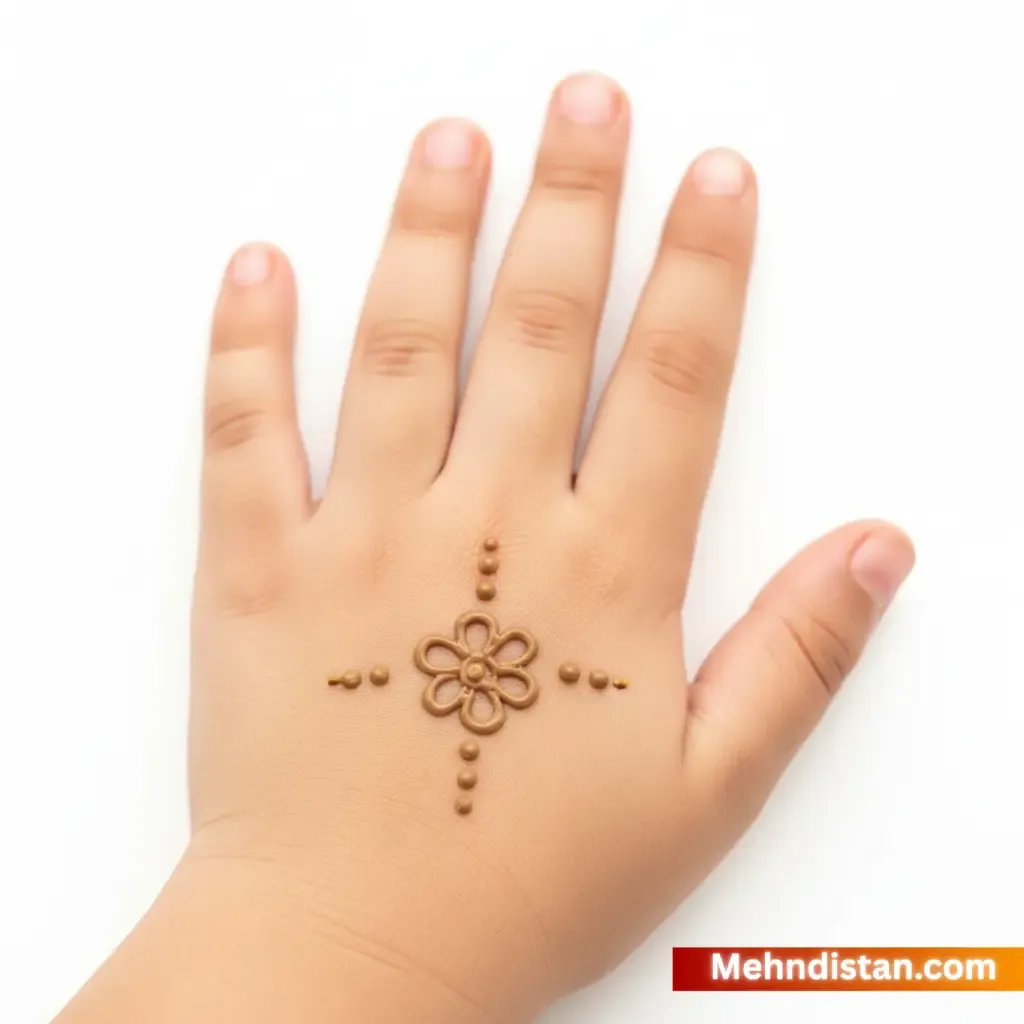
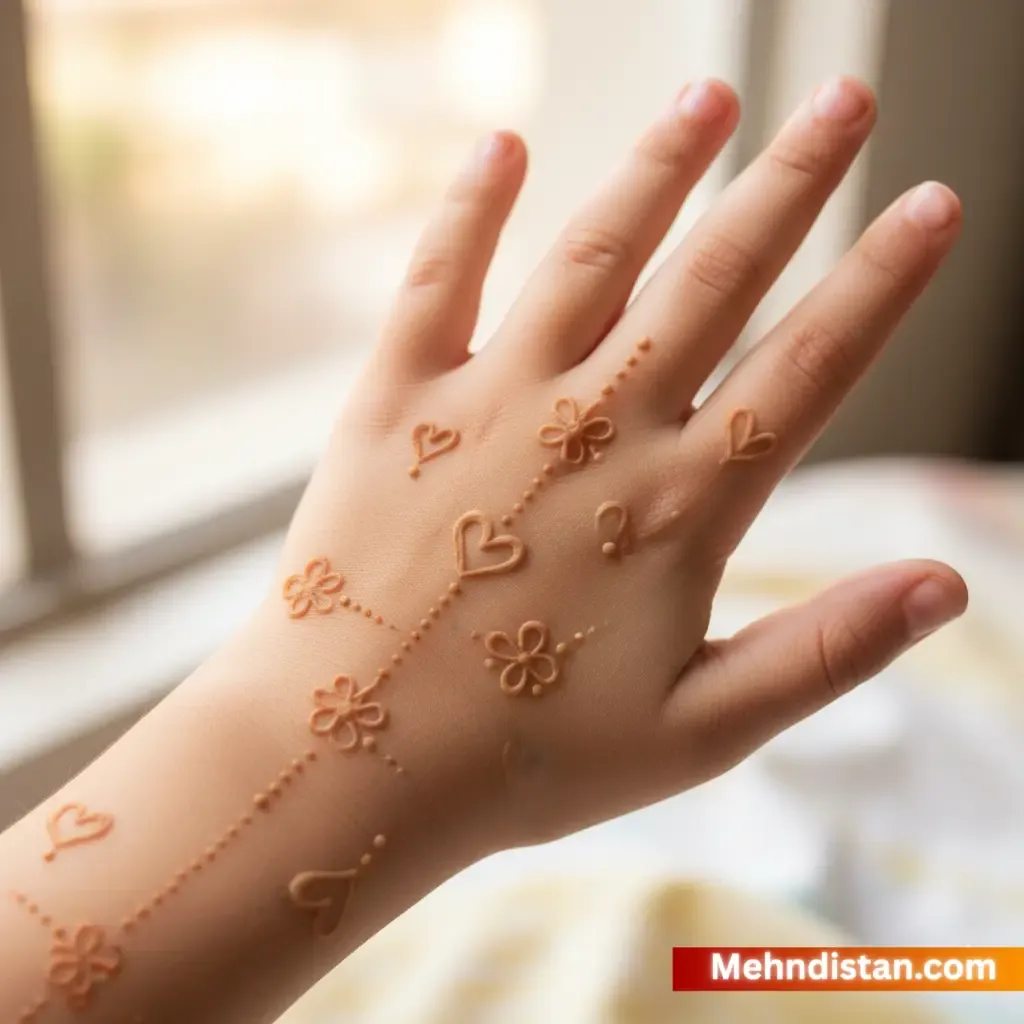
When time is short, I choose an easy pattern made from a few recognizable shapes. A heart with dots, a tiny flower, a simple sun, a butterfly, or a curved leafy line can look finished without requiring advanced drawing skills. These are also good choices when a child is excited and wants the design completed quickly.
- Start with one main shape and build around it.
- Use dots and short curves to fill only selected areas.
- Let the child choose between two or three simple motifs.
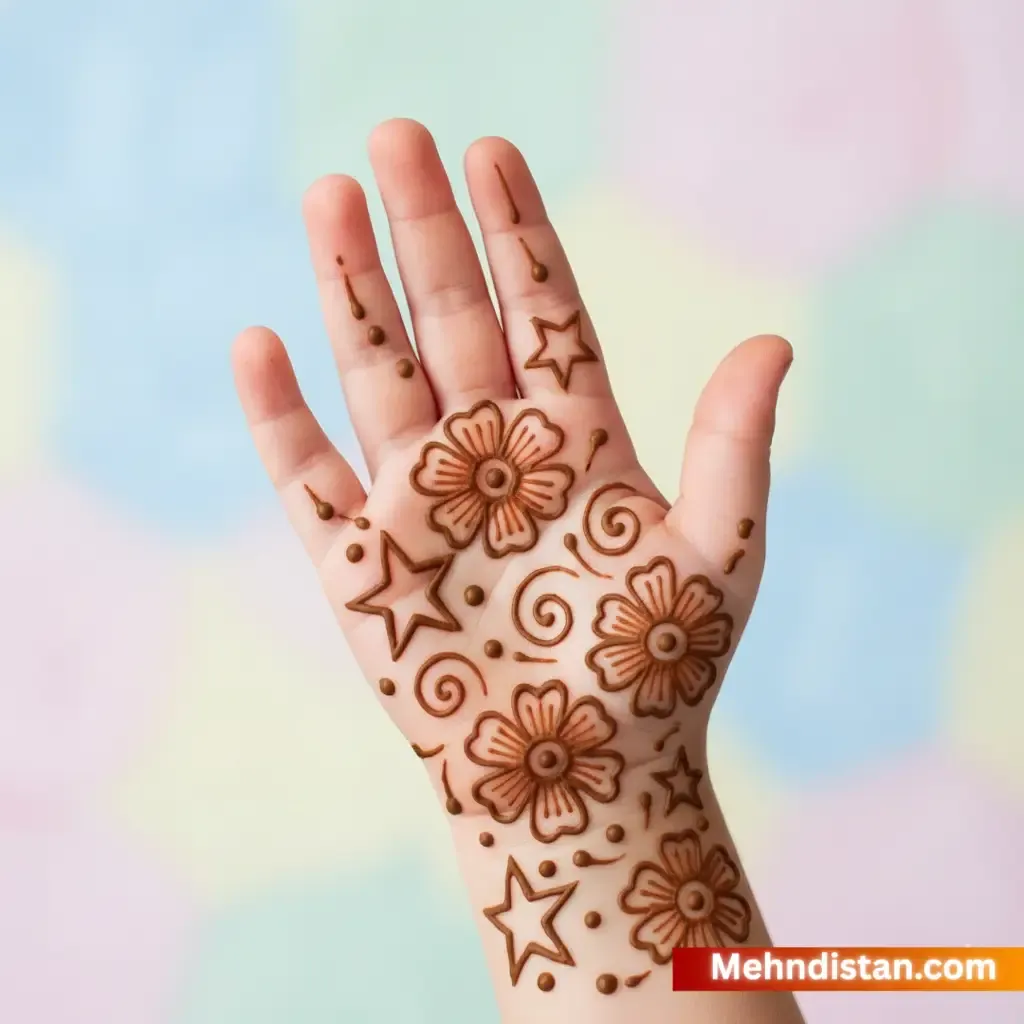
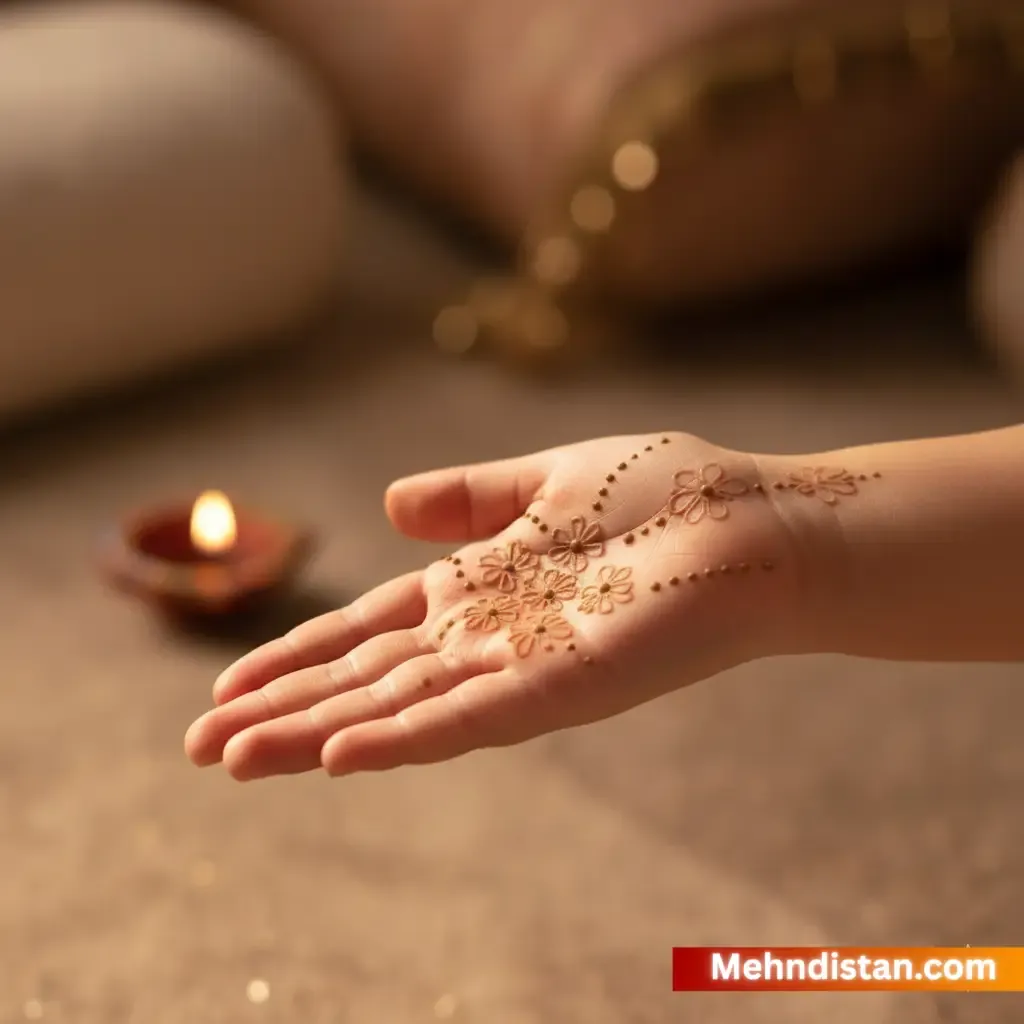
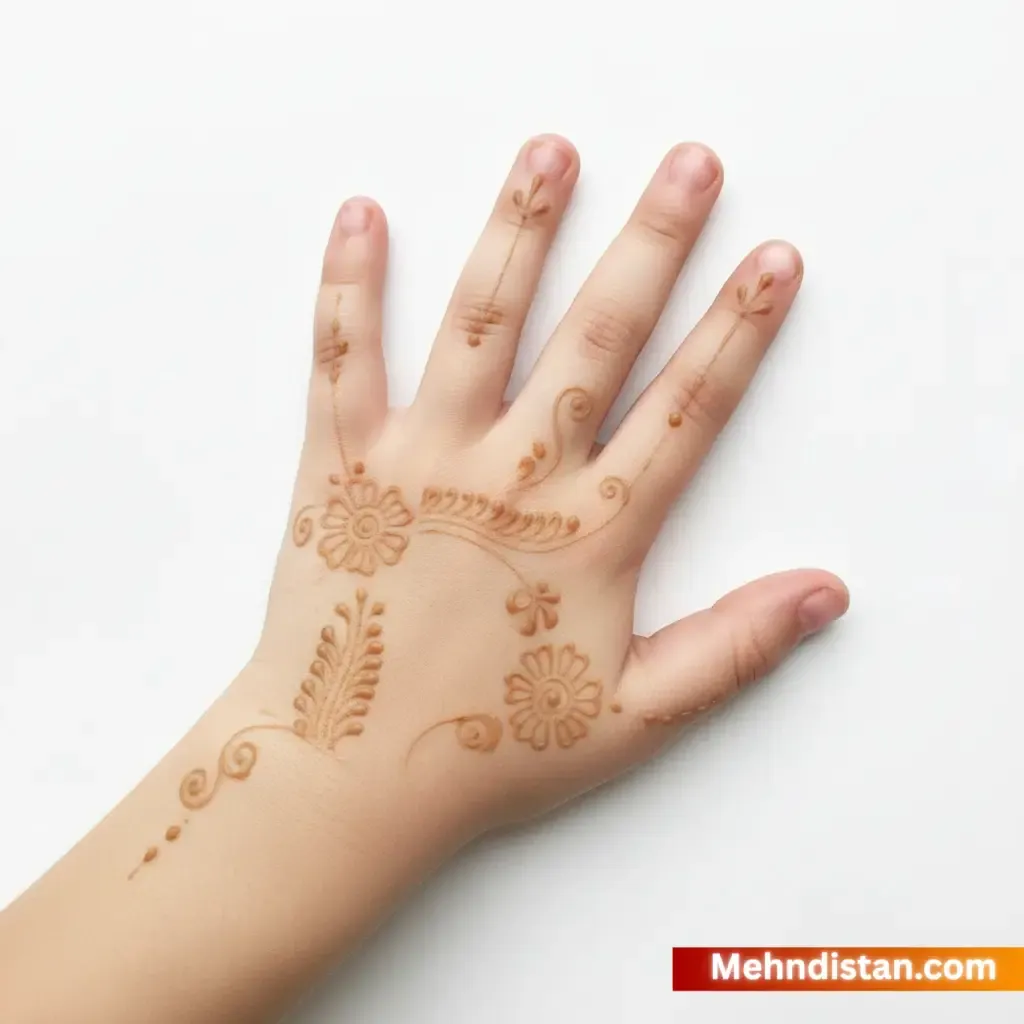
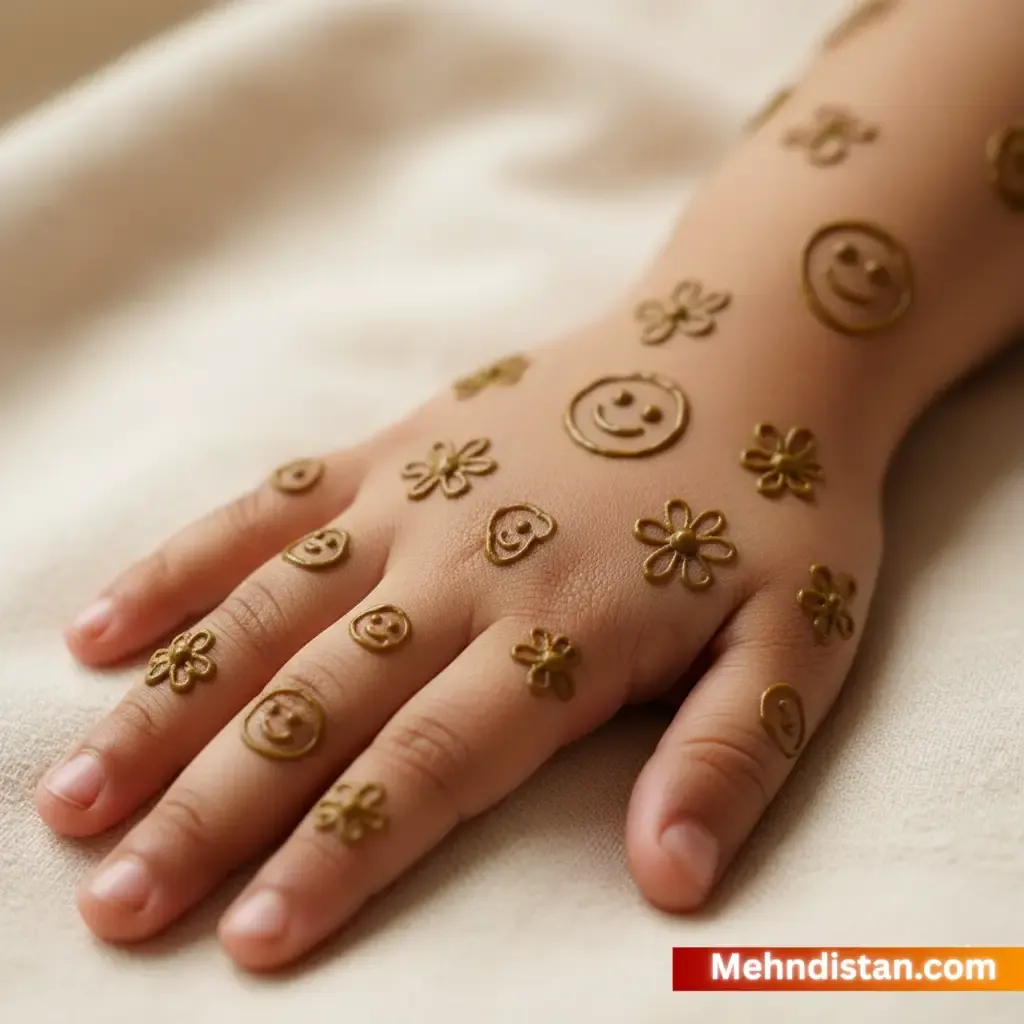
Flower Mehndi Design for Kids
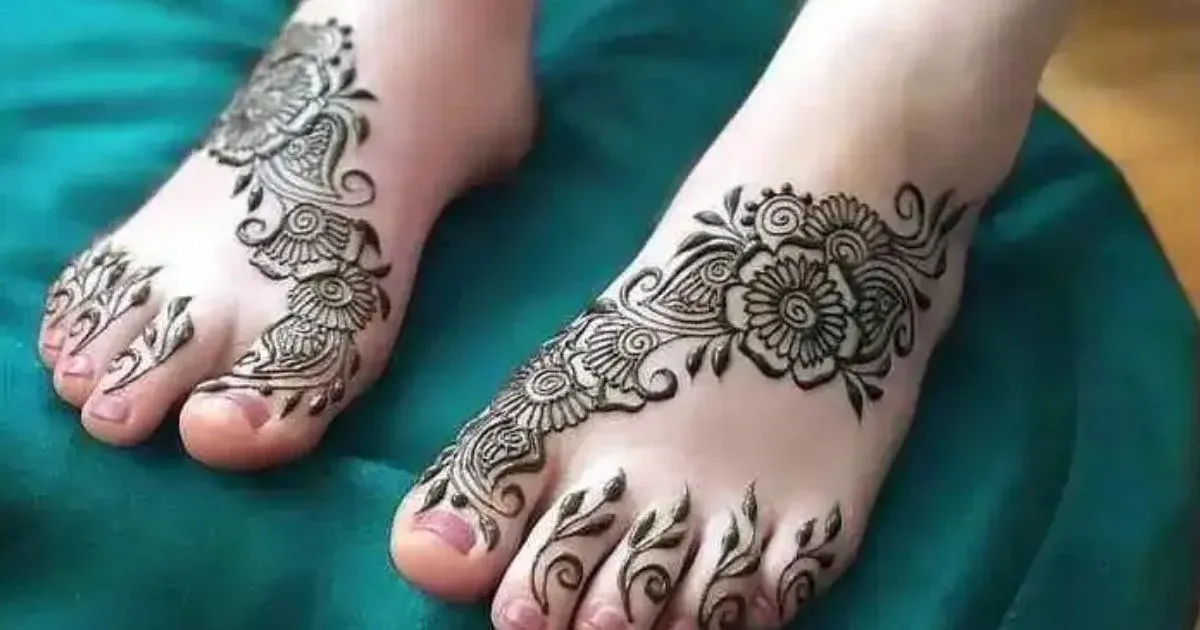
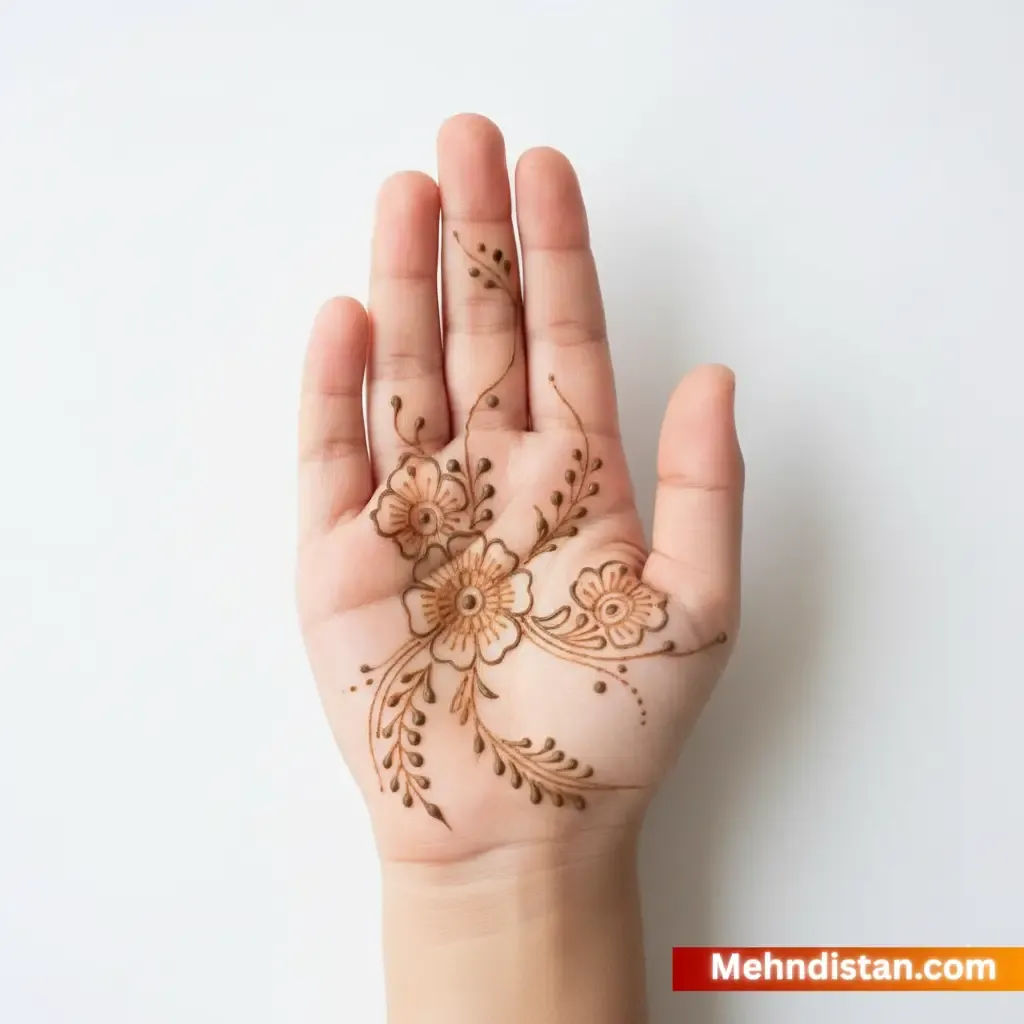
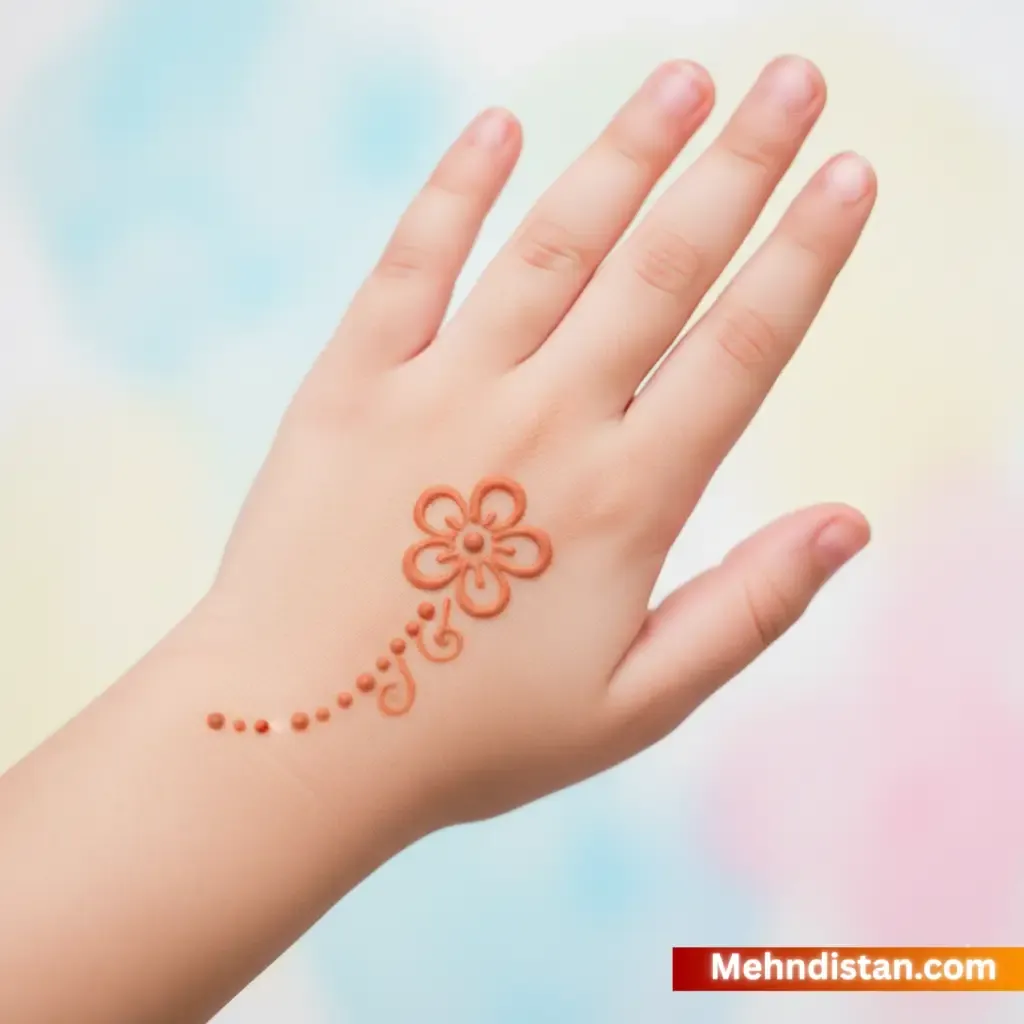
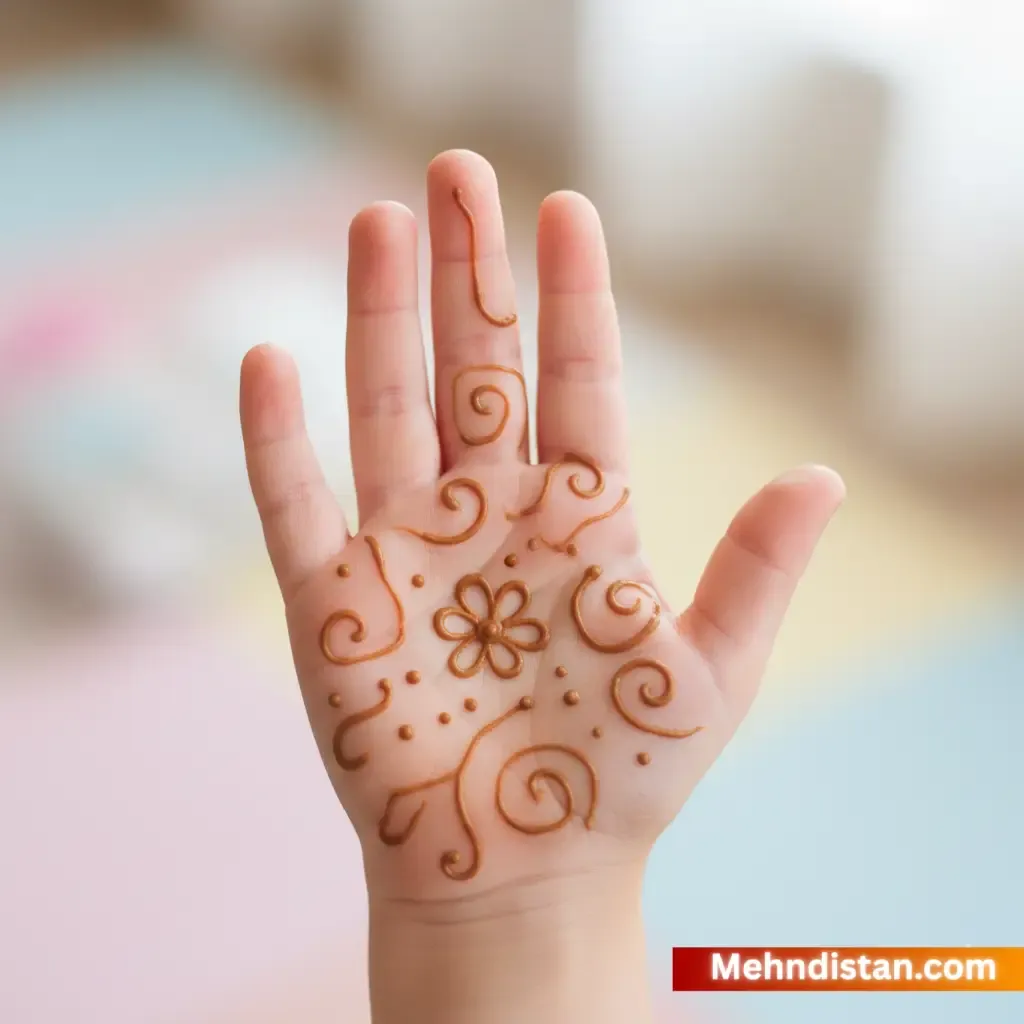
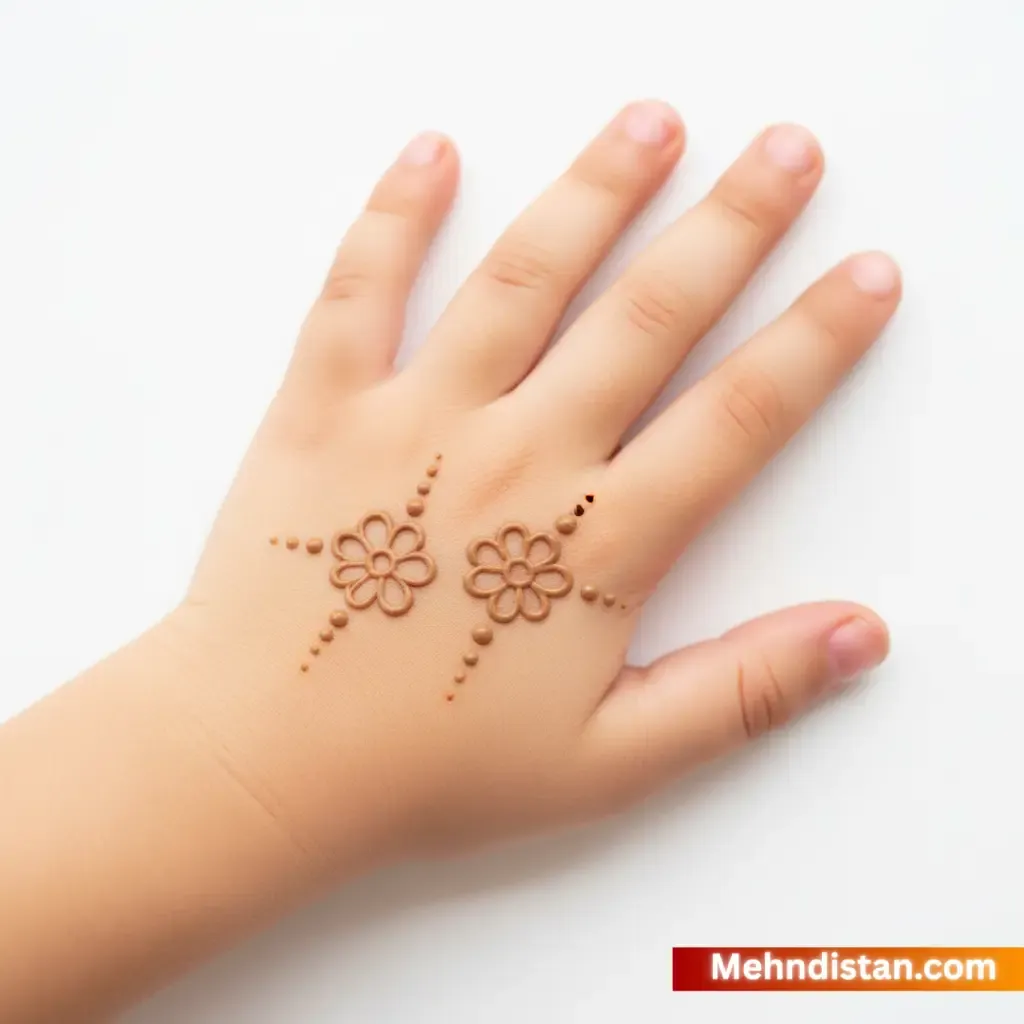
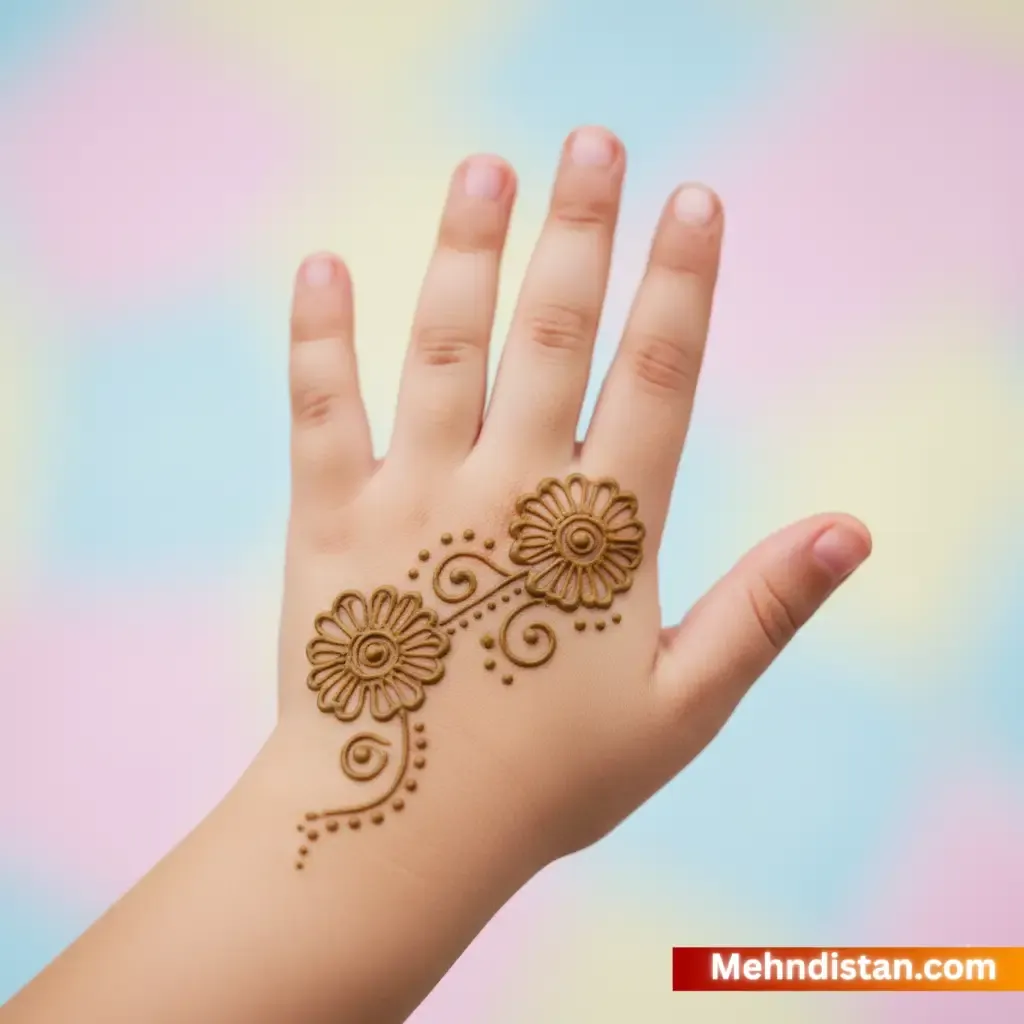
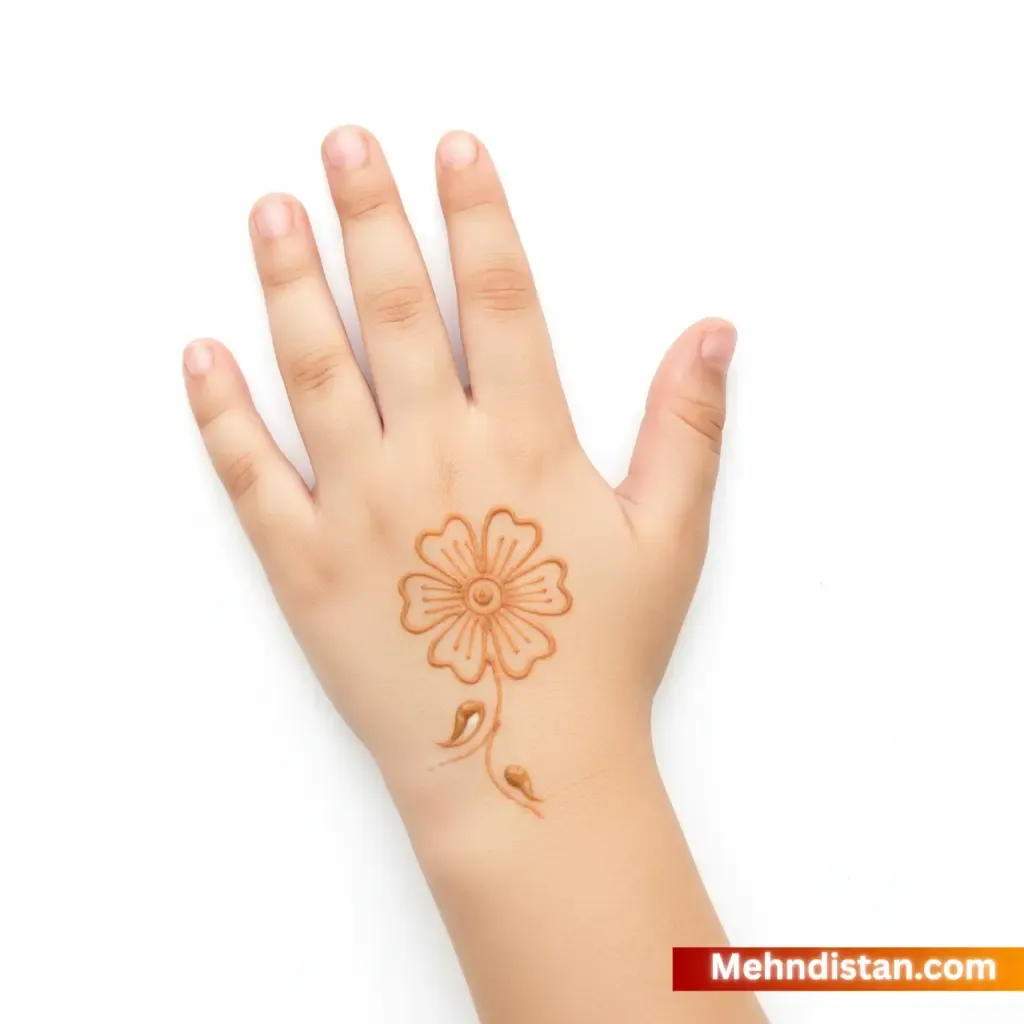
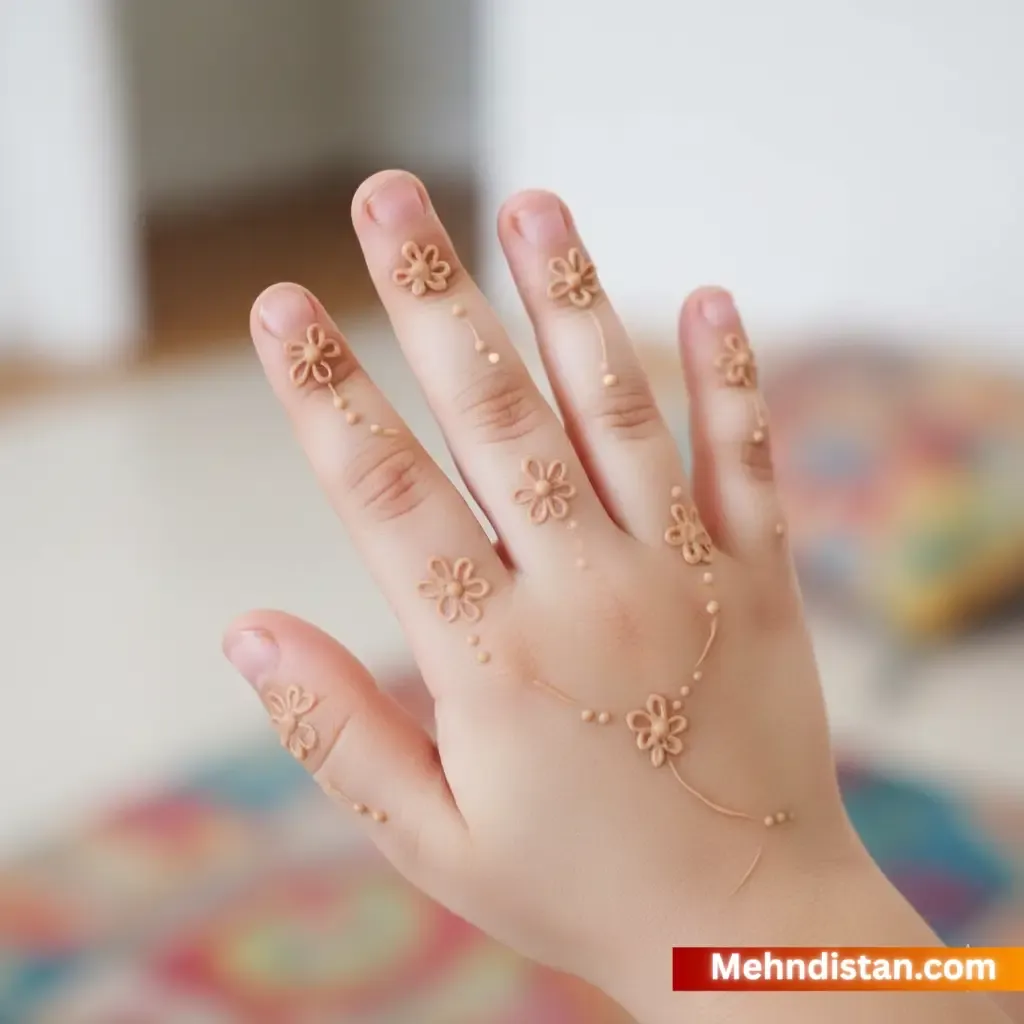
Floral patterns are among my favorite choices for children because they can be made as detailed or as simple as needed. I can use one large flower, several tiny blooms, a flower-and-leaf vine, or a few petals around a central dot. The design can also be adjusted easily to match the size of a child’s hand.
- Choose rounded petals for a soft, playful appearance.
- Match the flower size to the child’s hand instead of copying an adult pattern exactly.
- Use leaves and dots to add detail without filling every gap.
How I Choose the Right Mehndi Design for a Child
I first consider the child’s age and how long they can comfortably keep their hand still. For a younger child, I choose a small motif. For a school event, I prefer a subtle back-hand or finger design. For a wedding or festival, I may choose a more decorative front-hand or full-hand pattern if the child is comfortable with the application time.
- Fast application: Pick a flower, heart, butterfly, star, or simple vine.
- School-friendly: Choose a small back-hand or single-motif design.
- Festival: Combine flowers, leaves, dots, and a small central motif.
- Wedding: Use a slightly fuller design while keeping the lines open and age-appropriate.
Tips for Applying Mehndi on Kids
I keep the process relaxed and never force a child to sit through an application they do not want. I clean and dry the skin first, use a fresh skin-safe henna cone, and keep the design practical. I also keep the child’s hands away from the face and food while the paste is on the skin. If there is burning, itching, swelling, or another concerning reaction, I remove the product and seek appropriate medical advice.
- Patch-test the product before a larger application.
- Do not use black henna or unknown chemical mixtures.
- Keep the design simple enough for the child’s patience level.
- Allow the paste to dry naturally and follow the product’s safe-use directions.
Troubleshooting Common Kids’ Mehndi Problems
- The child keeps moving: Switch to a smaller design instead of trying to finish a complicated pattern.
- The lines look uneven: Use larger motifs and dots; small imperfections are normal on a moving hand.
- The design smudges: Keep the hand still while the paste dries and avoid rubbing the area.
- The child feels uncomfortable: Stop the application and continue another time only if the child is willing.
- Skin becomes irritated: Remove the product and avoid further application until the skin has settled; seek medical guidance if symptoms are significant.
Frequently Asked Questions
What is the best cute mehndi design for kids?
I would choose a simple flower, butterfly, heart, star, or leafy vine. These motifs are easy to scale down and usually take less time than dense adult patterns.
Which design is easiest for a child?
A small central flower with dots, a single vine, or a tiny heart is usually easier than a detailed full-hand pattern.
Can children use black henna?
I do not recommend black henna or unknown temporary-henna products for children. Some may contain chemicals that can cause serious skin reactions. I would choose a trustworthy skin-safe henna product instead.
How long should I keep henna on a child’s hand?
I follow the directions supplied with the specific skin-safe henna product rather than using one fixed time for every formula. The child’s comfort and skin reaction are also more important than maximizing stain depth.
What should I do if a child gets itching or burning?
Stop using the product and remove it from the skin. If the reaction is severe, spreading, or includes swelling or breathing difficulty, seek urgent medical care.
Final Thoughts
I find that the best kids’ mehndi designs are not necessarily the most detailed ones. A cheerful motif, comfortable application, and a pattern that suits the child’s age can look much better than an overly complicated design. I also like giving children a small choice, such as selecting a flower, butterfly, heart, or star, because it makes the activity feel personal and fun. If the occasion is a wedding or festival, I can add a few extra leaves, dots, or bands without making the pattern too dense. For everyday use, a tiny design is often enough. Use the ideas above as inspiration, adjust the size and detail to the child’s hand, and always put skin safety and comfort first.